
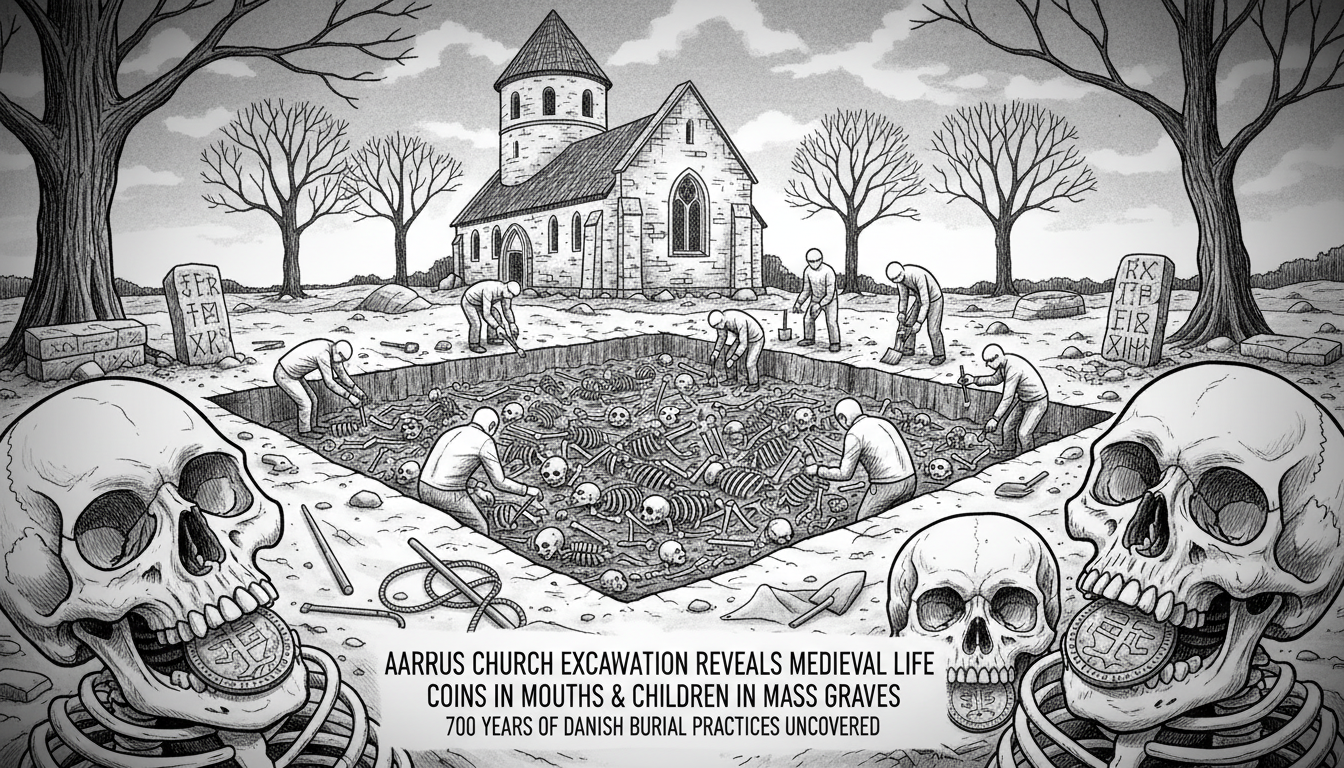
Archaeologists discovered 60 skeletons at the former St. Oluf's Cemetery in Aarhus. The remains span 700 years of Aarhus history. Researchers will analyze the bones to understand medieval life in Denmark's second-largest city. They found coins placed in mouths of the deceased. This burial practice reflects medieval beliefs about crossing into the afterlife. The excavation also revealed mass graves containing children. These findings suggest periods of epidemic disease or famine struck the population. The cemetery served Aarhus residents from approximately 1200 to 1900. This long timeline offers a unique window into centuries of urban development. Archaeologists will study dental health, bone structure, and burial artifacts. Their work reveals how ordinary people lived, worked, and worshipped. The St. Oluf's site was one of Aarhus's main burial grounds before its closure. Modern construction projects often uncover such historical sites in ancient Nordic cities. This excavation provides rare physical evidence about medieval Danish burial customs. The coin tradition specifically relates to ferry fees for the mythical river Styx. Such discoveries help counterbalance historical records that typically focus on wealthy elites. The child graves particularly highlight how medieval societies faced high infant mortality rates.
🇩🇰 Denmark
28 October 2025 at 19:25
7298 views
CultureCoins in Mouths and Children in Mass Graves: Aarhus Church Excavation Reveals Medieval Life
By Nordics Today •
In brief
Archaeologists uncovered 60 medieval skeletons in Aarhus with coins placed in mouths, revealing 700 years of burial practices. The excavation shows how ordinary Danes lived and died through plagues and famines. Mass child graves provide stark evidence of historical mortality patterns.
- - Location: Denmark
- - Category: Culture
- - Published: 28 October 2025 at 19:25
Illustration
Advertisement