
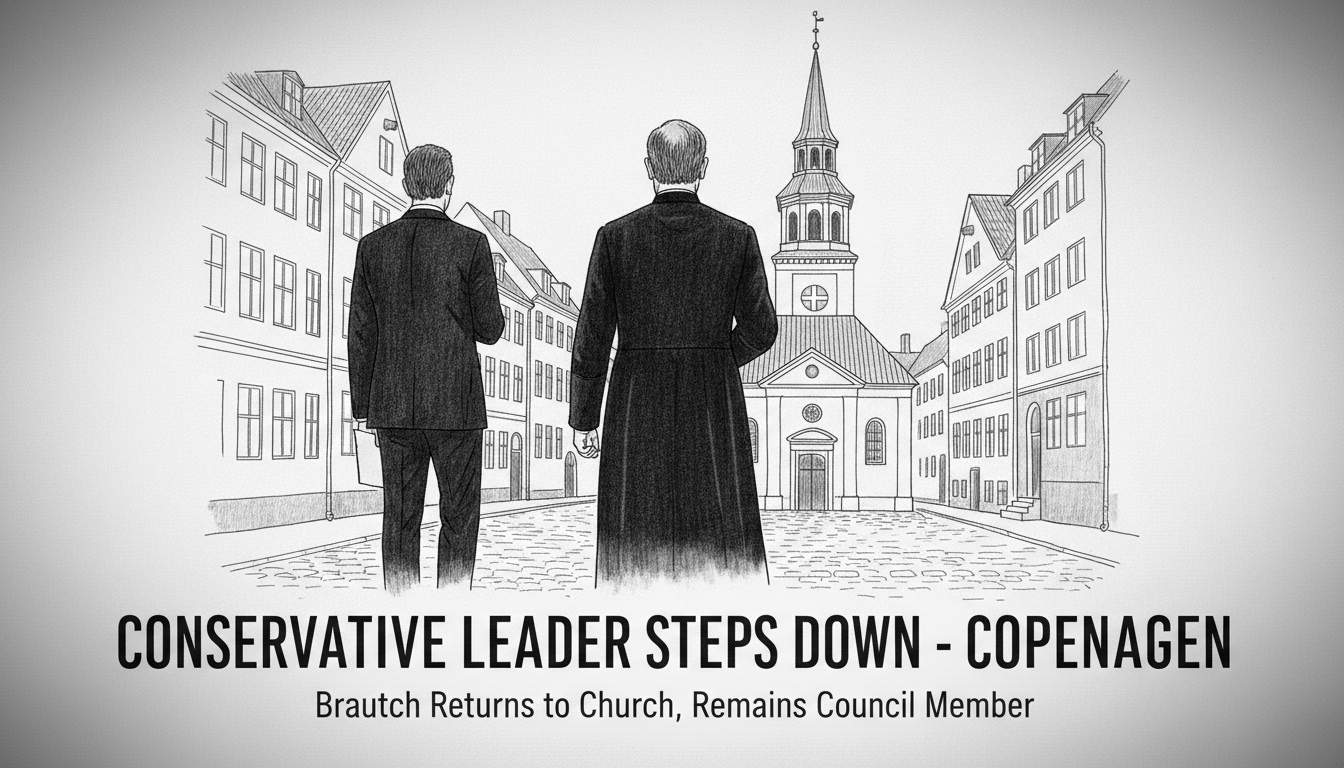
A prominent figure in Copenhagen's local political landscape has announced a significant change. Michael W. Brautsch, the lead candidate for the Conservative Party in Frederiksberg, is stepping down as leader of the party's municipal group. He will, however, remain a member of the city council. He made the announcement in a detailed social media post, framing the decision as a return to his core vocation and values. This move highlights the personal and professional balancing acts common in Danish local politics, where community roles often intersect with political duties.
Brautsch expressed deep gratitude for his time as group leader. He noted the group successfully elected eleven competent candidates committed to conservative policies for the next four years. His departure from the leadership role is effective from the start of the new year. He will resume his duties as a priest at Frederiksberg Church, a role familiar to local residents. He also looks forward to focusing on his position as social policy spokesperson, a portfolio close to his heart. He described himself as a social conservative, driven into politics by a desire to fight for the most vulnerable in the city. This personal motivation offers a window into the values shaping Copenhagen integration policies at the municipal level.
The political context of this resignation is important. The Conservative Party remains the largest party in Frederiksberg Municipality despite a notable electoral setback. They secured 33.7 percent of the vote in the latest local election, a decline of 6.6 percentage points. This result allowed the Social Democrats, led by re-elected Mayor Michael Vindfeldt, to maintain control. Brautsch is a recognizable public figure, having appeared as an expert on a popular television matchmaking program. His departure from frontline politics, even temporarily, marks a shift for the local party's dynamics. He concluded his statement by thanking supporters and stating his intention to take a break from social media to spend more time with his family.
The party's group chairperson, Laura Lindahl, is expected to serve as interim leader. This transition will be formalized at the group's first meeting in the new year. Such internal shifts are a normal part of the political process in Danish municipalities, reflecting both personal choices and strategic recalibrations after elections. The Danish welfare system relies heavily on effective local governance, making stability and clear leadership in these councils crucial for social service delivery. Changes in key political figures can influence the direction of local Denmark social policy, particularly in areas like social services which Brautsch emphasized.
This story is more than a simple personnel change. It underscores the human element within the structures of Danish society news. Politicians often juggle multiple roles, and a return to a prior profession like the clergy is a uniquely personal decision. For international observers, it demonstrates how Danish political culture can blend civic duty with personal vocation. The focus on social policy by the departing leader also points to ongoing debates within Denmark immigration policy and broader integration challenges. Municipalities like Frederiksberg are on the frontline of implementing national policies, and their local leaders directly impact community cohesion. The coming months will show how the Conservative group adapts its strategy under new leadership while navigating a council where they are the largest party but not in the mayor's office.