
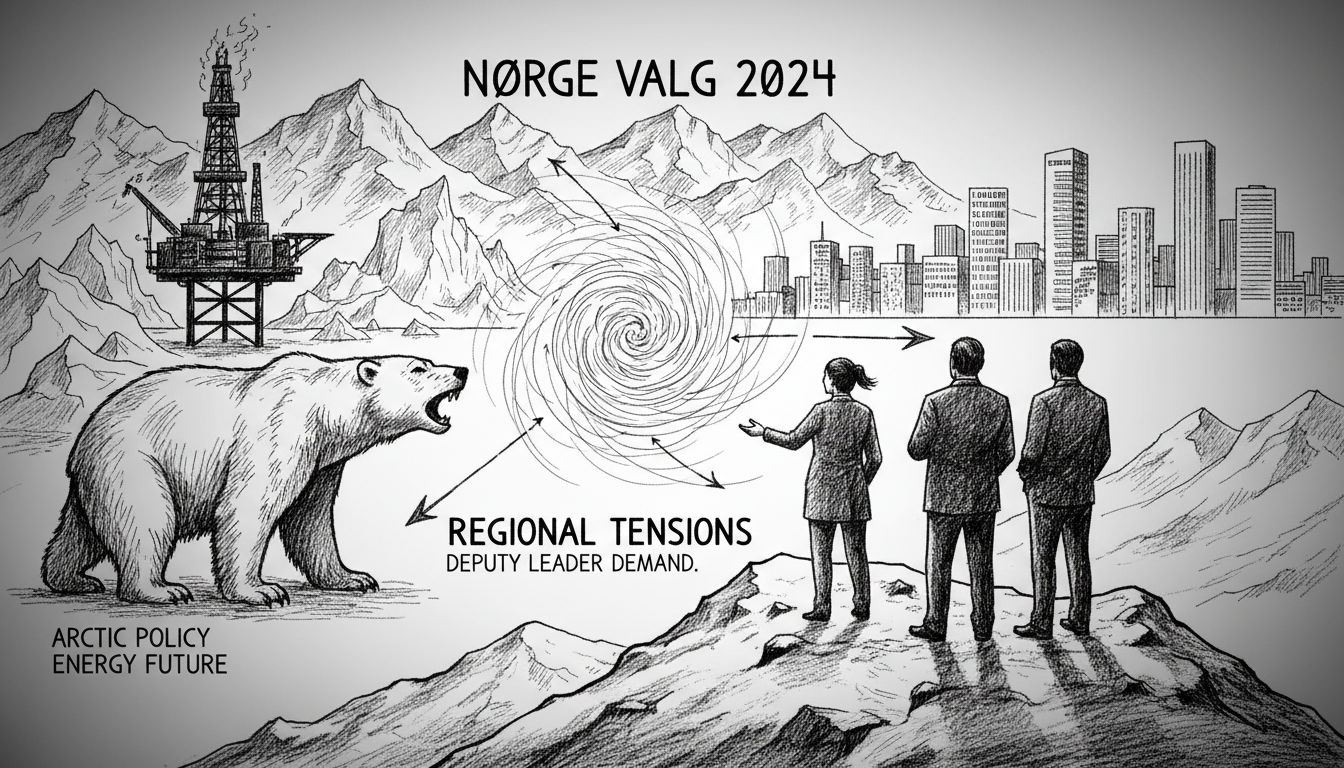
The selection committee for Norway's Conservative Party, known as Høyre, convened this afternoon to deliberate on the party's future leadership. The process will shape the opposition's direction and influence national policy on energy and Arctic development. Key figures must formally declare their candidacy, with the committee's final recommendation expected before the party's national convention in February.
Sources indicate a likely leadership slate includes prominent figures from the greater Oslo area. This prospect has ignited concerns about regional representation within the party's highest ranks. Strong voices from outside the capital, particularly from district municipalities, are pushing for geographic diversity. They argue the party leadership should reflect all of Norway, not just the dominant eastern region.
Bø municipality mayor Sture Pedersen is among those advocating for a deputy leader from outside the Oslo political bubble. The preferred candidate from these circles is a Bergen-based politician. This individual faces a complex decision, balancing family considerations with the demands of high office. The roles of party deputy leader and chair of the prestigious parliamentary Standing Committee on Foreign Affairs and Defence are both on the table. The foreign affairs post is exceptionally demanding, requiring deep engagement with Norway's NATO commitments and Arctic security policy.
The party's working committee, its core leadership body, has six seats. It includes the party leader, two deputy leaders, the head of the Young Conservatives, and the head of the Women's Political Committee. One seat remains, and district representatives insist it must go to someone from outside Oslo. Given the current political calculus, this final slot will likely go to a woman, preferably from Northern Norway.
This internal struggle highlights a persistent tension in Norwegian politics between the centralized power of Oslo and the country's vast regions. For the Conservative Party, which champions both a strong national oil industry and district development, this balance is critical. The outcome will affect how the party approaches resource management in the Norwegian Sea, development in the Arctic, and policies for communities along the fjords from Troms to Rogaland. The new leadership must bridge the gap between the financial hub of Oslo and the resource-rich districts that power the nation's economy. The committee's choice will signal whether the party prioritizes metropolitan political experience or a broader national coalition as it prepares for future electoral battles.
A party dominated solely by Oslo figures may struggle to connect with voters in key coastal and northern constituencies. These are areas with major stakes in fisheries, offshore wind projects, and traditional oil and gas operations in the North Sea. The leadership election is more than an internal party matter. It is a test of the Conservative Party's ability to represent Norway's diverse economic and geographic interests in the Storting. The final lineup will need to craft policies that resonate from the Oslofjord to the Barents Sea.