
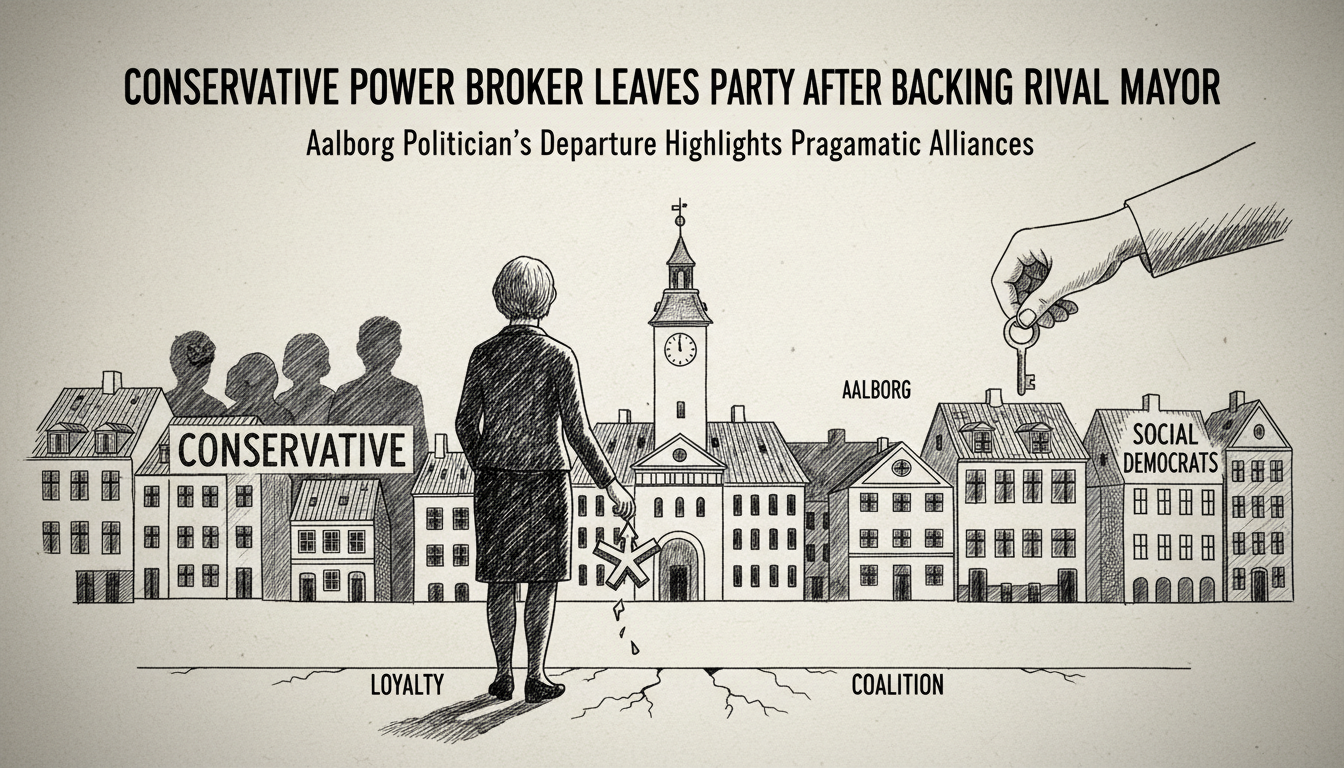
A prominent Conservative politician in Aalborg has left her party. Vibeke Gamst made the decision after facing potential expulsion. The move follows her pivotal role in a recent mayoral election. She crossed party lines to support a candidate from the Social Democrats. This action created a major rift within her local Conservative chapter.
The party had scheduled an extraordinary general meeting to discuss her membership. Officials planned to vote on her expulsion. That meeting has now been cancelled. Local party chairman Peter Brix confirmed the cancellation. Gamst stated that party leadership asked her to consider resigning. She chose to do so voluntarily. Her departure marks a significant local political realignment.
Gamst recently secured a position as councilor for Senior and Rehabilitation in the new municipal government. This appointment came after the mayoral vote she influenced. Her story highlights the complex nature of local Danish coalition politics. Municipalities often require cross-party agreements to form stable majorities. These deals can test party loyalty and create unexpected alliances.
This event speaks to broader themes in Danish society news. Local integration of political visions sometimes overrides strict party discipline. The Copenhagen integration model often discussed nationally plays out differently in regional hubs like Aalborg. Denmark social policy at the municipal level depends on such pragmatic collaborations. Councilors must balance party mandates with local needs and coalition agreements.
Political analysts note this is not an isolated case. Similar tensions occur when Danish welfare system priorities require bipartisan support. Mayors in Denmark often rely on votes from outside their own party bloc. This is especially true in municipalities with fragmented political landscapes. The Danish system encourages negotiation but can punish those who negotiate too freely.
What does this mean for governance? The new councilor will now work for an administration led by a party she does not formally belong to. This tests the traditional boundaries of Danish immigration policy debates and other council work. Her effectiveness may depend on personal relationships rather than party machinery. It also shows that individual political actors can still shift local power dynamics in an era of often rigid national party lines.
The situation raises questions about political identity and pragmatism. Should local representatives follow national party directives or local coalition logic? There is no simple answer in the Danish consensus model. This case will be studied by those interested in Copenhagen integration challenges and municipal politics. The outcome may influence how other municipalities handle internal dissent during coalition talks.
For international observers, this story reveals the fluid nature of Danish local government. The Danish welfare system's implementation often hinges on such behind-the-scenes negotiations. While national politics captures headlines, municipal decisions directly affect services for seniors, integration programs, and community rehabilitation. Gamst's move, while personal, reflects the ongoing recalibration of political alliances necessary to manage these complex responsibilities.