
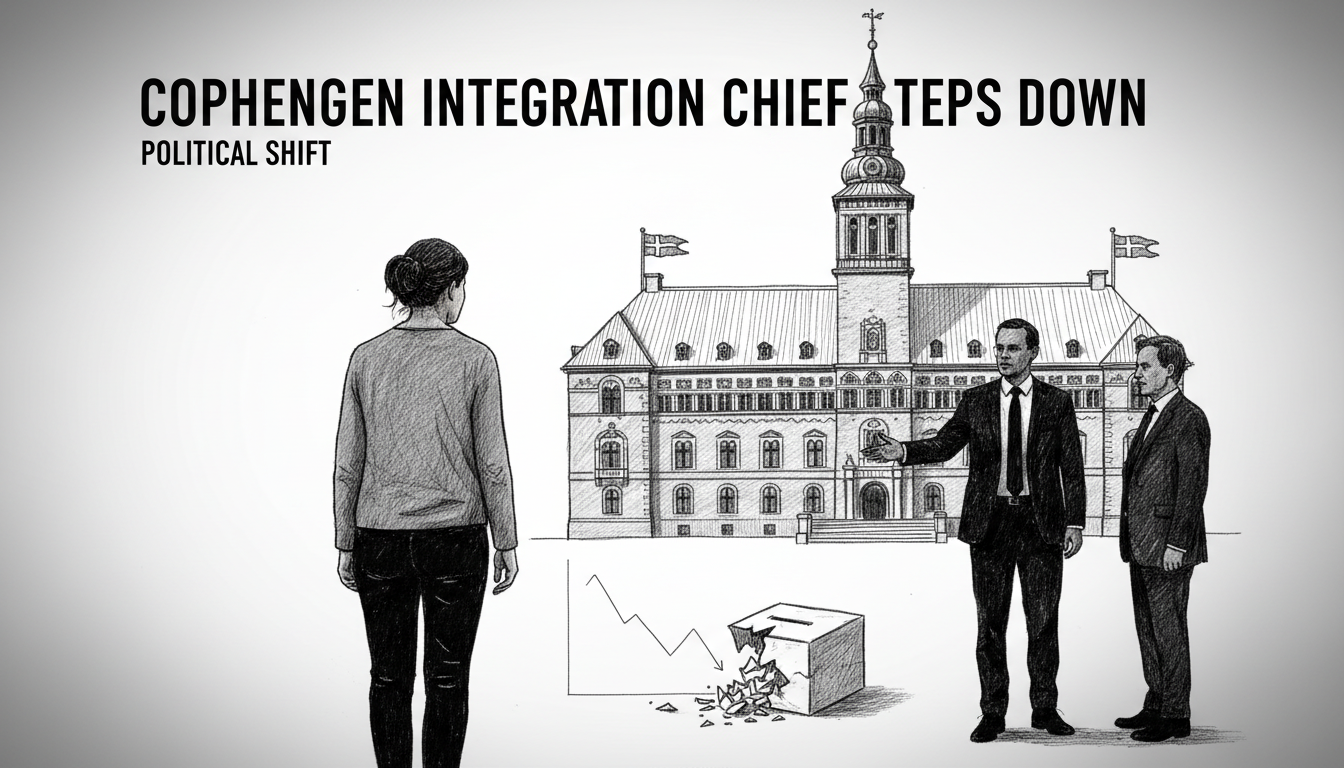
Pernille Rosenkrantz-Theil has officially left Copenhagen's city council. The Social Democrat politician received permission to resign from her elected position. She was set to become the city's employment, integration, and business mayor in the new year. Instead, she cited personal reasons for her departure. The council voted fifty in favor, two against, with one abstention. Her exit marks another setback for Denmark's ruling party in the capital. This development raises questions about political accountability and the future of integration policy in Copenhagen.
Rosenkrantz-Theil's resignation follows a disappointing municipal election for the Social Democrats. The party received only 12.7 percent of the vote in Copenhagen. This represents a decline of 4.5 percentage points. Both the Red-Green Alliance and the Socialist People's Party became larger than the Social Democrats in the city. The party that has held the mayor's office in Copenhagen for over a century was not even invited to coalition negotiations. This political shift reflects changing urban voter priorities across Nordic capitals.
The resignation process itself sparked debate about political responsibility. Council member Ole Birk Olesen voted against the resignation. He argued it betrayed voters who supported her. Rosenkrantz-Theil received the third-highest number of personal votes in the election. She initially stated she would take her council seat despite losing the mayoral race. Days later, she announced her complete exit from politics. She first blamed the party's poor election results, then changed her explanation to personal reasons. This sequence created confusion about her true motivations.
Andreas Keil will now assume the important mayoral portfolio Rosenkrantz-Theil vacated. He won an internal party election against four colleagues. Keil recently met with Prime Minister Mette Frederiksen. The national party leader faces pressure after poor local election results across Denmark. The Social Democrats declined in 87 of 98 municipalities. This Copenhagen leadership change occurs during a challenging period for the party nationwide. The meeting between Keil and Frederiksen was noted on the Prime Minister's social media.
This political transition has direct implications for Copenhagen integration policy. The integration mayor oversees critical social services and community programs. These programs affect thousands of residents in neighborhoods across the city. Municipal integration efforts in Denmark often focus on language education, job training, and community building. Copenhagen has developed specific initiatives through its social centers and district councils. A change in leadership can shift priorities and funding for these vital services.
Denmark's welfare system relies heavily on municipal implementation. Local governments manage schools, employment services, and social support. The integration portfolio sits at this crucial intersection. Effective policy requires coordination between national immigration rules and local social policy. Copenhagen's approach often serves as a model for other Danish cities. The new mayor will inherit ongoing challenges related to housing, education access, and labor market inclusion for diverse communities.
Political observers note this reflects broader trends in Danish society. Urban voters increasingly support left-wing parties over traditional social democracy. The Social Democrats' historic strength in working-class districts has eroded. Meanwhile, debates about immigration policy and welfare sustainability continue. Copenhagen's experience shows how local politics intersect with national debates. The city's demographic changes and economic growth create unique policy demands. Integration remains a central issue for municipal governments across Denmark.
The council now has fifty-five seats, with eight held by Social Democrats. This is a reduction of two seats from the previous term. The party must rebuild trust with Copenhagen voters. The new integration mayor faces the immediate task of stabilizing the department. Community leaders will watch for continuity in existing programs. Many integration initiatives operate on multi-year grants and partnerships. Political instability can disrupt these carefully built networks. The coming months will test the Social Democrats' ability to govern effectively from a weakened position.