
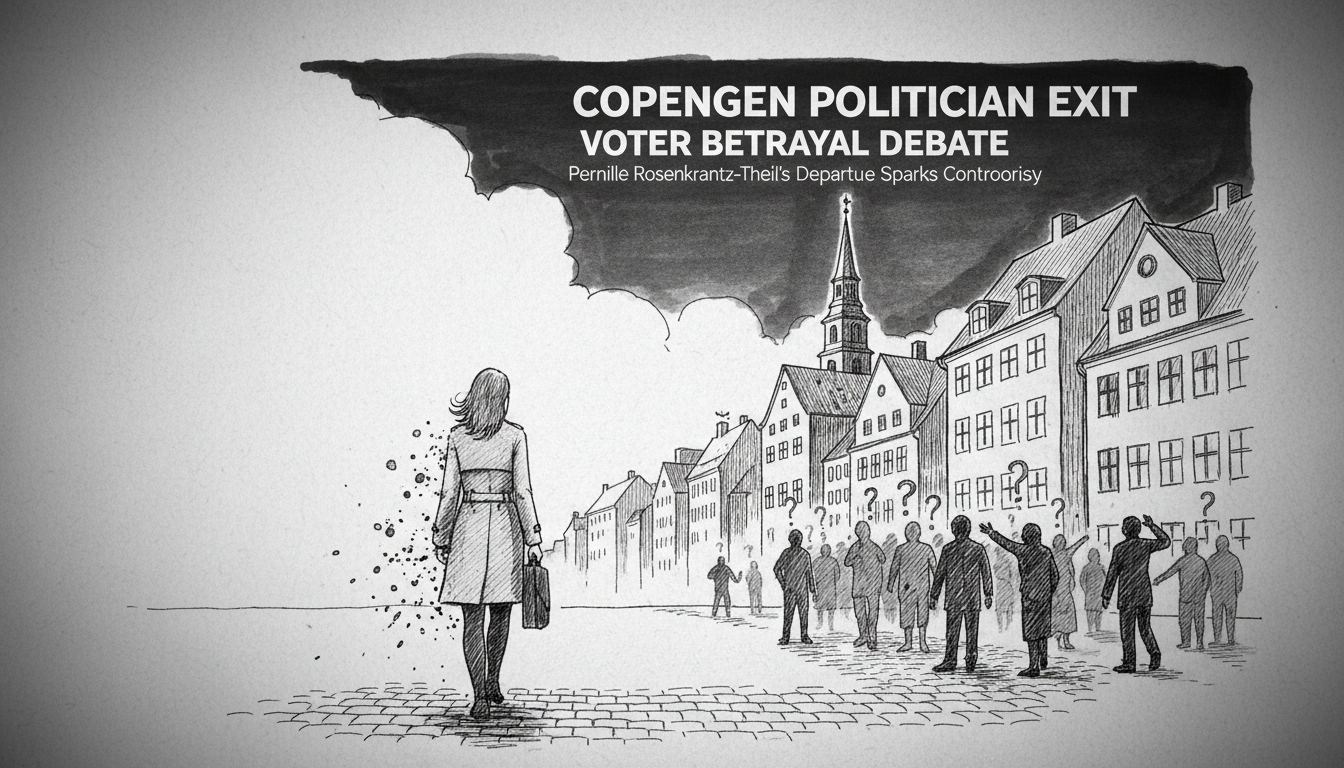
A prominent Copenhagen politician has formally left her elected post just weeks after voters went to the polls. Pernille Rosenkrantz-Theil, who was the Social Democrats' candidate for Lord Mayor, received official approval to exit the Copenhagen City Council. Her departure was approved by a vote of 50 to two, with one abstention. This move has ignited a fierce debate about political accountability and the social contract between elected officials and the citizens who vote for them.
Rosenkrantz-Theil was set to become the city's Employment, Integration, and Business Mayor starting in the new year. She cited 'personal reasons' for her sudden exit, a justification that Danish municipal law typically accepts for such withdrawals. The decision follows a disappointing election night for her party in the capital. The Social Democrats saw their support drop to 12.7 percent in Copenhagen, a decline of 4.5 percentage points. This result left the party, which has held the mayor's office for over a century, excluded from coalition negotiations entirely.
Critics argue the exit represents a betrayal of voter trust. 'It is a betrayal of the voters who voted for her. She did, after all, receive the third-highest number of personal votes,' said council member Ole Birk Olesen before the vote. He was one of the two who voted against her request. This sentiment touches a nerve in Danish society, where the welfare system and social policy rely heavily on public trust in institutions and elected representatives. When politicians step down shortly after an election, it can erode that foundational trust, particularly in communities already skeptical of the political process.
The implications for Copenhagen integration policy are now uncertain. The portfolio Rosenkrantz-Theil was to lead is critical in a city where integration challenges are a constant focus of social policy. Her replacement, Andreas Keil, won an internal party contest and has already met with the national Prime Minister. The leadership change at such a key moment raises questions about continuity in addressing complex issues like employment for newcomers and business development in diverse neighborhoods. Social centers and municipal services depend on stable political leadership for long-term planning.
This event is not isolated. It reflects a broader trend of political volatility following local elections across Denmark. The Social Democrats experienced decline in 87 of the country's 98 municipalities. The party's struggle in urban centers like Copenhagen points to shifting voter allegiances and a demand for new approaches to Denmark immigration policy and urban welfare. For international observers, the episode offers a clear view into the mechanics of Danish local governance, where even high-profile figures can exit swiftly, leaving voters and policy agendas in flux. The council now moves forward with eight Social Democrat seats, a reduction of two, in a 55-seat chamber. The real test will be whether the new leadership can restore confidence and deliver on the promises made during the campaign.