
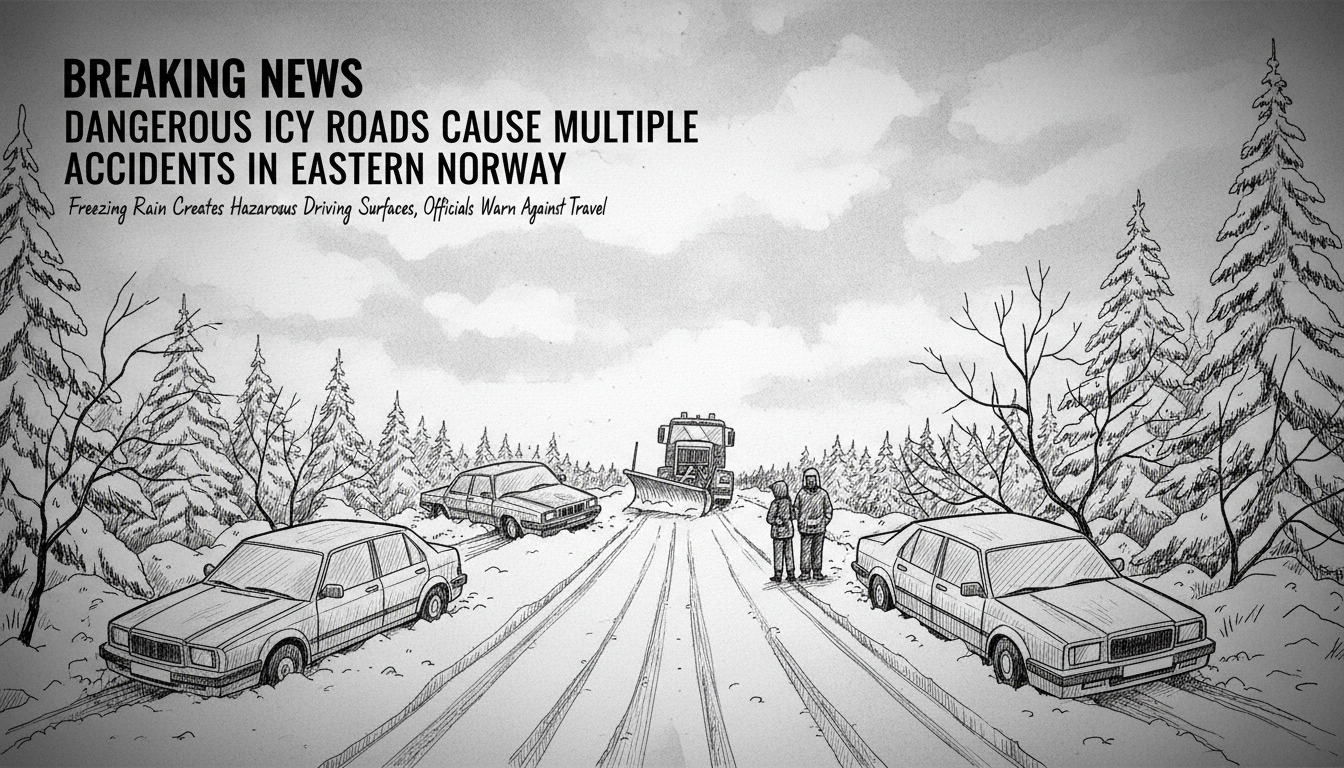
Eastern Norway faces dangerous driving conditions as multiple vehicles slide off roads. Traffic accidents increased significantly on Saturday evening. Many cars now sit stranded along major highways. The situation remains critical in several areas.
Road conditions deteriorated rapidly across the region. Traffic officials report particularly hazardous situations in Elverum, Hamar, and areas north of Hamar and Gjøvik. These locations experienced freezing rain that created invisible ice layers on road surfaces.
A traffic operations supervisor described the challenging conditions around midnight. She noted that vehicles are sliding slowly but steadily off roads and ending up in ditches. Several major routes including Highway 3 and Highway 2 saw multiple vehicles stopping along roadside shoulders. Drivers are waiting for salt spreader trucks to improve conditions.
Officials strongly advise against unnecessary travel. They emphasize this is not the night to drive with half a tank of either fuel or electricity. The recommendation includes keeping a full fuel tank and carrying warm clothing in vehicles for emergency situations.
Eastern Norway frequently experiences such hazardous winter conditions during transitional weather periods. The region's topography and climate create perfect conditions for freezing rain when warmer precipitation falls onto frozen ground. This phenomenon, known as glazed frost, creates nearly invisible ice layers that surprise even experienced drivers.
Norwegian road maintenance follows strict winter protocols, but sudden weather changes can outpace treatment efforts. The country invests heavily in winter road maintenance with specialized equipment and trained personnel. Still, nature sometimes moves faster than human response capabilities.
International drivers and newcomers to Norway should understand that winter driving here requires special preparation. Vehicles need proper winter tires with adequate tread depth. Drivers should carry emergency supplies including blankets, food, and warning triangles. The Norwegian Public Roads Administration provides real-time road condition updates through multiple channels.
What makes this situation particularly challenging? The combination of freezing rain and existing cold road surfaces creates black ice that's nearly impossible to see. Drivers often don't realize the danger until they lose control. This explains why even local drivers with winter experience are struggling.
The current situation demonstrates why Norwegian authorities take such a cautious approach to winter travel advisories. When officials recommend staying home, they base this on real-time data from multiple monitoring stations across the region. Their conservative approach has proven effective in preventing more serious accidents during similar weather events in previous winters.