
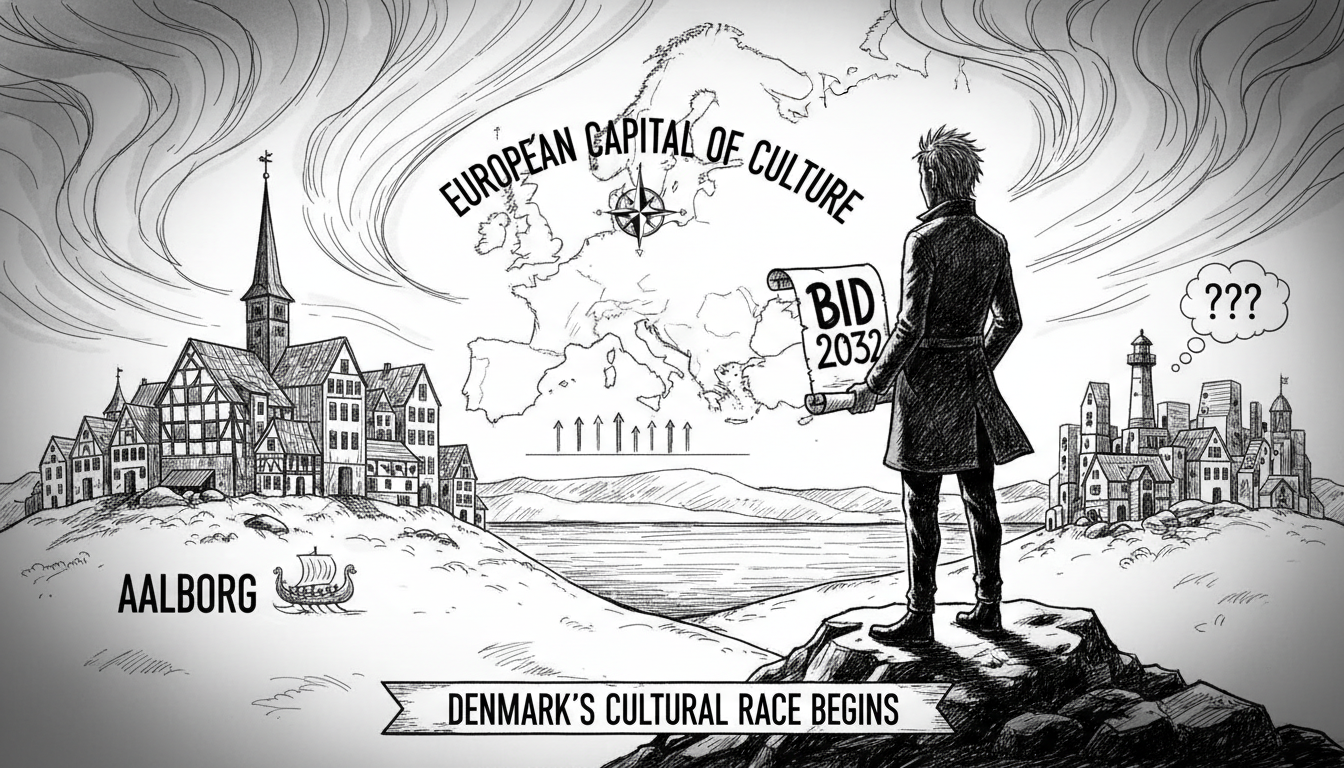
Danish cities can now officially apply for the prestigious title of European Capital of Culture. The Danish Ministry of Culture announced the opening of the national application process. The title will be awarded to a Danish city for the year 2032, with Bulgaria serving as the co-host nation that same year. This marks Denmark's third opportunity to host the event, following Aarhus in 2017 and Copenhagen in 1996.
Culture Minister Jakob Engel-Schmidt expressed his hope to see surprising candidates among the applications. He stated the title puts a city and its entire cultural life on the world map. While larger cities often win in many countries, he noted the beauty of showcasing Denmark's villages, island communities, or something entirely different to the world. The selection process is lengthy and rigorous. Cities must first submit a detailed application to a jury of twelve experts. Two jurors are appointed nationally, while ten are appointed by EU institutions.
After the application deadline, candidate cities will be invited to a preliminary selection where they present their vision. The Ministry of Culture will designate the winning Danish city based on the jury's recommendations by the end of 2027. The process underscores a significant national cultural strategy. It is not just about a year of events but a long-term investment in a city's identity and infrastructure. For the winning municipality, it means a decade of planning and development, with impacts lasting for generations.
Aalborg Municipality has already declared its candidacy. Mayor Lasse Frimand Jensen said if Aalborg becomes the Capital of Culture, it is something citizens and visitors will truly feel. He believes it would be remembered for generations. This early announcement signals the high stakes for local governments. The title brings substantial EU and national funding, increased tourism, and global attention. It also demands a coherent cultural program that engages the entire community and leaves a lasting legacy.
From my perspective covering Danish society, this competition reveals deeper currents in national cultural policy. It is a deliberate tool for regional development outside the capital region. The minister's call for surprising candidates is a direct challenge to the usual urban centers. It invites smaller communities to articulate their unique cultural narratives. This aligns with broader Danish social policy goals of decentralizing opportunity and strengthening local identity. The integration of diverse communities into a shared cultural project will be a critical measure of success for any bid.
Past hosts like Aarhus demonstrated how the title can transform a city's international profile and internal cohesion. The process forces municipalities to collaborate with local cultural institutions, social centers, and citizens. It requires a tangible plan for inclusion. For international readers, this is more than a cultural contest. It is a window into how Danish welfare and integration policies are often enacted at the municipal level through projects like this. The winning city's program will likely reflect current national dialogues on identity, community, and Denmark's place in Europe. The real work begins now, as cities across Denmark must build a vision ambitious enough to win and meaningful enough to sustain.