
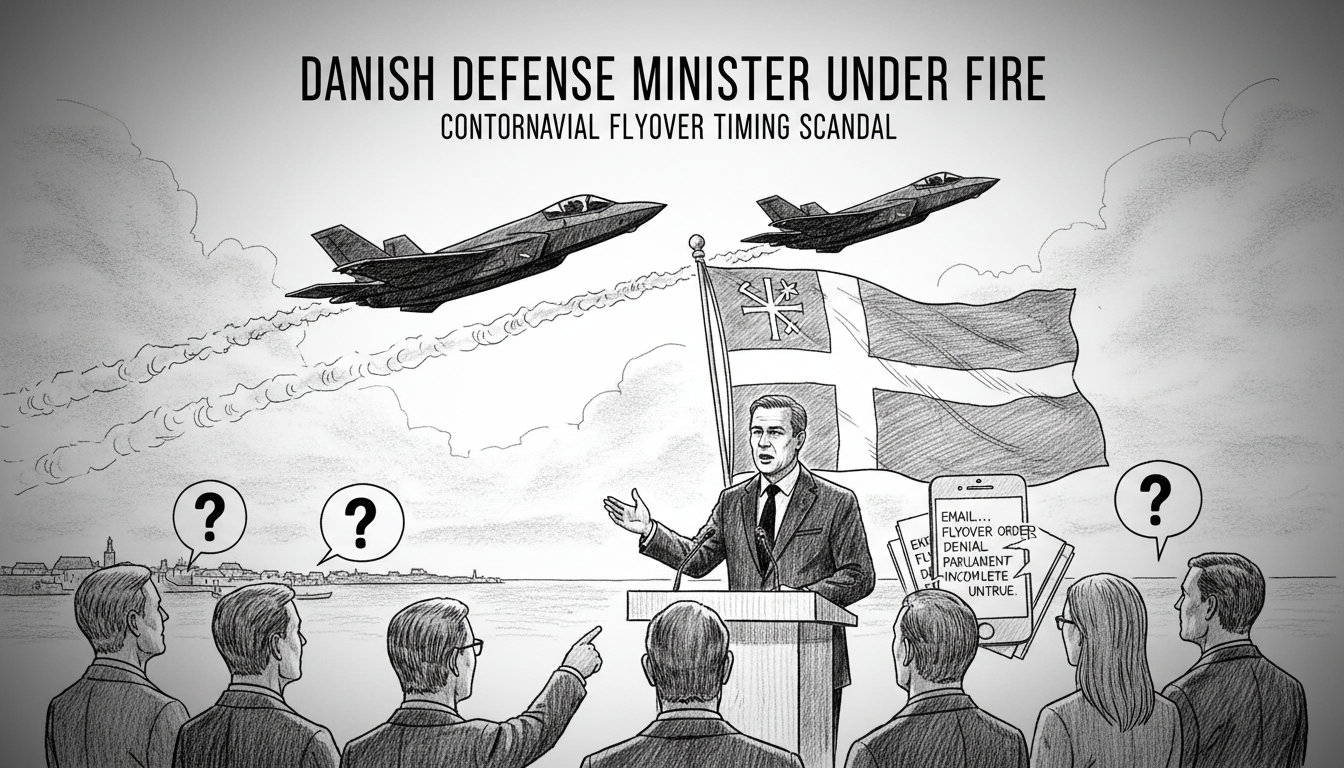
A political storm is gathering over Denmark's defense minister. Troels Lund Poulsen faces accusations of orchestrating a military flyover for personal political gain. The controversy centers on the timing of F-35 fighter jets over a major public political festival. Critics say the jets roared overhead precisely during the minister's own debate segment. Internal documents appear to contradict the minister's public denials. This situation raises serious questions about the use of state military assets. It also tests public trust in ministerial accountability within the Danish welfare system.
The incident occurred during the annual Folkemødet political festival on Bornholm. This event is a cornerstone of Danish democratic engagement. It brings politicians and citizens together for open debate. Witnesses described a dramatic scene as the jets passed over the main stage. The timing coincided with the minister's scheduled appearance. Public broadcasters captured the moment, noting the apparent coordination. The minister's political opponents were quick to question the coincidence. They demanded a full explanation in a parliamentary defense committee hearing.
A key piece of evidence is an internal email from early June. It was sent from the Defense Command to the Air Command and ministerial advisors. The email states the defense minister's office specified a preference. It requested the F-35 flyover occur during the minister's event window. The stated goal was so the minister could discuss the aircraft. The email explicitly asks if the jet's noise would be audible on the ground. This document directly challenges the minister's repeated claims of non-involvement. In the hearing, Poulsen steadfastly denied ordering the flyover. He maintained he had no prior knowledge of the specific timing.
Opposition politicians remain deeply unsatisfied. Franciska Rosenkilde from the Alternative party was blunt in her assessment. She said the information provided was, at best, incomplete and, at worst, untrue. She stressed the seriousness of the matter when it involves a minister. Dennis Flydtkjær from the Denmark Democrats echoed this sentiment. Both politicians confirm they will pursue the matter further in the defense committee. They argue the explanations given lack credibility. The perception of using military power for political theater damages institutional trust. This is a sensitive issue in a nation proud of its transparent governance.
This controversy touches a nerve in Danish society. It intersects with ongoing debates about political integrity and the use of public resources. The Danish model relies heavily on trust in its institutions and officials. Incidents that suggest personal political maneuvering with state assets undermine that trust. For international observers, it highlights the high standards of accountability expected in Nordic politics. The fallout may influence public opinion ahead of future policy debates, including those on broader Denmark immigration policy and national security. The committee's next steps will be closely watched. The core question remains whether a minister can separate official military acts from personal political opportunity.
From my perspective covering Copenhagen integration and social policy, this story is about more than jets. It is about the integrity of public communication. When ministers face credible evidence contradicting their statements, the social contract weakens. Danish social policy is built on a foundation of reliable information flowing between the state and its citizens. This case tests that foundation. The resolution will signal how the system handles potential conflicts between political ambition and ministerial responsibility. It is a reminder that in a healthy democracy, the mechanisms of scrutiny must function without fear or favor.