
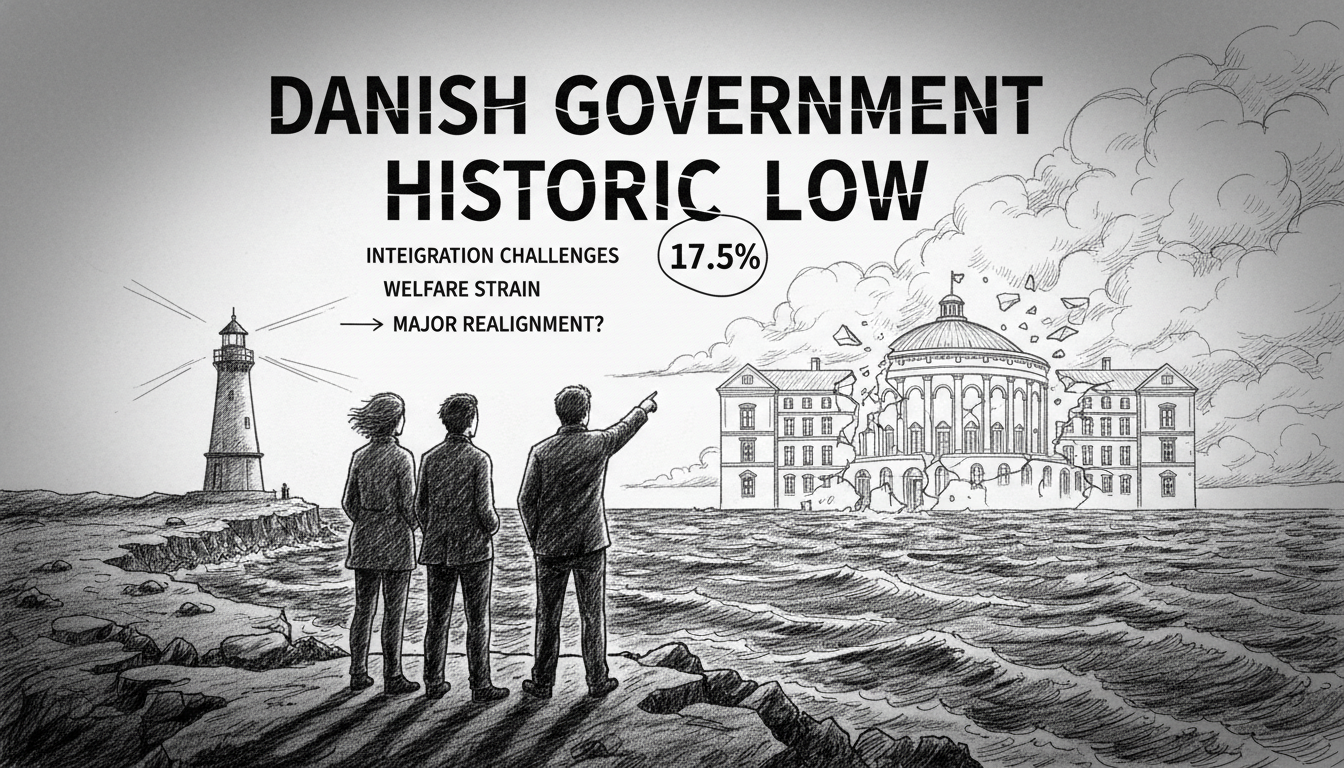
Denmark's ruling Social Democrats confront a dramatic decline in public backing. Recent polling shows only 17.5 percent of Danes would currently vote for the party. This marks the lowest single measurement during Prime Minister Mette Frederiksen's leadership. The numbers reveal deepening challenges for Danish society news and Copenhagen integration policies.
The party previously recorded similar weak results earlier this year. Current support levels match those last seen over a decade ago under different leadership. Compared to just months ago, the Social Democrats have lost nearly one-fifth of their backing. This follows disastrous local election results where the party achieved its worst performance in half a century.
Danish welfare system reforms face increasing scrutiny as public confidence wanes. Denmark social policy experts point to multiple factors behind the decline. Integration challenges in urban centers like Copenhagen create complex pressures. Community leaders note growing dissatisfaction with both immigration policy and domestic social programs.
Municipal social centers report strained resources amid changing demographic patterns. Local officials observe that traditional support bases feel increasingly disconnected. One Copenhagen integration coordinator described the situation as a wake-up call for all political parties. The coordinator said in an interview that communities want practical solutions rather than political rhetoric.
Denmark immigration policy remains a central debate topic across the political spectrum. The current government's approach has drawn criticism from both left and right. Some analysts suggest the polling reflects broader European trends rather than purely local issues. Other Nordic countries face similar challenges balancing social welfare with changing populations.
What does this mean for Denmark's political future? The declining numbers could signal a major realignment in Danish politics. Coalition governments may become more complex to form and maintain. Voters appear to be reevaluating their traditional loyalties amid contemporary challenges.
The government now faces the difficult task of rebuilding trust while managing national priorities. Denmark's renowned social model undergoes constant testing in today's global context. How political leaders respond to these polling numbers will shape the country's direction for years to come.