
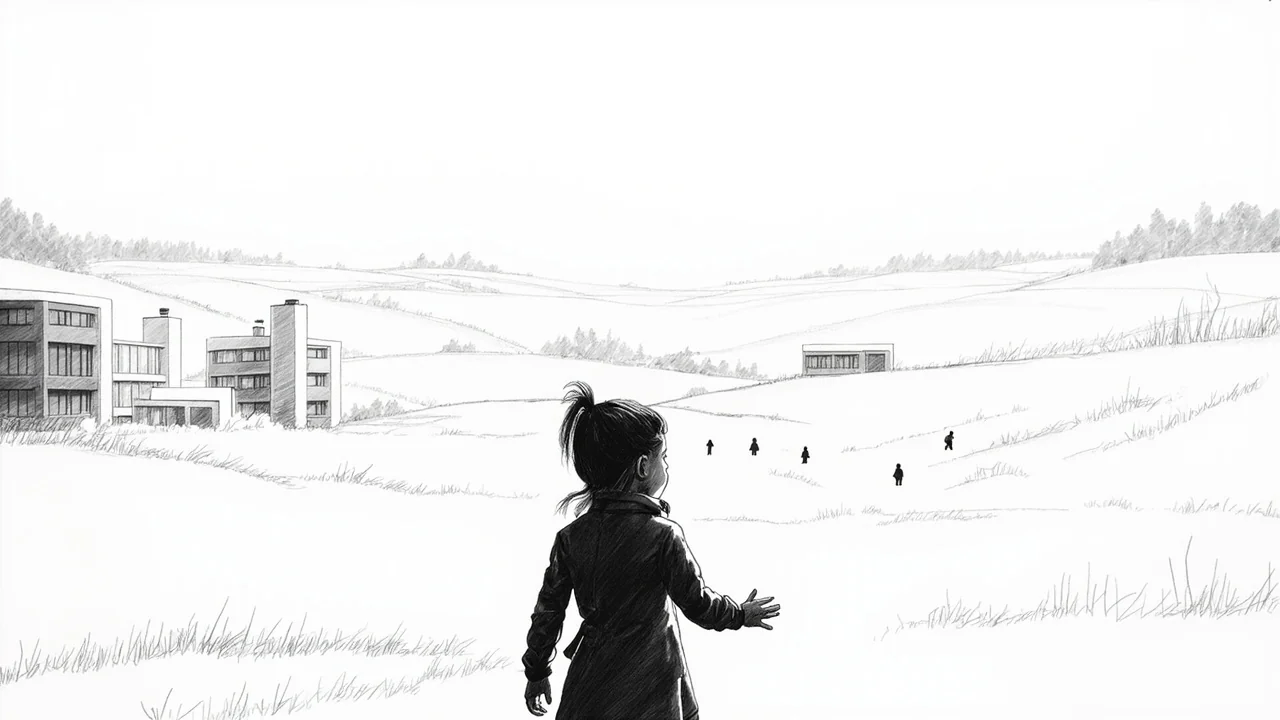
Eleven-year-old Isabella Eziddin Hansen can only attend school two to three days per week, for just 45 minutes at a time. Two years after a playground accident left her with a concussion, she still suffers from headaches, light sensitivity, and fatigue that forces her to retreat to dark, quiet rooms. Source: Danish Ministry of Health.
Her family's desperate search for help exposes a glaring gap in Denmark's otherwise thorough healthcare system. Despite contacting multiple public institutions, they've been repeatedly turned away due to Isabella's age or because her condition doesn't fit neatly into existing treatment categories.
System fragments leave families stranded
The Eziddin Hansen family's experience reveals how Denmark's healthcare bureaucracy fails its youngest patients. They contacted Aarhus Kommune's concussion coordinator but were rejected because Isabella is under 15. The municipal brain injury coordinator said concussions don't qualify as brain injuries. Hammel Neurocenter and Aarhus Universitetshospital both lack pediatric concussion programs.
"We land again and again somewhere where Isabella is either too young or has the wrong condition to get public help," says her mother, Wikki Lund Hansen, who quit her job to care for Isabella full-time.
This fragmentation affects thousands of Danish children annually. According to Dansk Center for Hjernerystelse, approximately 17,000 children suffer concussions each year, with 15 percent developing long-term symptoms requiring treatment. That's 2,500 children who need specialized care that often doesn't exist.
"Families encounter a fragmented system with no clear pathways," explains Hana Malá Rytter, research director at Dansk Center for Hjernerystelse. "Both children and parents spend enormous energy just navigating the system."
Myths about child recovery persist
The healthcare system's failures stem partly from outdated beliefs about pediatric brain injuries. Many medical professionals still assume children recover faster from concussions than adults, despite growing evidence to the contrary.
"It's a myth that children recover quickly or that their development somehow absorbs the damage," says Frank Humle, director of Center for Hjerneskade. This misconception leaves children like Isabella without appropriate care pathways.
Research shows that childhood brain injuries, including concussions, can affect educational attainment well into adulthood. Yet Danish hospitals routinely dismiss pediatric cases or refer families to expensive private clinics charging 1,400 kroner per consultation.
Aarhus Kommune officials now acknowledge the system's inadequacy. Rådmand Metin Lindved Aydin admits: "It's deeply unsatisfactory for this family. We must offer rehabilitation to adults, youth, and children affected by long-term symptoms."
Political response comes too late
Aarhus Kommune allocated two million kroner in its latest budget to improve concussion care starting in 2027, but officials are only now considering whether these funds can help children. The timeline offers little comfort to families struggling today.
The broader implications extend beyond individual cases. Sports-related concussions are the leading cause of pediatric brain injuries, yet Denmark lacks systematic prevention or treatment protocols for young athletes.
Expect Folketinget hearings on pediatric concussion guidelines after summer recess, as more families like the Eziddin Hansens demand accountability from a system that promises universal care but delivers bureaucratic maze-running instead.
Read more: Two-Thirds of Danish Parents Financially Support Adult Child....
Read more: Five Sperm Whales Strand on Danish Coast as Rescue Proves Im....