
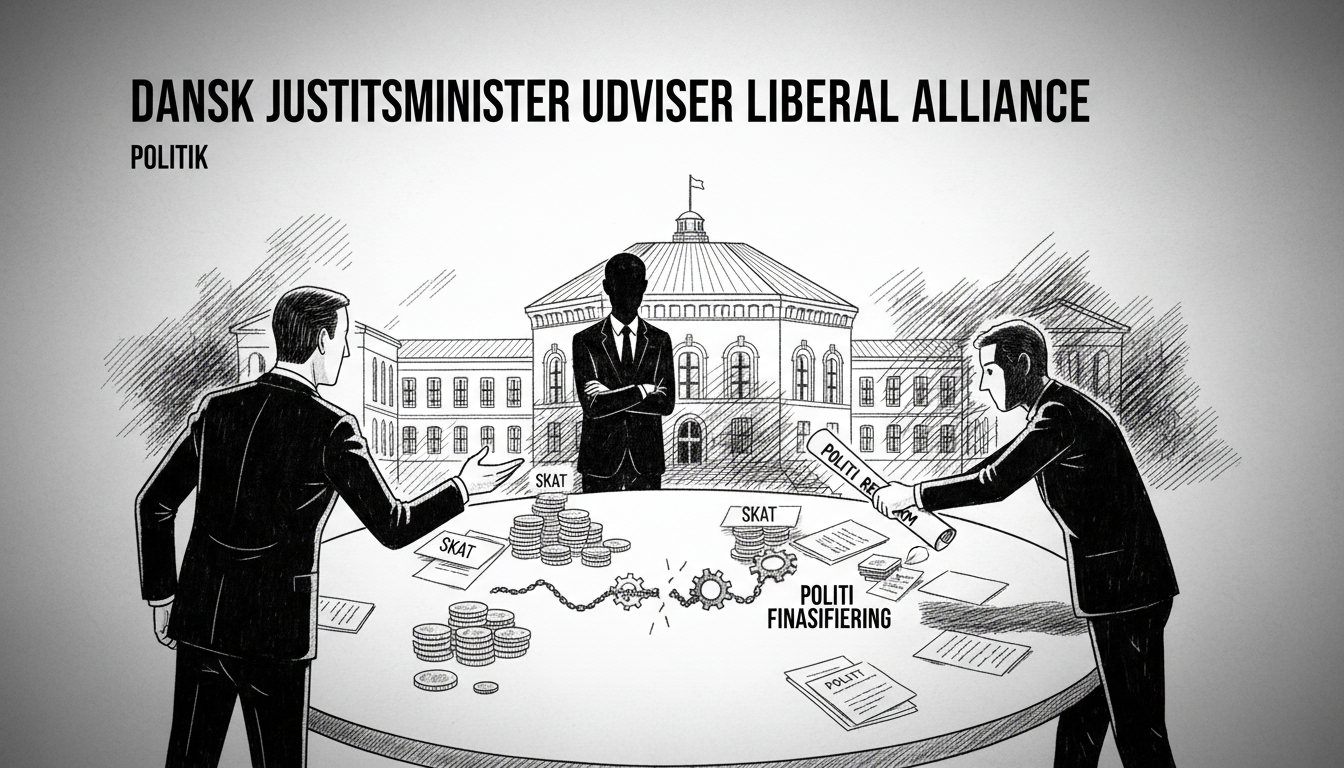
Danish Justice Minister Peter Hummelgaard has removed the Liberal Alliance party from negotiations on a new multi-year funding agreement for the police and prosecution service. The move follows a fundamental dispute over how to use the government's fiscal space. The government wants to allocate funds to strengthen law enforcement, while Liberal Alliance has publicly committed to using the same financial resources for tax cuts. This political clash has direct implications for Copenhagen's business climate and the broader Danish economy, as stable public institutions underpin investor confidence.
Hummelgaard stated the party's contradictory positions undermined trust. He said the government cannot allow a party to promise tax cuts one day and then negotiate to spend the same money on police the next. The negotiations aim to set the financial framework for the police for the coming years, with plans to increase budgets by 1.5 billion kroner by 2030. This funding is critical for modernizing police capabilities, including the adoption of new technologies like facial recognition, which Liberal Alliance has opposed. The minister argued he could not grant any party a veto over such technological tools for the next five years.
For international businesses operating in Copenhagen and the Øresund region, a well-funded and modern police force is a key component of operational security and stability. The political deadlock introduces uncertainty. Major Danish companies like Ørsted, Maersk, and Novo Nordisk rely on predictable regulatory and security environments. Disruptions in political consensus on core public services can ripple through the economy, affecting trade logistics and corporate planning in key business districts like Nordhavn and Carlsberg Byen.
Liberal Alliance's legal affairs spokesman, Steffen Larsen, called the government's move a sign of panic. He accused the ruling coalition of being a populist venture that is failing. This rhetoric signals deepening fractures within the Danish political landscape. The expulsion of a negotiation partner is a rare and severe step, indicating the government's priority is securing its police funding plan without compromise. The incident reflects a broader trend in Danish politics where budget surpluses and fiscal space become battlegrounds between social welfare investment and tax reduction agendas.
What happens next? The government will likely proceed with other parliamentary parties to secure the police funding deal. The exclusion of Liberal Alliance narrows the coalition's base but may streamline decision-making. For the business community, the outcome will signal the government's capacity to deliver on long-term institutional investments versus immediate fiscal relief. The stability of Denmark's renowned consensus model is being tested, with clear implications for economic policy and the investment landscape. The focus now shifts to whether the government can maintain its economic strategy while managing political dissent.