
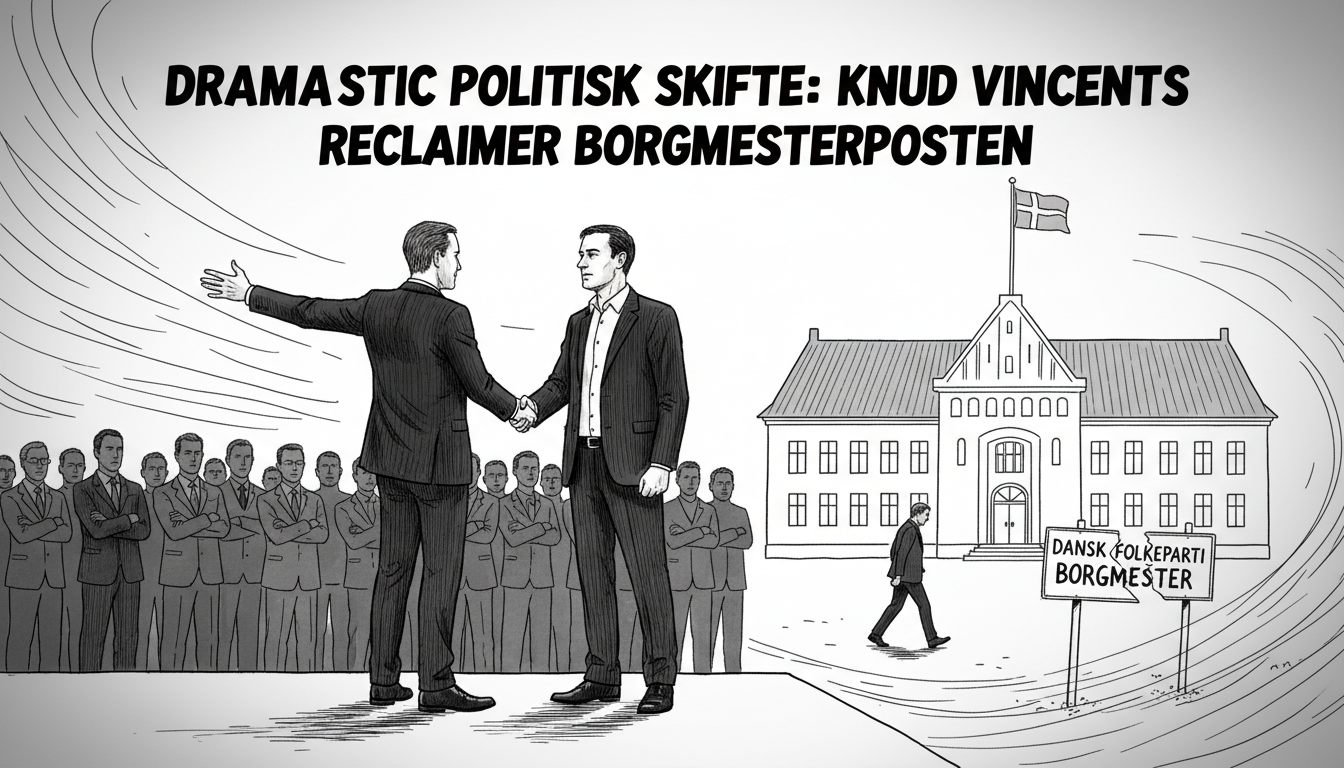
A dramatic political reversal has unfolded in the Danish municipality of Slagelse, where the sitting mayor has reclaimed his position just days before a final vote. Knud Vincents from the Venstre party will continue as mayor after securing a new and unusually broad coalition. This move overturns a previous agreement that would have installed Henrik Brodersen from the Danish People's Party as the town's leader. The shift highlights the fluid and often unpredictable nature of Danish municipal politics following local elections. For international observers, it offers a window into the pragmatic deal-making that characterizes Denmark's consensus-driven political culture, even at the local level.
The political saga began after local elections last month. Vincents initially appeared to have the support to continue, but that majority collapsed when the Socialist People's Party left the governing agreement. This created an opening for Brodersen, who secured a new coalition deal with Venstre's support. That deal would have made him the sole Danish People's Party mayor in the country following the recent elections. However, in what has been described as a last-minute rescue, Vincents and his Venstre colleagues abandoned that agreement. They forged a new, historically broad coalition with the Social Democrats, the Conservatives, Liberal Alliance, the Socialist People's Party, and the local Storebæltslisten party.
This new coalition commands 24 of the 31 seats on the Slagelse city council. Vincents described it as a historical agreement, noting it is the first time in the municipality that both Venstre and the Social Democrats have entered a governing coalition together. He stated the agreement contains political points for good dialogue and can help develop the municipality further. The two parties are the largest in the incoming council, each holding nine seats. The swift change occurred before the new council's constitutive meeting, where the mayor for the next term is formally elected. These meetings take place across Danish municipalities in early December, making this a period of intense political negotiation nationwide.
From an integration and social policy perspective, such local political stability matters. Mayors in Danish municipalities hold considerable power over the implementation of national policies, including those related to integration programs, education allocation, and social services. A sudden shift in leadership can disrupt long-term projects and community initiatives. The broad coalition backing Vincents suggests a potential for stable, centrist governance in Slagelse, which could benefit planning for local social centers and welfare services. This is often preferable to the uncertainty that can accompany narrow or fragile majorities.
The episode also reveals the tactical nature of Danish politics. Parties frequently engage in 'constitueringsaftaler' or formation agreements after elections. These are not legally binding until the formal council meeting, allowing for last-minute renegotiations, as seen here. For Henrik Brodersen, the news came via a phone call from Vincents on Thursday morning. He never got to wear the mayoral chains. The situation underscores a simple truth in politics: a deal is only final when the vote is cast. For residents of Slagelse, the outcome likely means continuity rather than a shift in political direction, with a mayor they already know at the helm for another four years.