
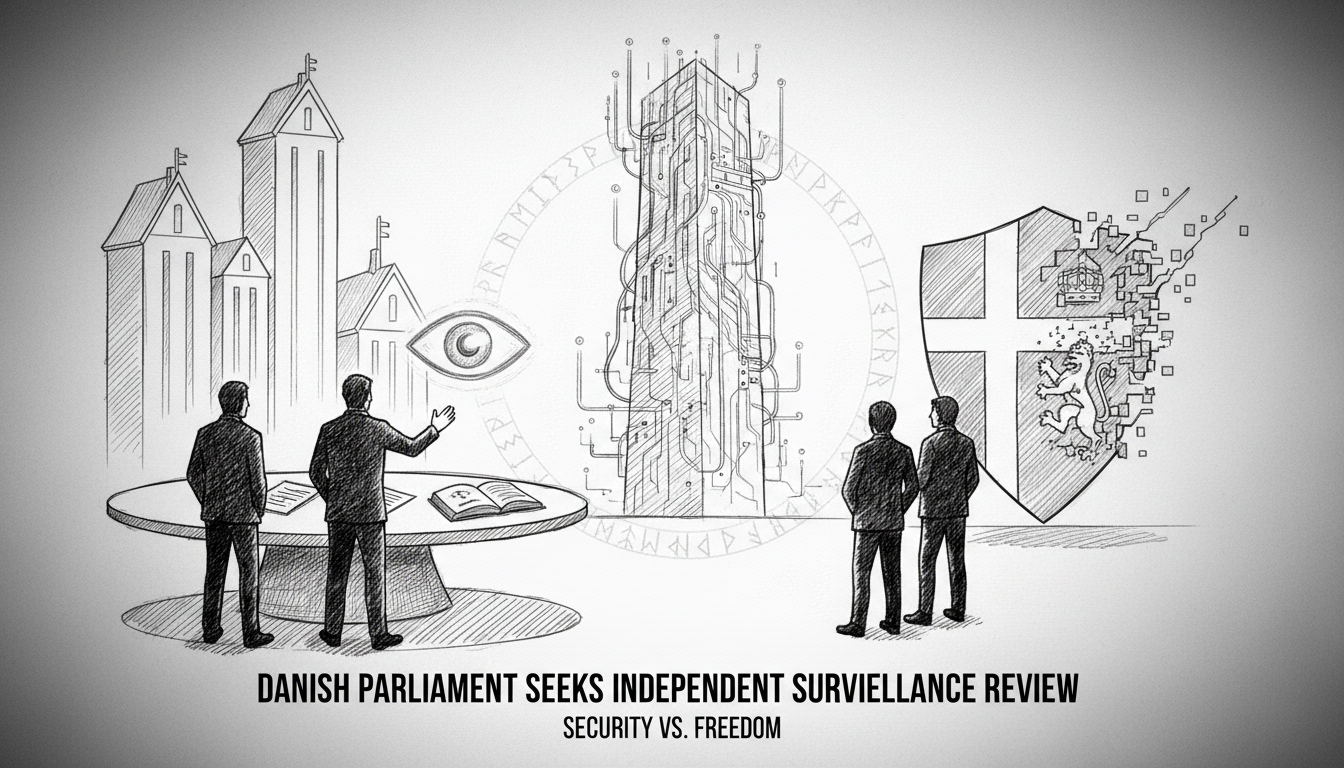
A broad political majority in the Danish parliament is pushing for an independent commission to scrutinize the state's expanding surveillance powers. This cross-party initiative aims to map the extent of surveillance on Danish citizens, responding to growing concerns over privacy erosion. The move follows the government's recent withdrawal of a controversial proposal that would have allowed tech giants to scan users' encrypted images and videos.
Helene Brydensholt, legal spokesperson for the Alternative party, co-proposed the commission. She described it as surveillance of the surveillance itself. There is a clear need for an overview of the interventions made in recent years, she said in a parliamentary debate. Her sentiment reflects widespread unease about legislative changes that have steadily increased monitoring capabilities.
The political landscape shows unusual alignment. Support comes from parties across the spectrum, including the Danish People's Party, the Social Liberals, the Conservatives, the Red-Green Alliance, and the Socialist People's Party. Independent MPs and the recently formed Citizens' Party also back the plan. This coalition represents 88 parliamentary mandates, surpassing the government's 85 domestic policy seats.
Recent legislative attempts have fueled this debate. A highly criticized PET law, now postponed, would have granted Denmark's intelligence service access to public registers, social media comments, websites, and media. Another dropped proposal from Justice Minister Peter Hummelgaard sought mandatory scanning of all digital communications for illegal child abuse material. Critics labeled it mass surveillance and a breach of fundamental freedoms.
Steffen Larsen, legal spokesperson for the Liberal Alliance, supports the commission despite backing some surveillance tools. The argument that you have nothing to hide does not hold, he stated. Everyone has something to hide. That is why we draw the curtains at night. If the state is always watching, that freedom disappears. His comment highlights the tension between security and liberty central to Danish social policy.
Betina Kastbjerg of the Denmark Democrats clarified her party's position. We are actually strong supporters of surveillance, including facial recognition, she noted. Yet they support the commission to provide citizens with security that an independent body is checking for privacy violations. This stance shows even surveillance advocates recognize the need for oversight in Denmark's welfare system.
The government's response has been measured. Justice Minister Peter Hummelgaard stated he is not fundamentally opposed to a commission but insists experts should not dictate political decisions. The government acknowledges that balancing privacy with crime prevention is an important discussion, he said. He prefers linking the commission discussion to debates on the postponed PET law.
This development reflects deeper currents in Danish society. Denmark has traditionally valued both a strong, trusting welfare state and robust personal privacy. The expansion of digital surveillance tools challenges that balance. For Copenhagen's diverse communities and new residents, the implications are particularly acute. Perceptions of overreach could damage the social trust essential for successful integration.
Historical context matters here. Nordic countries have generally maintained stricter data protection standards than many peers. The current debate tests whether Denmark will follow other nations toward broader surveillance or chart a more restrained course. The commission's potential findings could influence not just law but the fundamental relationship between citizen and state in one of the world's most digitized societies.
What happens next depends on parliamentary negotiations. The government could technically oppose the move by using mandates from the North Atlantic territories, but that would be politically contentious. The broad support suggests a commission is likely, marking a significant moment of legislative reflection on a defining issue of modern governance.