
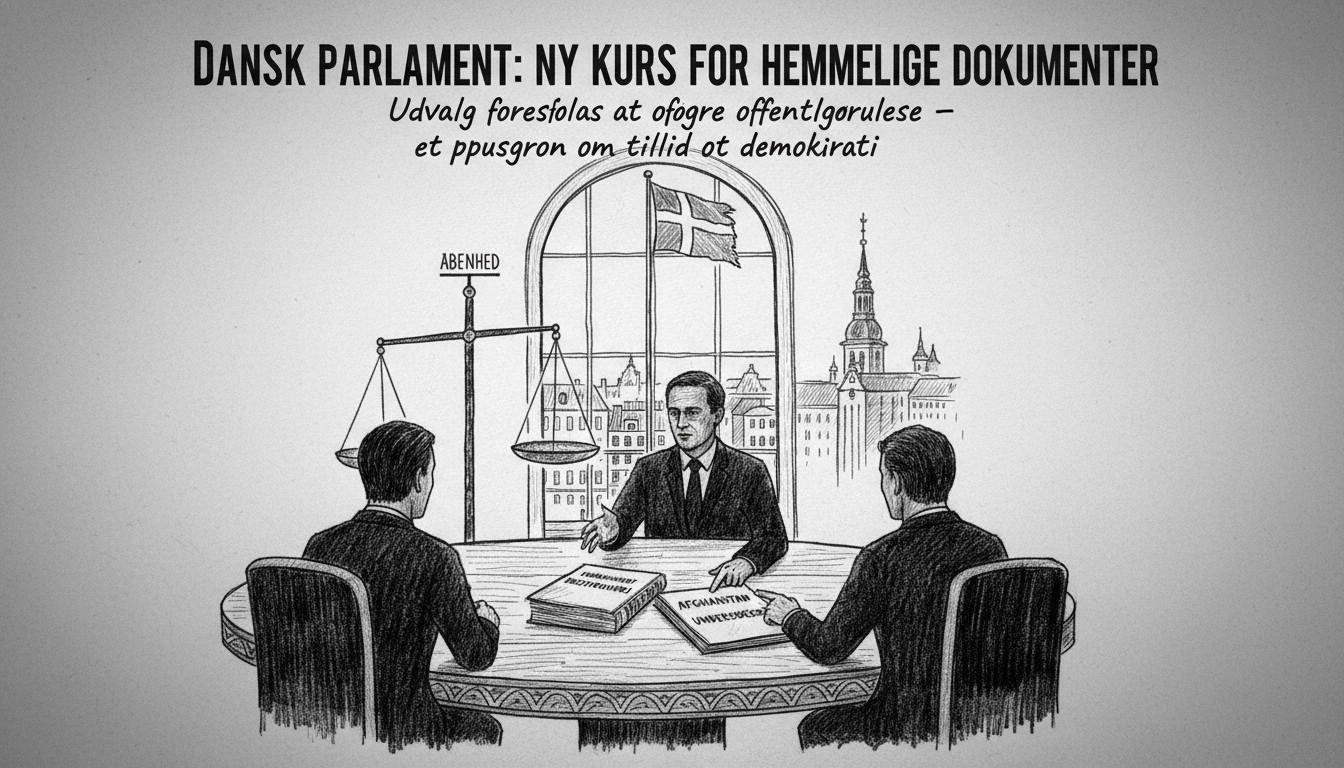
The Speaker of the Danish Parliament, Søren Gade, has broken his silence on a sensitive procedural matter. He is now open to changing how confidential documents are published in official inquiries. The current system gives the Parliament's Presidium, which he leads, the final say. Gade suggests a different approach might be more appropriate. He wants the relevant parliamentary committee to decide what becomes public within the law's framework. This shift could increase transparency in politically delicate investigations. The discussion centers on the inquiry into Denmark's Afghanistan mission. Gade outlined his position in a written correspondence with a major newspaper. He stated he would take steps for the Presidium to discuss the matter. The core question is who should control the release of sensitive state documents. This debate touches the heart of Danish democratic oversight and public accountability.
For international observers, this is a nuanced but vital aspect of Danish society news. Denmark's political system is built on consensus and robust committee work. The Folketing's committees are where detailed policy scrutiny happens. Transferring publication authority to them aligns with this tradition. It suggests a trust in specialized politicians over a centralized leadership group. This move could be seen as decentralizing a key power. It reflects ongoing conversations about transparency in the Nordic welfare model. The Danish welfare system relies on public trust in institutions. Handling state secrets is a direct test of that trust.
This proposal has clear implications for Copenhagen integration and broader Denmark immigration policy. Past foreign policy decisions, like those in Afghanistan, directly affect integration communities. Many Afghan refugees and their families now live in Denmark. How the state accounts for its past actions influences their perception of Danish society. Transparent processes can build confidence in public institutions. Opaque ones can foster distrust. This is a tangible link between high-level parliamentary procedure and social cohesion on the ground. Community leaders in Copenhagen's Nørrebro or Aarhus often cite the need for governmental transparency. They argue it is foundational for successful integration.
From a Denmark social policy perspective, the machinery of government matters. How information flows from state to citizen shapes public debate. It influences how policies on education, employment, and welfare are evaluated. For instance, clear data on the outcomes of integration programs is crucial. If the process for releasing official documents is overly restrictive, it hinders analysis. Municipalities and social centers rely on accurate information to design local services. A more committee-driven process might lead to more nuanced disclosures. It could balance national security with the public's right to know. This is not just about one inquiry. It sets a precedent for future examinations of state action.
What does this mean in practice? The Presidium includes speakers from the largest political parties. Delegating to a committee, like the Foreign Policy Committee, changes the dynamic. Committee members develop deep expertise on specific topics. They might better judge what information is truly sensitive versus merely embarrassing. The risk is that committee decisions could become more politicized. The benefit is a process closer to the evidence. This debate occurs against a backdrop of global scrutiny over Western interventions. Denmark's approach will be watched by allies and critics alike. The Speaker's openness to change indicates a system capable of self-reflection. It is a small but significant signal about the health of Danish democracy. The next step is a formal discussion in the Presidium. Its outcome will reveal how much Danish politicians trust their own investigative processes.