
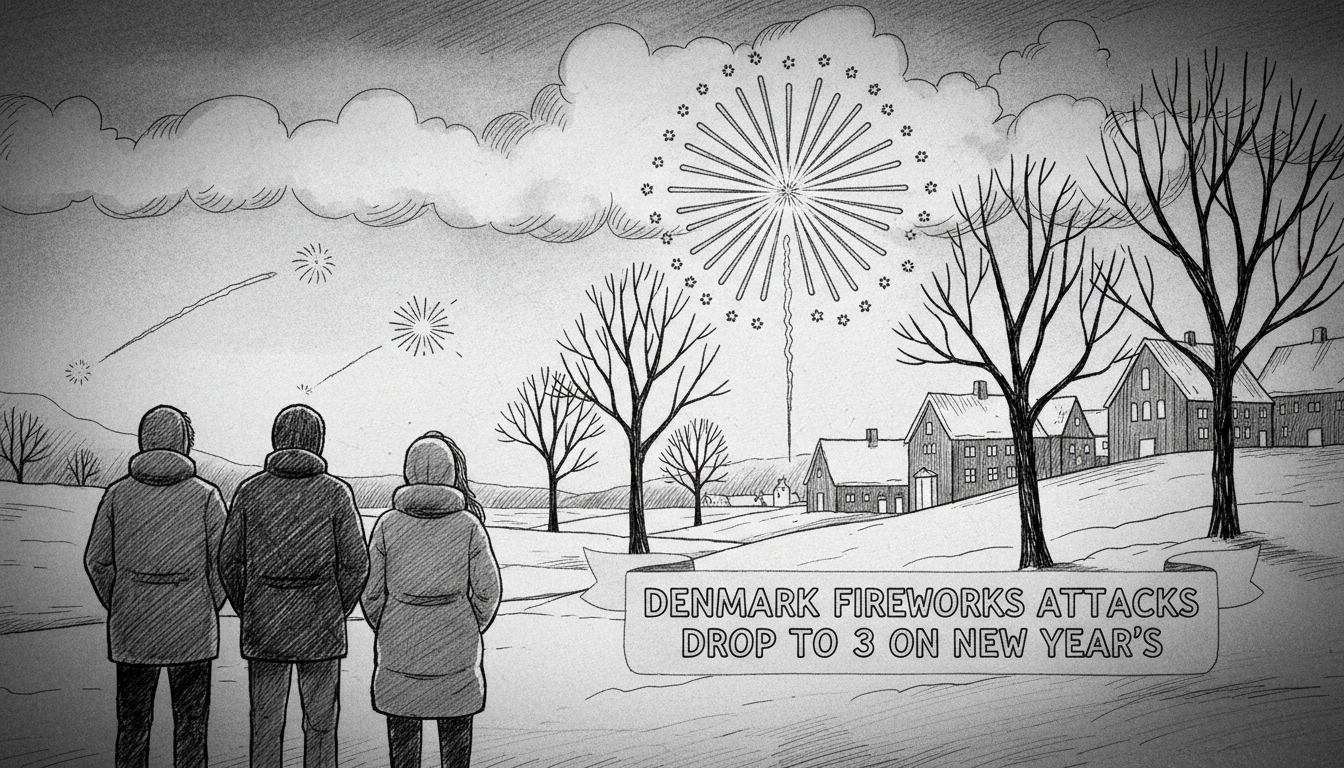
Denmark recorded three direct fireworks attacks against emergency responders this New Year's Eve. Firefighters and ambulance crews in Copenhagen and other cities faced rockets and firecrackers aimed at their vehicles and personnel. While authorities note this figure represents a decline from previous years, each attack represents a profound breach of safety for those tasked with public protection.
I watched the dispatches come in from the social command center in Copenhagen's Norrebro district. The tension among coordinators was palpable, a mix of professional focus and personal dread. 'Every call where crews report being targeted, our hearts sink,' said Lars Nielsen, a senior operations manager with the Copenhagen Fire Department. 'It shifts our mission from pure assistance to self-defense, and that delay can cost lives.'
A Dangerous Tradition Tested
The Danish New Year's tradition of fireworks is a spectacular, communal celebration. For emergency services, it is often the most demanding night of the year. This year, despite overall quieter celebrations in some areas, the targeted aggression persisted. One incident in Aarhus saw a fire engine's windshield cracked by a launched firework. In Copenhagen's Nordvest district, paramedics assessing a patient were forced to take cover as explosives detonated near their ambulance.
These are not random acts of revelry gone wrong. They are deliberate assaults. 'When a rocket is shot directly at a person in uniform, it is an act of violence,' stated Mette Frederiksen, a social policy researcher at the University of Copenhagen. 'It reflects a disturbing disconnect from the social contract that underpins our welfare system—the idea that public servants are there to help, not to be targets.'
The Complex Social Landscape
Understanding this phenomenon requires looking beyond the flashpoints. Experts point to a confluence of factors in urban areas where these attacks are most frequent. Anonymity in large, chaotic crowds plays a role. So does a broader, sometimes imported, cultural friction with authority figures. Social media trends glorifying reckless behavior amplify the problem.
Integration policy often focuses on employment and language. Community safety and respect for public institutions are equally critical pillars. 'These attacks happen in neighborhoods with diverse populations, but they are committed by a very small minority,' notes Amir Hassan, a community leader in Tingbjerg. 'The vast majority are as appalled as anyone. We work with youth groups year-round to build respect for police and firefighters, but one night of chaos can undo months of work.'
Municipal social centers, key to local integration efforts, are now part of the conversation. Their role in preventive work, especially with young men in their late teens and early twenties, is seen as crucial. Copenhagen Municipality has piloted programs that bring youth to fire stations for workshops, demystifying the work and building positive contacts.
Policy Responses and Enforcement Challenges
Danish law clearly prohibits endangering others with fireworks. Enforcement on December 31st, however, is notoriously difficult. Police resources are stretched thin across massive celebrations. The government has previously debated stricter regulations on firework sales, including implementing a licensing system or banning the most powerful categories.
After this year's incidents, calls for action are renewing. The Danish Emergency Management Agency advocates for a specific, enhanced penalty for targeting rescue personnel. 'The legal framework exists, but the consequence must match the severity of the crime,' a agency spokesperson said. 'Attacking those who run toward danger is an attack on society itself.'
Data collection remains key. While the three attacks mark a decrease, consistent national statistics on such assaults have only recently been prioritized. This makes tracking long-term trends challenging. Without hard data, policy shifts are harder to justify, even as the human impact on crews is intensely felt.
The Human Cost Beyond the Statistics
The real story is not just in the number three. It is in the lingering anxiety it breeds among first responders. Many now approach New Year's calls with heightened vigilance, a mental burden that affects morale and operational readiness. Psychological support for crews after such events has become a standard part of debriefings in major cities.
For long-serving personnel, the change in atmosphere is stark. 'Twenty years ago, we were seen as helpers. Now, in certain situations, we are seen as targets,' shared a veteran paramedic who requested anonymity due to safety concerns. 'It changes how you do your job. You're scanning the crowd not just for the patient, but for threats.'
This erosion of trust carries a significant social cost. It can make recruiting for these essential jobs harder in certain urban communities. It also risks creating a defensive distance between emergency services and the citizens they serve, which contradicts the core principles of the Danish welfare model.
Looking Ahead to Next New Year's Eve
As the smoke clears from this year's celebrations, municipal councils and the national government will review the reports. The conversation will likely balance cultural tradition against collective security. Proposals may include limiting sales points, funding more supervised public firework displays, and expanding community-based prevention programs.
The goal is not to dim the Danish New Year's spirit, but to protect its guardians. The decrease to three attacks offers a fragile hope that awareness and targeted efforts might be having an effect. Yet, for the firefighters and paramedics who felt the explosions rock their vehicles, the number that matters is zero. Achieving that will require a sustained societal commitment, bridging policy, enforcement, and community relations. Can Denmark safeguard its cherished tradition while ensuring those who protect the public night are not forced to dodge its fireworks?