
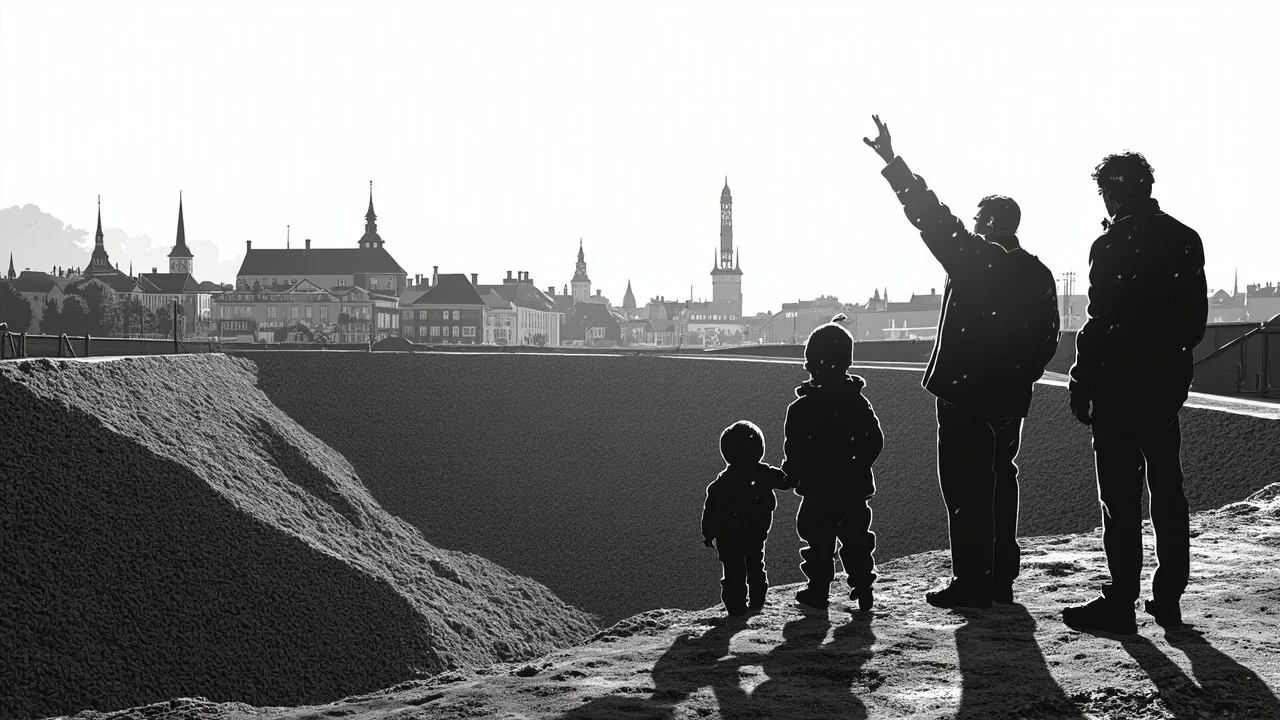
Denmark society faces a glaring inconsistency in its compensation policies. Neighbors to wind turbines, solar parks, and F-35 fighter jets receive financial compensation for disruption, but residents living next to gravel pits get nothing despite enduring dust clouds, noise, and plummeting property values. Source: Geological Survey of Denmark and Greenland.
Jørgen Gornitzka knows this reality intimately. For nearly 30 years, he has lived in Pedersborg near Sorø, watching a small gravel pit expand until it sits directly behind his hedge. When wind conditions align, his property receives what he calls "free sandblasting." The fine dust coats laundry, settles in window frames, and forces him to clear sand from his windshield wipers before driving to prevent scratching the glass.
"You cannot be in the garden when the sorting equipment runs," Gornitzka explains. The machinery noise makes outdoor activities impossible during operating hours.
Political support meets government inaction
The compensation gap has sparked unusual political unity. Bruno Jerup from Enhedslisten chairs the Committee for Green Transition, Sustainability and Environment and supports compensation schemes. Kim Edberg Andersen from Danmarksdemokraterne argues the government bears responsibility for splitting property values while expanding gravel operations from Gribskov to Sorø.
SF's raw materials spokesperson Marianne Bigum frames it practically: "We know we need raw material pits around Denmark, so we need people willing to be neighbors to them." According to Danish Regions, the organization proposed a compensation framework to the environment minister in October 2019, with backing from the construction industry.
Yet Environment Minister Magnus Heunicke has failed to deliver a thorough plan for future raw material extraction, leaving residents in limbo. Region Sjælland's recent raw materials plan drew over 400 protest responses, highlighting widespread opposition to uncompensated disruption.
The generational burden
The promise that former gravel pits eventually become scenic lakes offers cold comfort to current residents. Edberg Andersen, 53, calculates he would need to live to 150 to see the benefits. "The generation that owns houses now, or the young generation planning to buy in these areas, can expect a gravel pit next door for their entire time living there," he notes.
This timeline mismatch reveals a fundamental flaw in Danish planning policy. While future generations may inherit attractive lake districts, current residents bear decades of environmental disruption without compensation. The policy essentially socializes the costs while privatizing future benefits.
Heunicke now hints at examining wind turbine compensation models for potential application to gravel pits, but offers no timeline. With broad political support already established since 2019, the delay appears driven by cost concerns rather than policy complexity. Expect growing pressure from affected municipalities to force government action before the next election cycle, particularly as raw material demand intensifies with climate infrastructure projects.
Read more: Denmark Raises Skilled Worker Salary Bar Despite Labor Crisi....
Read more: Denmark Creates Top 100 List of Women Who Deserve Statues.