
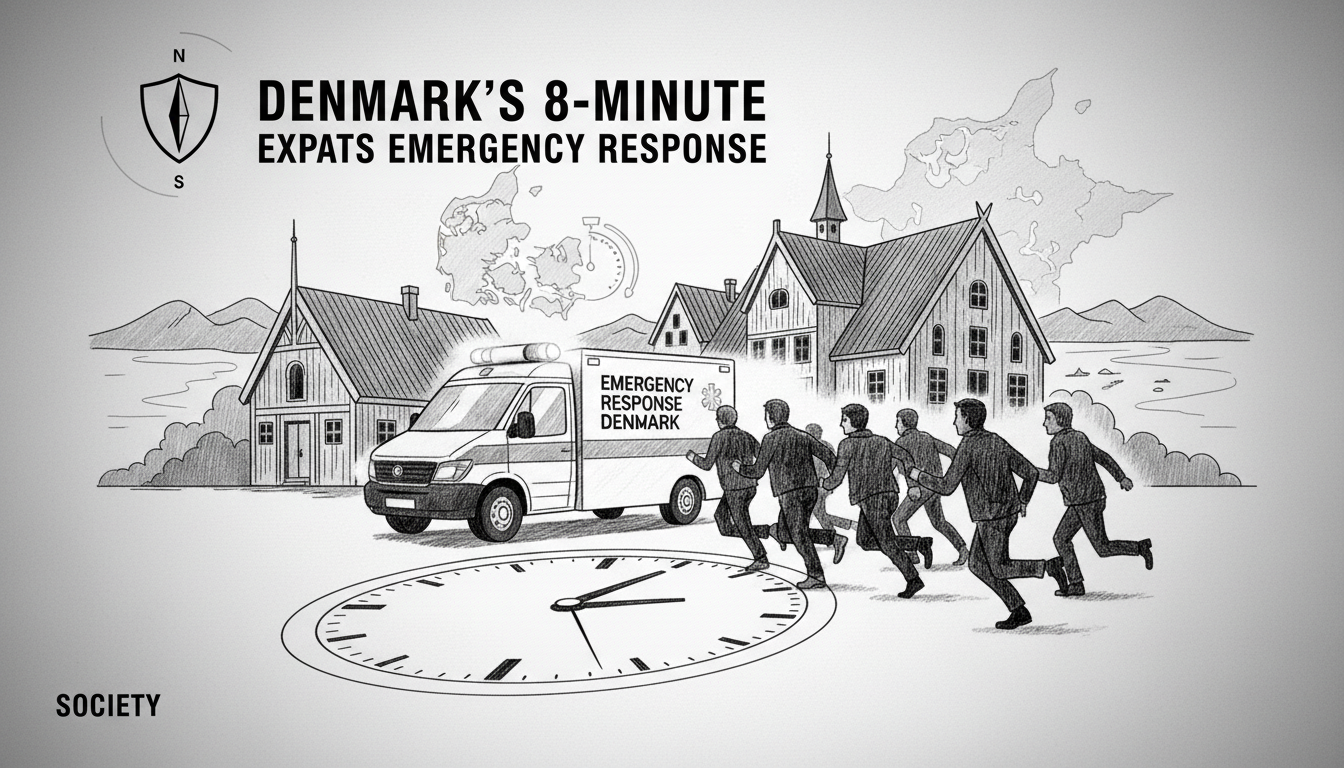
Denmark's emergency ambulance response times average just 8-10 minutes in urban areas, a reality that recently comforted a British software developer in Copenhagen after a skateboarding accident. He called 112, and help arrived in eight minutes, providing immediate care without any request for payment. His experience underscores a core principle of Danish society: emergency medical care is based on need, not insurance status. For expats, this system can be both reassuring and confusing, differing sharply from many private healthcare models abroad.
This efficient response is funded through Denmark's universal healthcare system, which consumes about 10% of the country's GDP. All legal residents with a CPR number are covered, but the process of obtaining that key identifier can take weeks. Until then, expats face potential bills—around 1,500 kroner for an ER visit or 1,200 for ambulance transport. Understanding these nuances is critical for newcomers navigating their first health crisis.
The 112 Lifeline: How Emergency Services Operate
When you dial 112 in Denmark, your call routes to Falck or a regional ambulance service under contract with the state. Operators prioritize calls based on medical urgency, not the caller's nationality or payment ability. This setup ensures that life-threatening cases receive immediate attention, a standard that healthcare analysts often praise for its equity. The model reflects the Danish welfare system's emphasis on equal access, a social policy cornerstone.
Response times are consistently swift, but the aftermath depends on your paperwork. If you lack a CPR number, you will receive a bill for services. This policy maintains system integrity while covering costs for unregistered individuals. It's a practical approach that balances open access with financial sustainability, though it can surprise expats accustomed to different billing practices.
Your CPR Number: The Gateway to Full Coverage
The ten-digit CPR number is your essential key to the Danish healthcare system. Registration typically requires three to four weeks after securing residency, a period that leaves many expats in a coverage gap. During this time, emergency care is still available, but costs apply. Once registered, you receive a yellow health card, which guarantees access to everything from general practitioners to hospital specialists without upfront fees.
This registration process is a fundamental part of integration into Danish society. It links you to the public health database, ensuring continuity of care across clinics and hospitals. For expats, obtaining the CPR number should be a top administrative priority upon arrival. Delays can lead to unnecessary expenses during medical emergencies, though no one is turned away in crisis situations.
Hospital Hierarchies: From Urgent Care to Major Trauma
Denmark's hospitals are tiered to manage patient flow effectively. For serious, life-threatening emergencies, major centers like Rigshospitalet in Copenhagen operate 24/7. For less critical issues—fractures, deep cuts, or infections—urgent care centers called 'Akutmodtagelse' serve as intermediate points. These facilities reduce wait times for non-critical patients, who might otherwise linger for hours in a full emergency department.
Wait times vary based on severity, a triage system that prioritizes the most urgent cases. Hospital staff generally speak English, and all treatments are documented in the national health database. This integration allows any Danish doctor to access your medical history, promoting coordinated care. For expats, knowing whether to go to an urgent care center or a full emergency room can save valuable time and reduce system strain.
Practical Protocols for Expats in Crisis
In a life-threatening situation—chest pain, severe bleeding, unconsciousness—always call 112 first. Describe symptoms clearly and provide your exact address. Stay on the line until help arrives. For non-life-threatening issues, contact your general practitioner during office hours or use the after-hours service Lægevagten by calling 1813. This stepwise approach keeps emergency resources available for critical needs.
Download the official 'Sundhedsjournalen' app to store health records and access medication lists. Keep emergency contacts saved in your phone, along with your doctor's details. Know the location of your nearest hospital; in Copenhagen, Bispebjerg Hospital handles many emergencies. These preparations empower expats to act swiftly, aligning personal responsibility with public system reliance.
System Strengths and Growing Pressures
Healthcare analysts commend Denmark's model for its efficiency and equitable access, core values in Danish social policy. The system ensures that all residents, regardless of income, receive necessary emergency care. However, experts note increasing pressures from an aging population and rising healthcare costs. Wait times for elective procedures and specialist appointments can be long, a trade-off for universal coverage.
The integration of expats into this system highlights both its inclusivity and its administrative hurdles. While emergency response is seamless, the reliance on CPR numbers creates a bureaucratic step that can confuse newcomers. Municipalities and social centers often provide guidance, but the responsibility falls on individuals to register promptly. This dynamic reflects a broader Danish expectation: that integration requires proactive steps from those joining society.
For expats, a medical emergency can be a sudden immersion into the Danish welfare state. The experience of the British developer—swift care without upfront payment—illustrates the system's ideal operation. Yet, the potential for bills without a CPR number reveals its pragmatic boundaries. Understanding these details is not just about health; it's about navigating the social contract in Denmark, where collective safety nets come with individual responsibilities. As more expats call Denmark home, their ability to access emergency care smoothly becomes a test of the system's adaptability and a lesson in Danish societal values.