
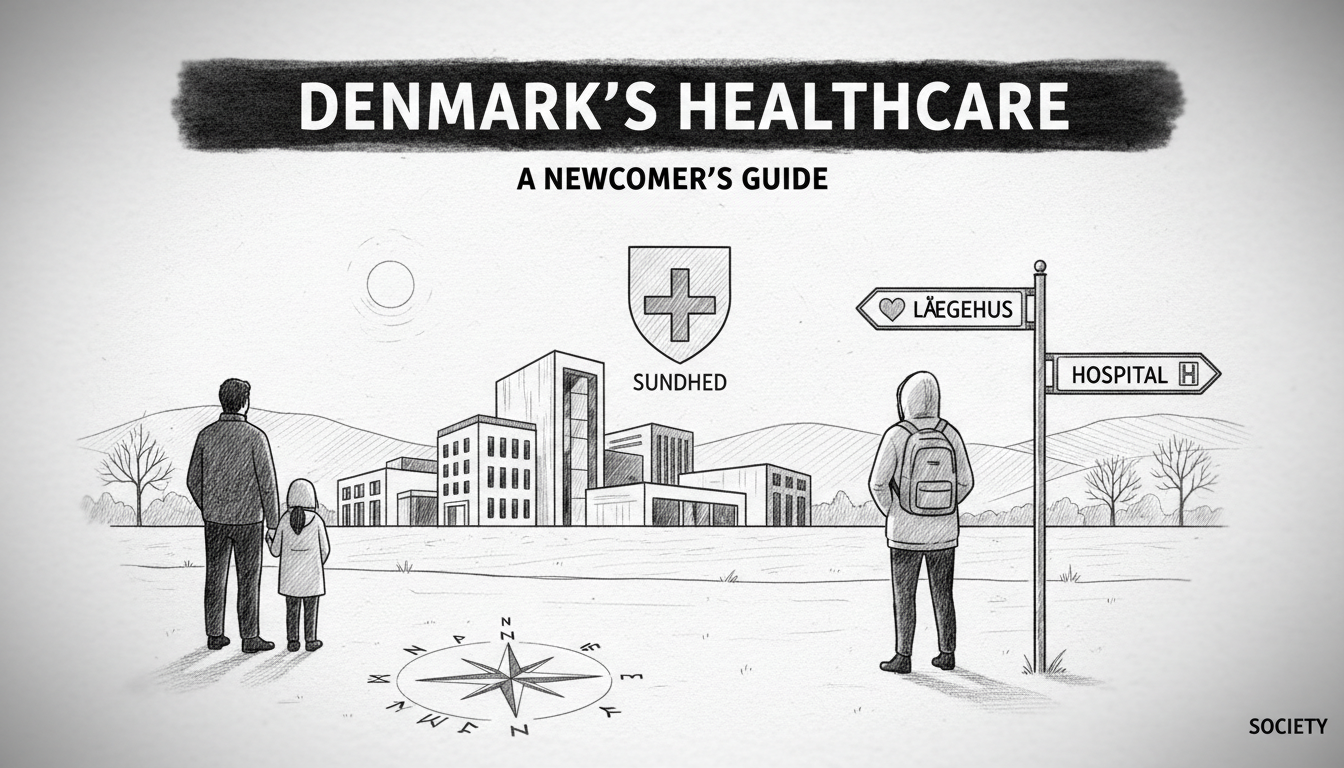
Denmark’s world-class healthcare system, funded 80% by public taxes, can be daunting for new residents. The key to unlocking it is a small, yellow plastic card. For thousands of new arrivals each year, navigating this efficient but gatekept system is their first major task, a process defined by digital bureaucracy and a fundamental trust in primary care. I remember my own confusion years ago, holding that card and wondering where to start. This guide breaks down the essential steps, from registration to specialist care, based on official pathways and the lived experience of newcomers.
The Essential Yellow Card
Your access to Danish healthcare begins not with a doctor, but at your local municipality’s citizen service center, or Borgerservice. Registration here grants you a CPR number—your personal identification in the system. Within about two weeks, your yellow health card (sundhedskort) arrives by mail. “This card is your passport to healthcare,” explains Karen Højgaard, an integration coordinator with Copenhagen Municipality. “Never leave home without it. It’s required for everything from a GP visit to picking up prescription medicine.” The system is designed for equity, ensuring all legal residents with a CPR number have the same foundational access. This universal model, where most services are free at the point of use, is a cornerstone of the Danish welfare state.
Your Gateway: Choosing a General Practitioner
Within two weeks of receiving your CPR number, you must choose a General Practitioner (GP). This is a critical step. Your GP acts as the central hub for all non-emergency care and is your mandatory referral point for specialists. You select one at sundhed.dk, the national health portal, where you can filter by location and language. In Copenhagen, approximately 40% of GPs list English as a spoken language. “Your relationship with your GP is paramount,” says Dr. Lars Bo Jørgensen, a family physician in Østerbro. “We are the coordinators. The system is built on the principle that we know our patients’ full history, which leads to better, more cost-effective care.” This gatekeeper model is praised for preventing system overload but can feel restrictive to those accustomed to direct specialist access.
Understanding Costs and Emergencies
While funded by taxes, some user fees apply. Prescription medicines are subsidized, with patients paying around 50% of the cost up to an annual out-of-pocket maximum of 4,130 kroner. Adults pay for most dental care. However, emergency treatment is completely free. For urgent medical issues, call 112. For advice on whether an issue is urgent, the 24/7 medical helpline 1813 is your first call. A doctor or nurse will assess your symptoms and direct you to the appropriate level of care, whether it’s a video consultation, an out-of-hours clinic, or an emergency room. This triage system effectively manages hospital admissions.
The Digital Front Desk
Denmark’s healthcare is increasingly digital. Your sundhed.dk profile, accessed via MitID, is a central repository for your health data. Here, you can view medical records, lab results, vaccination history, and book certain appointments. The companion app, Min Læge, connects directly to your GP’s office for secure messaging, prescription renewals, and reminders. “Digital platforms empower patients and streamline administration,” notes a policy analyst from the Danish Health Authority. “For newcomers, mastering these tools is as important as finding a clinic.” This shift reduces phone calls and waiting times for simple queries, though it requires digital literacy.
Pathways to Specialists and Hospitals
Accessing a dermatologist, cardiologist, or surgeon requires a referral from your GP. This is a defining feature of the system, designed to ensure specialist time is used appropriately. Waiting times vary; statistics show an average 30-day wait for an orthopedic consultation, while cancer treatment pathways legally begin within 14 days of referral. Exceptions exist for direct access to psychologists and physiotherapists. Some residents opt for private health insurance to bypass public waiting lists for non-critical care; basic plans start around 300 kroner monthly. Sites like Tryor.dk allow for comparison.
Navigating Cultural Nuances
The system’s efficiency relies on patient proactivity and clear communication. Appointments are concise, and doctors expect you to prepare questions. “There’s a cultural expectation of partnership,” says Højgaard. “You must speak up about your concerns.” For non-English speakers, municipalities sometimes provide professional translators for medical visits—a crucial service often overlooked. Furthermore, the strong emphasis on preventive care—from national screening programs to GP health checks—reflects a long-term investment in population health that contributes to Denmark’s average life expectancy of 81 years.
A System in Balance
Denmark’s healthcare consistently ranks in the global top 10 for quality and access. Its strengths are equity, strong primary care, and innovative digital integration. The challenges, as experts note, include waiting times for certain specialist treatments and the navigation burden placed on new residents. The system asks for initial patience and paperwork in exchange for long-term security. For the newcomer, success lies in securing that yellow card, building a relationship with a GP, and embracing the digital tools. It is a system that rewards those who learn its rules, offering a powerful safety net that defines the Danish social contract. The ultimate question for every new arrival is not about quality, but about learning how to effectively step into this structured, collective approach to well-being.