
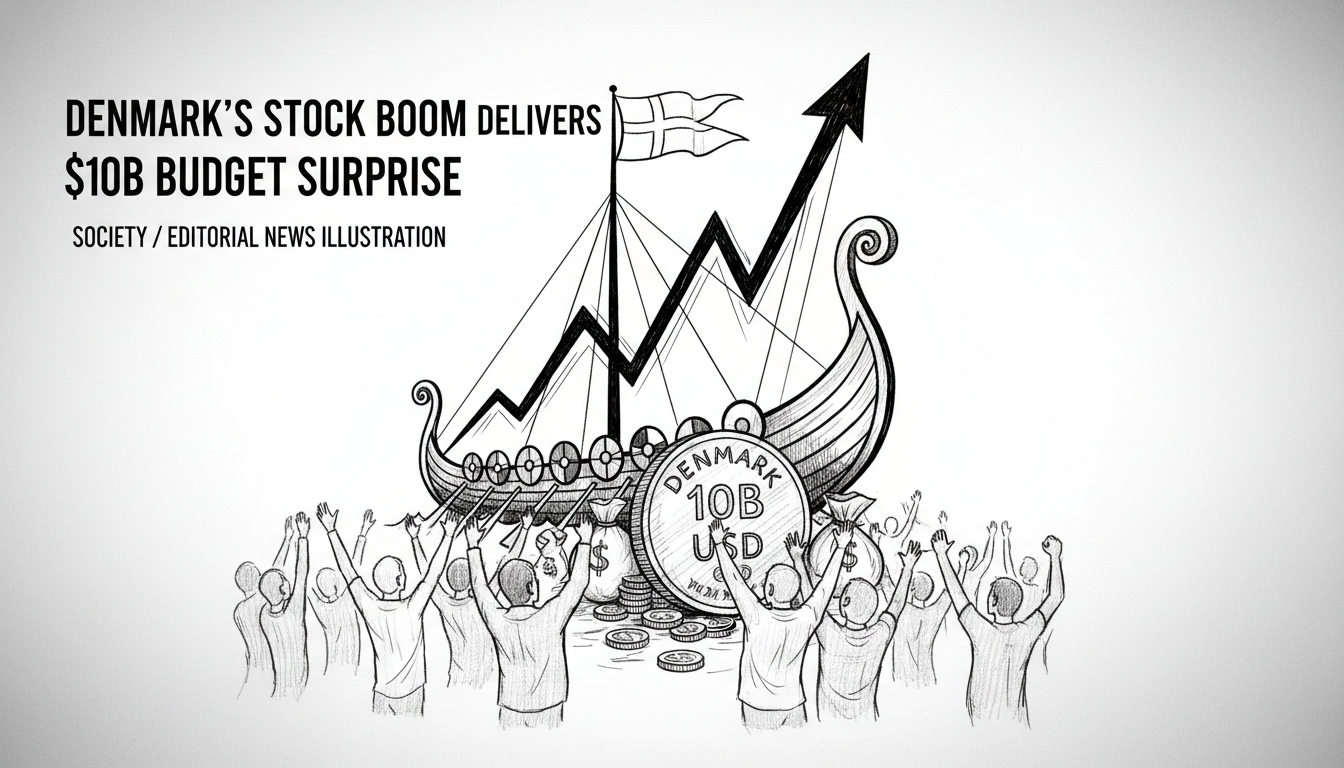
Denmark's finance minister Nicolai Wammen is managing a budget surplus billions larger than forecasted, thanks to a roaring stock market. The OMXC25 index climbed approximately 24% year-to-date in 2025, driving capital gains tax revenues far beyond government projections. This fiscal windfall presents both a rare opportunity and a complex challenge for Denmark's renowned welfare state.
As a reporter focused on Danish society news and integration, I see this economic shift as more than just numbers on a balance sheet. It has tangible implications for social policy, education funding, and the support systems in Copenhagen and beyond. The central question now is how a social democratic finance minister will navigate this surplus in a nation built on equitable resource distribution.
The Scale of the Stock Market Windfall
The Danish stock market's performance in 2025 has been remarkable, outperforming several European peers. This boom translates directly into state income through Denmark's comprehensive capital gains tax system. While official figures are still being finalized, ministry estimates suggest the surprise revenue exceeds 70 billion Danish kroner, equivalent to over $10 billion USD. This comes atop an already healthy economic outlook, with Denmark's GDP growth projected around 2.5% for the year.
Finance Minister Nicolai Wammen now oversees a fiscal scenario few anticipated during last year's budget negotiations. The surplus provides significant room to maneuver without resorting to borrowing or cuts. In a recent press briefing, Wammen acknowledged the positive development but cautioned that responsible management is paramount. "Strong markets benefit pension savers and state finances," he said. "Our task is to ensure this strength translates into long-term security for our society."
Expert Analysis: Boom Sustainability and Fiscal Choices
Economists are divided on the durability of this market surge. Some attribute it to global trends and robust corporate earnings within Denmark's flagship pharmaceutical and renewable energy sectors. Others warn of potential volatility, urging caution against embedding temporary revenues into permanent spending. "This is a classic good problem to have," said Birgitte Larsen, chief economist at a major Copenhagen bank. "The key is to avoid overheating the economy. A mix of debt reduction, strategic investment, and perhaps tax relief for low-income earners would be a balanced approach."
From a social policy perspective, the surplus arrives amid ongoing debates about the capacity of the Danish welfare system. Municipalities, which handle core integration services and social support, have long called for increased state funding. Anna Mikkelsen, mayor of a district with a large immigrant population, told me, "We see daily needs in our community centers—from language classes to mental health support. This financial space could be a chance to strengthen the local safety net that prevents social exclusion."
Priorities for a Potential Spending Surplus
The political discussion in Copenhagen now centers on potential allocations. Key areas include green energy transition, defense spending aligned with NATO commitments, and bolstering public healthcare. However, from my reporting on integration challenges, I believe investments in education and labor market access yield profound societal returns. Denmark's immigration policy success hinges on effective inclusion, and targeted funding here could address gaps.
Specific proposals circulating among policy experts include expanding subsidized childcare to help parents, especially women, enter the workforce, and increasing grants for vocational training programs tailored to newcomers. Statistics on integration show that employment remains the single largest factor in successful inclusion. Investing in job creation and skills matching could accelerate progress.
Another consideration is Denmark's high level of household debt. Some experts advocate using part of the surplus for targeted tax reforms that ease the burden on middle-class families, stimulating consumer confidence without fueling inflation. The government must also weigh the benefits of further paying down national debt, which would strengthen Denmark's fiscal resilience against future crises.
A Crossroads for Danish Social Policy
This unexpected bounty places Minister Wammen at a policy crossroads. The social democratic tradition emphasizes using state resources to reduce inequality and provide security. Yet, economic prudence is equally valued. How the surplus is deployed will signal the government's priorities for the remainder of its term.
Will it lead to significant new initiatives in Copenhagen integration programs or broader social housing projects? Or will caution prevail, with most funds earmarked for reserves and debt reduction? The coming budget negotiations will reveal much about Denmark's direction. As one senior civil servant in the finance ministry noted privately, "Every krone spent today is a krone not available for a future recession. But every krone not invested in people is a potential social cost later."
Ultimately, the stock market's gift to the treasury is a test of vision. For a society that prizes both fairness and stability, the choices made in the next few months will resonate far beyond the financial markets. They will shape the lived experience of communities across Denmark, determining whether this windfall becomes a footnote in economic reports or a foundation for a more cohesive future.