
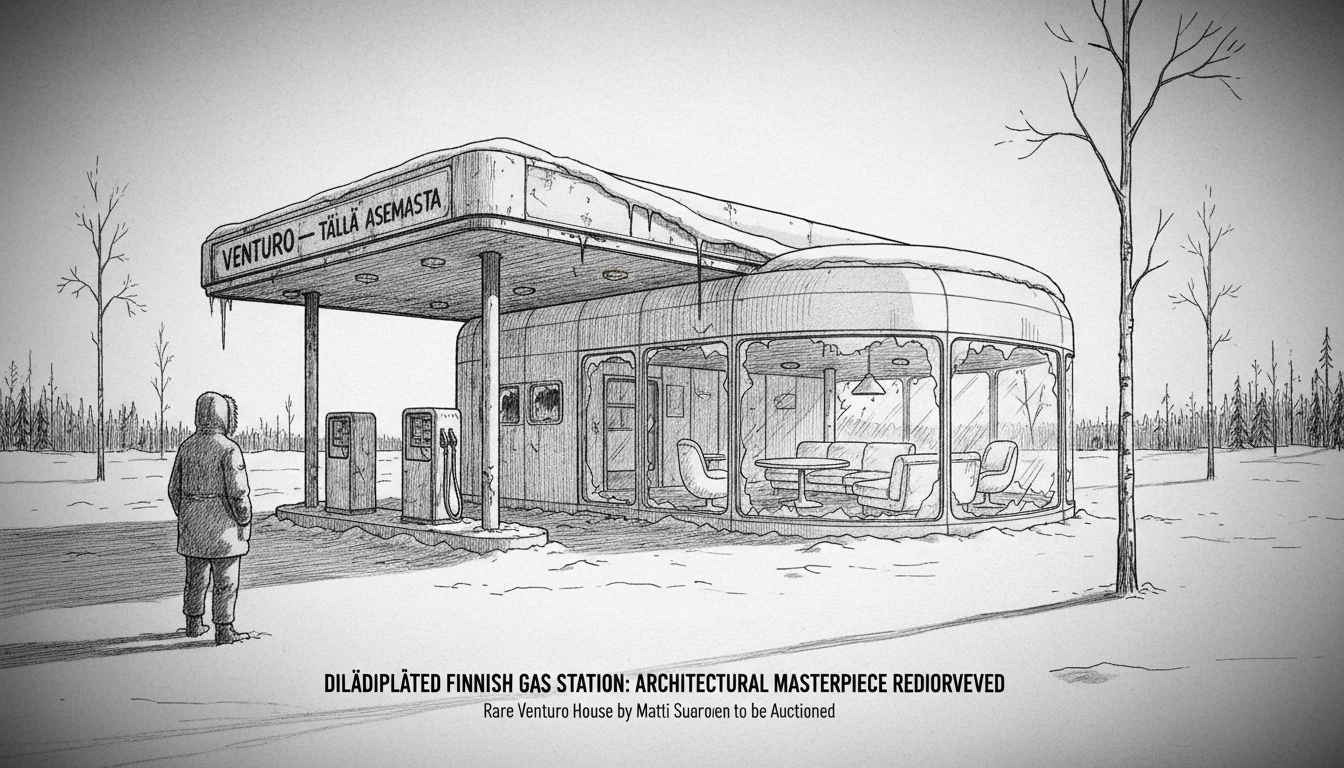
A worn-down former gas station in Luumäki, Finland hides an architectural secret. The building is one of only 19 Venturo houses designed by world-renowned architect Matti Suuronen in the 1970s. These prefabricated plastic buildings are extremely rare collectibles today.
The structure has fallen into disrepair since its café closed in the 1980s. It served as storage for over four decades. Through the windows, visitors can still see the original 1970s plastic furniture preserved inside.
The building remained in private ownership for decades. The owner received annual inquiries and purchase offers but either refused to sell or asked too high a price. After the owner's death several years ago, the property passed to heirs and is now coming to auction.
"It will be sold through auction on the Meklari.com website," confirmed Harri Boman from the selling agency Kymrea Oy. "Interested buyers can already contact us."
Some practical arrangements remain before the sale. Authorities are checking whether the Finnish Heritage Agency has any requirements regarding the building.
Matti Suuronen gained international fame for designing the Futuro house, nicknamed the UFO house for its flying saucer appearance. Only 20 Futuro houses were manufactured in Finland, with about 100 total worldwide including licensed production.
One Finnish-made Futuro originally opened as the UFO Café in Luumäki in 1970. It moved to Pöytyä the following year, but the box-like sales building remained. The Venturo house replaced it on the same site.
Though less famous than the Futuro, the Venturo is equally rare. The building continued operating as both a café and gas station, keeping the UFO Café name even after the actual UFO house left.
The café changed owners in the 1980s but never reopened. According to local reports, the new owner's hired café manager had a traffic accident before opening. The owner also felt the local municipality didn't want competition for the nearby Luumäki Motel.
The building sat unused as storage for over forty years.
Futuro houses have sold for hundreds of thousands of euros. Valuing this Venturo is difficult due to extreme rarity and infrequent sales.
"We're talking about a remarkably valuable entity," an architecture museum archivist commented previously. "If the original furniture exists and the interior is preserved, it could be truly valuable."
The interior indeed contains original plastic furniture that some observers mistook for designs by legendary Finnish designer Yrjö Kukkapuro.
"They're not Kukkapuro's but designed by Matti Suuronen himself," Boman clarified. "Kukkapuro's chairs had four legs while Suuronen's designs have three."
Even without furniture, the building would be valuable. "Venturos are just as valuable as Futuros," the archivist noted. "Futuro was more complicated. Practical Venturos served as homes and gas station cafés."
Years of neglect show in the building's poor exterior condition. It requires restoration, which won't come cheap.
"The café should absolutely be saved," the archivist commented a decade ago. "Though the period plastic is terribly difficult to restore." The building's condition has worsened since, making restoration more challenging and expensive.
This situation highlights how architectural treasures can hide in plain sight, deteriorating while waiting for someone to recognize their value. The building's fate now depends on whether a buyer emerges willing to undertake the costly restoration.