
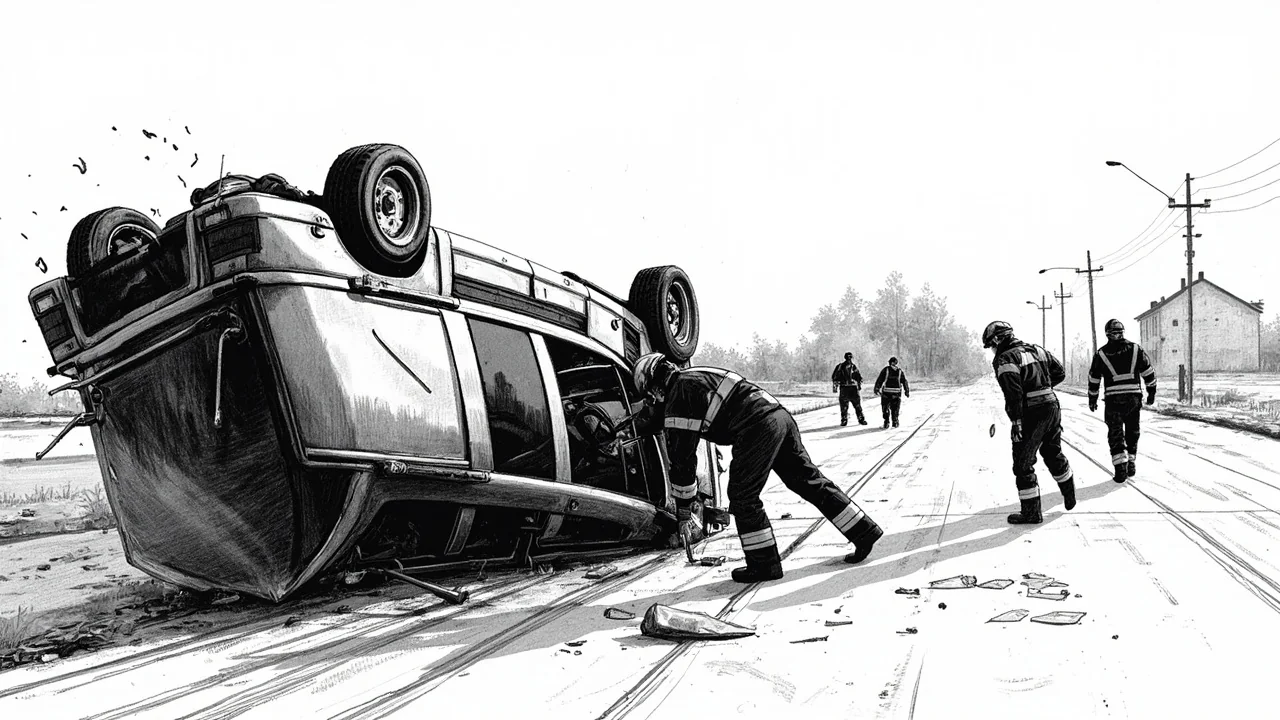
Denmark's road safety record, with 175 fatal accidents in 2022, faced another test when a driver was trapped in an overturned car on Vardevej in Vejle last Saturday. The incident required a complex rescue operation by local emergency services, highlighting the constant demand on Denmark's integrated response systems. A motorist had to be cut free from their vehicle after crashing into a ditch, according to Sydøstjyllands Politi. Watch commander Thomas Kiær confirmed the driver was physically uninjured but remained trapped inside the wreckage, necessitating specialist extraction.
The Emergency Call and Response
Police received the accident report at 8:47 PM, with the caller stating a car was lying on its roof in a roadside ditch. The sole occupant, the driver, was confirmed to be conscious and alert at the scene. While no physical injuries were reported, the vehicle's structural damage and position made self-evacuation impossible. This triggered a multi-agency response, standard procedure for incidents where individuals are trapped. The Vejle Fire Department was dispatched to the location with cutting equipment to secure the vehicle and free the driver. Such collaborations between police and fire services are a routine part of Denmark's municipal emergency planning, designed for rapid deployment across varied urban and rural landscapes.
The Rescue Operation on Vardevej
The technical extraction process involves stabilizing the vehicle to prevent further movement before using hydraulic tools to cut through door frames or roof pillars. Firefighters are trained to perform these delicate operations with minimal risk to the trapped individual, even when injuries are not initially apparent. The successful rescue on Vardevej concluded with the driver being helped from the wreckage without needing medical transport. The police then shifted focus to securing the scene, managing traffic, and initiating an investigation into the cause of the single-vehicle accident. Initial inquiries typically examine factors like road conditions, vehicle mechanics, and driver behavior, though findings from this specific case were not immediately released.
Infrastructure and Accident Prevention Context
This accident occurred on Vardevej, a major thoroughfare in the Vejle municipality. While Denmark boasts one of the world's lowest road mortality rates, its national strategy continuously targets a vision zero policy for serious accidents. The country's approach combines strict enforcement of traffic laws with continuous investment in road engineering and public awareness campaigns. Each incident provides data points for municipal traffic planners and safety boards, who analyze black spots and implement remedial measures like improved signage, lighting, or road surface changes. The psychological impact on drivers involved in such traumatic events, even without physical harm, is also a recognized concern within Denmark's holistic welfare system, which provides access to follow-up care if needed.
The Human Element in Mechanical Rescue
Beyond the protocols and statistics lies a human story of sudden vulnerability. Being physically uninjured yet mechanically trapped in an overturned vehicle creates a unique psychological stressor. The driver's experience, from the moment of the crash to waiting for the sounds of cutting equipment, underscores that accidents are measured in more than property damage or bodily harm. Denmark's welfare framework acknowledges this by ensuring that citizens involved in traumatic events can access psychological support through their municipality or general practitioner, though such follow-up is not automatic and relies on self-referral. The seamless rescue, therefore, is just the first step in a potential longer journey for the individual involved, a facet of societal care that extends beyond the immediate emergency response.