
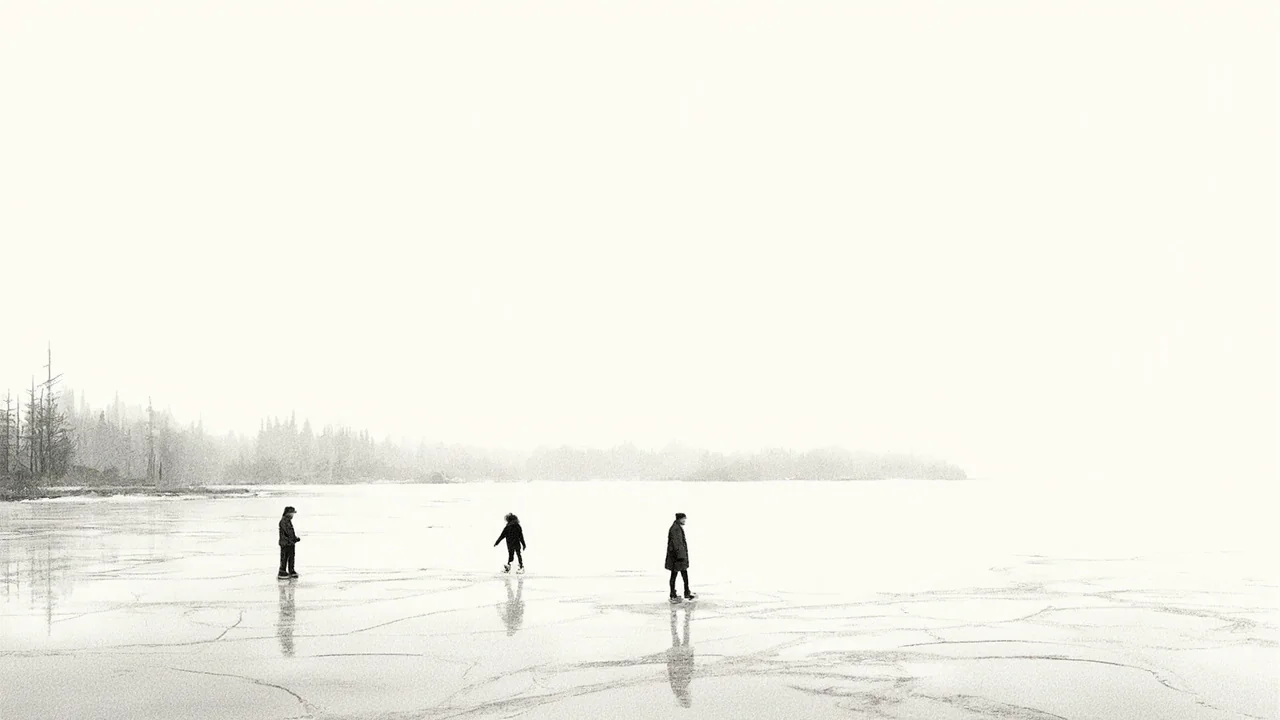
Denmark's rare deep freeze created a once-in-a-generation skating moment on Copenhagen's lakes this weekend. Asphalt lies hidden under thick snow, and the ice is frozen solid enough to hold countless Copenhagen residents. Many seized that rare moment on Peblinge Sø on Saturday, perhaps for the last time, several feared. The city lay blanketed under a white duvet of snow, setting a scene that felt both magical and fleeting.
A Scene of Collective Joy
The ice on Peblinge Sø became a spontaneous community center. Children wobbled on borrowed skates while adults glided carefully, their laughter cutting through the crisp air. Families shared thermoses of coffee, and strangers helped each other up after slips. This wasn't organized sport but a pure, communal celebration of a natural phenomenon. For a few hours, the usual barriers of busy city life dissolved onto the frozen canvas. The scene repeated across other city lakes, but Peblinge Sø, nestled in the heart of the city, captured the essence of the event.
Many expressed a bittersweet awareness that such days are becoming rarer. "It's probably a once in a lifetime. Unfortunately," one skater remarked, voicing a common sentiment hanging over the joyous activity. The comment speaks to a broader understanding of shifting winters. The last time the ice in central Copenhagen was deemed safe for widespread skating was roughly eight years ago. This historical context, remembered by long-time residents, added a layer of poignancy to the weekend's fun.
The Science Behind the Safe Ice
The necessary conditions for safe, natural ice skating in an urban area like Copenhagen are exceptionally precise. It requires a sustained period of deep frost, with temperatures consistently well below freezing, and minimal snowfall. Snow acts as an insulator, preventing the ice from thickening. This weekend's perfect alignment of hard frost before a snow fall created the unique window. The municipal authorities did not officially sanction the skating but notably did not intervene, a tacit acknowledgment of the ice's unusual strength and the event's cultural significance.
Local community leaders have often pointed to such shared experiences as vital, though informal, parts of Danish social cohesion. They happen outside the structured frameworks of clubs or associations. A community organizer from the Nørrebro district noted that these unpredictable gatherings are where casual integration happens. People from all backgrounds meet on neutral, joyful ground. The fading frequency of such events represents a subtle loss of these unplanned social spaces.
Municipal Response and Cultural Memory
Copenhagen's municipality maintains specific protocols for ice safety on its lakes and canals. They regularly measure thickness and post warnings. The system is designed for risk prevention in increasingly temperate winters. This weekend presented a rare exception where public instinct and natural conditions aligned perfectly with safety. The scene served as a living archive of cultural memory, reminding citizens of winters depicted in classic Danish paintings and literature.
The economic aspect is also tangible. Sporting goods stores in inner-city neighborhoods reported a sudden run on skates, both sales and rentals. This minor boom highlights how the city's infrastructure and commerce still respond to traditional weather patterns. However, business owners acknowledged the trend is downward. Investing in large skate inventories has become a riskier venture with each passing mild winter.
Looking Toward a Thawing Future
The unspoken question on the ice was about the future. Climate data for Denmark shows a trend toward milder, wetter winters. Periods of sustained freezing are becoming shorter and less severe. What felt like a gift this weekend may, for the next generation, become solely a story told by their parents. The event thus transcended simple recreation. It became a collective pause, a tangible connection to a Danish winter identity that is slowly receding.
The snow continued to fall lightly on Sunday, but a forecast of rising temperatures signaled the end. By Monday, the ice would begin its retreat, and the asphalt would reclaim its place. The images and memories of thousands skating in the heart of Copenhagen, however, will persist. They will serve as a powerful, experiential benchmark against which future winters are measured, not just in degrees Celsius, but in shared human experience.
The Integration of a Moment
In a country often focused on formal integration metrics and policy, this weekend offered a different model. On the ice, success was measured in shared smiles and spontaneous assistance. There were no forms to fill or language requirements to meet. The common goal was simple balance and enjoyment. This human-centric interaction is a cornerstone often discussed in Danish social policy but is harder to engineer than a language course. Its organic occurrence is perhaps its most valuable quality.
As the thaw sets in, Copenhagen returns to its normal rhythm. The social centers and municipal programs continue their vital, structured work. Yet, for two days, the city itself became the social center. It provided a masterclass in informal community building, powered by nothing more than frozen water and a collective desire to seize a disappearing day. The lesson lies not in replicating the ice, but in valuing the unplanned connections it facilitates.