
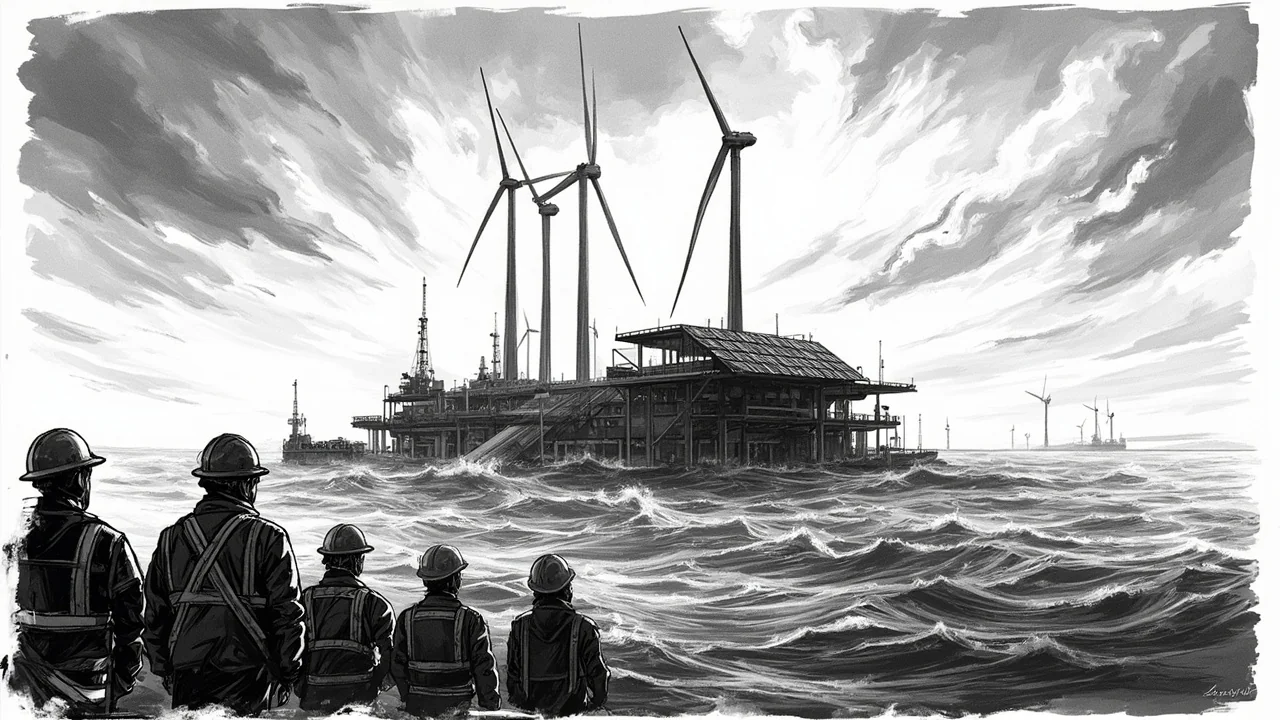
Denmark's Energiø Bornholm can supply electricity to three million households after a new Danish-German agreement revived the stalled offshore wind project. The deal, announced Monday evening, involves sharing the costs for supporting offshore wind development, though the precise financial split remains undisclosed by the Climate, Energy, and Utilities Ministry. This injection of life into the world's first energy island marks a pivotal moment for European energy security and Danish trade competitiveness, directly impacting business districts from Copenhagen to the Øresund region.
A Cost-Sharing Revival
The agreement between Denmark and Germany specifically covers the 'support needs' for offshore wind, ensuring the Energiø Bornholm project moves forward after being stranded. While the ministry has not detailed the exact cost distribution, the commitment signals strong cross-border cooperation. For Danish companies, this translates into predictable investment frameworks. The project establishes a direct electricity trading link with Germany, featuring a total offshore wind capacity of three gigawatts. This infrastructure is critical for stabilizing energy prices that have hampered European industry.
Defining the Energy Island Model
Energiø Bornholm will function as a hub, collecting power from multiple surrounding offshore wind farms and transmitting it via subsea cables to Denmark and Germany. Unlike artificial constructs, it utilizes the existing island of Bornholm for its electrical equipment. This model is set to become a blueprint for future projects. The three-gigawatt capacity is not just a number, it represents a tangible shift towards decentralized, renewable energy grids. For Copenhagen-based energy traders and Øresund region manufacturers, this means a more resilient and scalable power supply.
Addressing Industrial Energy Costs
European companies currently pay two to three times more for energy compared to their competitors in the United States and China, according to figures from Dansk Metal. This disparity threatens the survival and development of European industry. Claus Jensen, the union's president, states, 'For European industry to survive and develop, it requires access to ample cheap and green electricity, and the agreement on Energiø Bornholm secures that.' The project's scale aims to directly lower these operational costs, making Danish exports more competitive on global markets.
Enhancing Competitiveness and Security
Dansk Industri has hailed the agreement as a crucial step towards increased European energy security and strengthened competitiveness. Lars Sandahl Sørensen, the organization's CEO, explains, 'When we build renewable energy on this scale, we lower companies' energy prices, strengthen supply security, and make it more attractive to place production and data centers in Europe.' Access to large volumes of stable, green electricity is a prerequisite for firms to invest, expand, and create new jobs domestically and across the continent. This is particularly relevant for tech and pharmaceutical sectors clustered around Copenhagen.
Pioneering Cross-Border Cooperation
Green Power Denmark highlights that Energiø Bornholm exemplifies how Denmark can help other nations break free from dependence on expensive, imported, and polluting energy. The organization's director emphasizes, 'We need much more energy cooperation across borders, and Denmark has the areas to help other countries free themselves from their dependence on dear, unsafe, and polluting imported energy, while simultaneously creating Danish growth and employment.' This approach not only bolsters Denmark's role as a renewable energy exporter but also fosters diplomatic and trade ties, potentially increasing Danish company revenues from energy technology exports.
Economic Implications for Danish Business
The revival of Energiø Bornholm carries immediate trade implications. By stabilizing and potentially reducing energy costs, it enhances the profitability of Danish manufacturing and data center operations. Companies in the Øresund region, a key economic corridor, stand to benefit from lower overheads. The project's construction and maintenance will generate employment and demand for services from Danish engineering firms. While specific export numbers aren't detailed, the overarching goal is to improve the trade balance by making Danish goods cheaper to produce and more attractive to foreign investors seeking green energy solutions.
A Template for Future Projects
This agreement sets a precedent for similar international energy partnerships. The success of Energiø Bornholm could lead to more such islands, leveraging Denmark's expertise in wind power. The focus on cost-sharing between nations addresses a major hurdle in large-scale renewable projects. For Danish businesses, this means a growing market for their technology and consultancy services. The project underscores a strategic move to position Denmark as a central hub in Europe's green energy transition, with ripple effects expected across Copenhagen's stock exchange and beyond.