
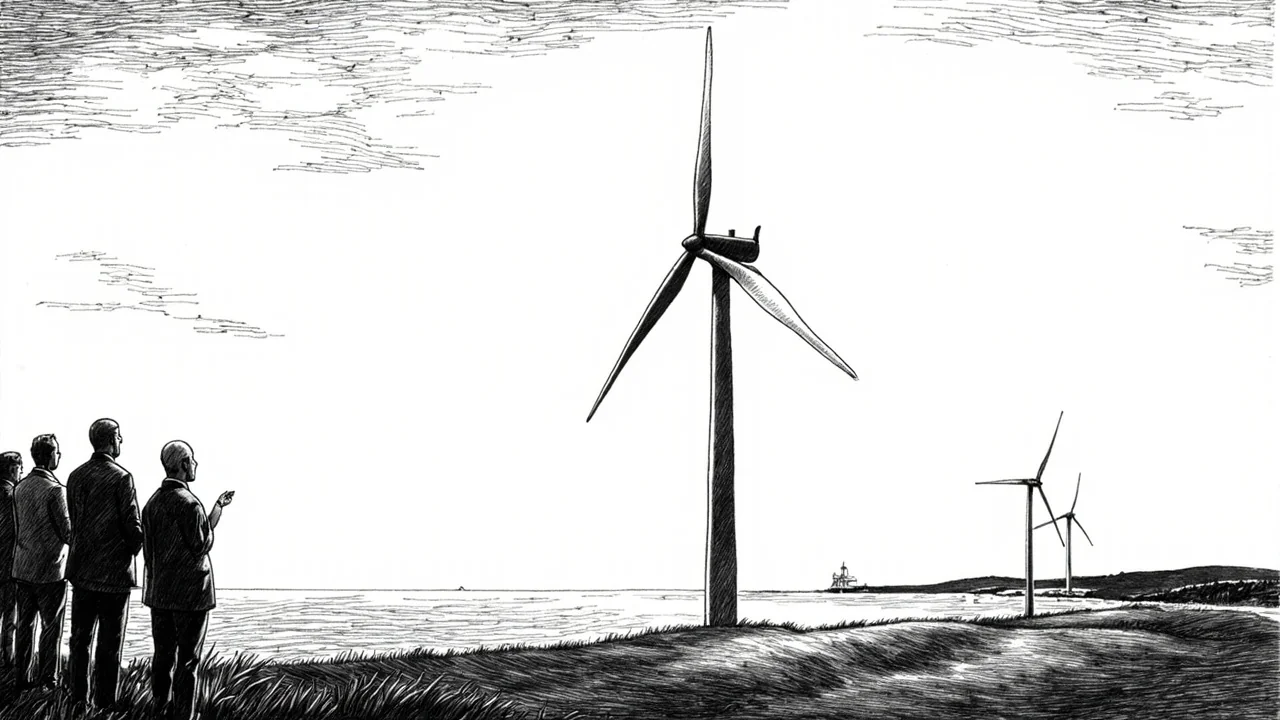
Denmark's Energiø Bornholm agreement has ignited optimism for local businesses after a prolonged period of uncertainty. For Martin Ransted, owner of Bornholms Elektromotor, the news means his company's substantial investments and a decade of patience are finally poised to yield returns. "It means everything," said Ransted, his smile broad, after the Danish and German governments announced a payment model for the historic energy project. The agreement unlocks Denmark's largest energy initiative, set to power up to three million Danish and German households with electricity from offshore wind farms in the Baltic Sea.
A Long-Awaited Green Light
Martin Ransted has waited 11 years for this moment. He has been part of the Offshore Bornholm alliance, a group of about 30 companies working with the offshore industry around the island. The project, first presented by a parliamentary majority in June 2020, has experienced significant fluctuations. It was expanded from 2GW to 3GW but was also paused less than a year ago. This instability made the wait challenging for committed local enterprises. "We invested a lot and hoped it would come. Then we heard it wasn't coming and thought about selling the equipment again. Luckily, we kept it," Ransted explained, highlighting the financial risks borne by small and medium-sized businesses betting on Denmark's green transition.
Substantial Investments on the Line
In recent years, Ransted has invested approximately five million kroner in specialized equipment for offshore wind installation and maintenance. This includes mobile light generators for illuminating land and water during construction, along with heat blowers, pumps, hoses, and other generators. These tools are now ready for deployment, turning what was a speculative gamble into a strategic asset. The Bornholm Energy Island project involves building a large transformer station on Bornholm and establishing three offshore wind parks. For companies like Bornholms Elektromotor, this represents a direct opportunity to service a major infrastructure project, potentially leading to job creation and long-term contracts. "I hope we can get more employees and that we can service the energy island, also in the future when it's finished. We can use our heads and hands and contribute something to the energy island," Ransted said.
The Broader Economic Context
This agreement signals more than just a technical milestone, it represents a crucial step in Denmark's renewable energy exports and regional trade. The project underscores the Øresund region's role as a cleantech hub and stabilizes planning for the local supply chain in Copenhagen and beyond. While specific export figures for the Bornholm project are not yet available, such large-scale initiatives typically involve billions in contracts for Danish engineering firms and component manufacturers. The resolution of the payment model between Denmark and Germany removes a key barrier, allowing procurement and construction phases to move forward. This progress is vital for Denmark's ambition to be a green energy exporter, particularly to the German market.
Preparing for Immediate Impact
With the deal finalized, Bornholms Elektromotor and similar businesses are shifting from a holding pattern to active preparation. Ransted described the announcement day as a celebration for the entire island. "It's a festive day. Both for us, but actually for all of Bornholm. We had hoped it would happen, and now it does. We are ready, and if customers want other things, then we must gear up," he stated. This readiness is critical, as the project's scale demands a robust local supply chain to avoid delays and cost overruns. The equipment purchased by Ransted's company is specifically tailored for offshore wind operations, indicating a targeted strategy to capture value from this national project.
Navigating Past Uncertainties
The path to this agreement has not been smooth, reflecting broader challenges in financing and coordinating international energy infrastructure. The pause announced nearly a year ago created palpable anxiety among invested companies. For Ransted, the decision to retain his equipment despite the setback proved prescient. This experience highlights the risks smaller Danish firms face when aligning their capital expenditures with long-term government-led projects. The clarity provided by the Danish-German agreement now allows these businesses to plan with greater confidence, secure financing, and potentially expand their operations to meet upcoming demand.
Future Prospects and Regional Growth
The Bornholm Energy Island is more than a power source, it's a catalyst for economic activity in a region poised for growth. The project will necessitate a wide range of services, from logistics and maintenance to technical support, creating opportunities for companies across Denmark. For Bornholms Elektromotor, the focus is on leveraging its existing investments to secure a role in the construction and ongoing operation phases. The company's story mirrors that of many Danish SMEs in the renewable sector, where upfront investments are significant, and returns depend on policy stability and international cooperation. With this hurdle cleared, the attention turns to execution and the tangible economic benefits for Bornholm and Danish trade.
A Milestone for Danish Green Ambitions
The finalization of the Bornholm Energy Island deal marks a pivotal moment in Denmark's energy strategy. It demonstrates the ability to navigate complex international partnerships and provides a blueprint for future cross-border renewable projects. For local business owners like Martin Ransted, it validates years of commitment and financial risk. As equipment is mobilized and plans solidify, the project is set to become a cornerstone of Denmark's green export economy, supplying clean power and reinforcing Copenhagen's status as a leader in sustainable business solutions. The true measure of success will be in the lasting impact on the island's economy and Denmark's position in the global energy market.