
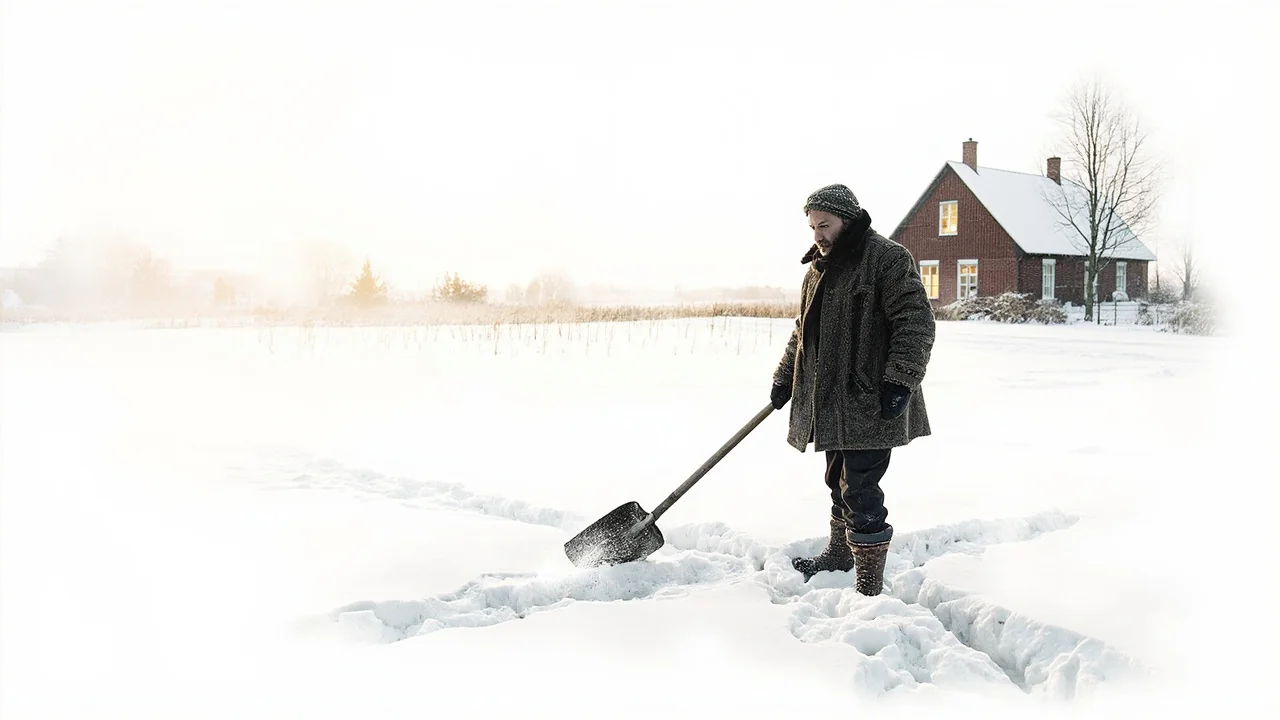
Danish society news often highlights systemic challenges, but a single act of community solidarity in Lolland this past Friday captured a different essence. Waking to a landscape transformed by thick snow, which covered sidewalks, cycle paths, and roads, the staff at Svanevig Hospice faced a quiet crisis. For the vulnerable residents and their families, the impassable snow wasn't just an inconvenience—it was a barrier to connection during life's most fragile moments. This is where local farmer Michael Lau Rasmussen intervened with his telescopic loader, ensuring the paths to the hospice were cleared not for payment, but on principle.
A Friday Morning Blanket
The snowfall was widespread across the region, a typical yet disruptive winter event in Denmark. At Svanevig Hospice, the pristine white cover presented an immediate logistical problem. The facility, dedicated to end-of-life care, depends on the constant ability for loved ones to visit. The snow threatened to isolate patients during a time when family presence is most critical. The silence of the snow-covered grounds contrasted sharply with the urgent need for accessibility that the hospice's mission requires.
The Hospice's Quiet Crisis
For a hospice, operational continuity is non-negotiable, and weather is a known variable that municipal services cannot always address instantly. The management and staff, whose primary focus is patient care, were faced with a practical obstacle that could have emotional consequences. The potential for family members to be unable to reach their loved ones added an unnecessary layer of stress to an already difficult situation. It was a specific, human problem within the broader context of Denmark's social welfare system, which relies on a blend of public provision and community action.
A Farmer's Instinct
Michael Lau Rasmussen, working in tune with the weather year-round, saw the need and acted. He arrived with his machinery and cleared the snow efficiently. His reasoning was straightforward and deeply empathetic. "At the hospice, there are people spending their last days. It's no good if their relatives can't get to them," he explained. His action wasn't calculated as a formal volunteer service, it was a spontaneous response to a neighbor's need, reflecting an informal social contract that exists alongside official structures.
The Ethics of a Free Service
Remarkably, Michael refused any form of payment for his work, framing his decision in ethical terms directly tied to the hospice's purpose. "The money can be used much better on the patients, so it would almost be a little unethical to accept payment for it," he stated. This perspective elevates the act from simple neighborly help to a conscious choice that prioritizes the hospice's resources. It underscores a personal value system where community support is rendered without transactional expectation, a concept deeply woven into aspects of Danish social culture.
An Open-Ended Offer
Michael's commitment extended beyond that single morning. He made a point to tell the hospice that they should not hesitate to contact him again if more snow fell. "They can just call again. I work according to the weather all year round. Whether it's day or night doesn't matter much either," he said. This offer removes a point of anxiety for the hospice staff, providing a reliable, informal safety net. It highlights how individual flexibility in rural professions can fill gaps that larger, more rigid systems might not address with the same immediacy.
Community Echoes
The response to Michael's gesture was profoundly positive. The hospice itself publicly thanked him in a Facebook post, sharing their gratitude for his efforts. This public acknowledgment served to amplify the act, turning a private good deed into a shared community narrative. The post generated reactions and comments that celebrated his character, demonstrating how such stories resonate deeply within Danish society news, affirming shared values of care and mutual responsibility.
The Broader Context of Care
While a single snow-clearing event is small in scale, it occurs within the larger ecosystem of Danish welfare and integration policy, where the well-being of every individual is a stated goal. The story touches on themes of social cohesion and the human infrastructure that supports the formal welfare state. In towns and rural municipalities across Denmark, countless similar informal acts help bind communities together, ensuring that systems function on a human level. This is especially poignant in a care context, where practical barriers can have significant emotional impacts.
The Value of Informal Networks
This incident illustrates the critical role of informal community networks, particularly in rural areas like Lolland. These networks operate alongside, and in support of, the formal municipal and state provisions of the Danish welfare system. They provide resilience and adaptability, offering solutions that are hyper-local and immediate. The trust required for a hospice to accept such help, and for an individual to offer it so freely, is a social asset that policies aim to foster but cannot directly mandate.
Beyond the Snowdrifts
Michael Lau Rasmussen's action is a snapshot of a particular Danish ethos, where community responsibility is often personal. It raises subtle questions about the interplay between state, municipality, and citizen. While the Danish welfare system is comprehensive, its strength is arguably magnified by the voluntary, unpaid efforts of individuals who step in when they see a need. The story at Svanevig Hospice is not about policy failure, but about community success—a demonstration of how social solidarity is lived, not just administered. As weather continues to challenge Denmark's infrastructure, it is these individual acts of foresight and kindness that often ensure no one is left isolated in the cold.