
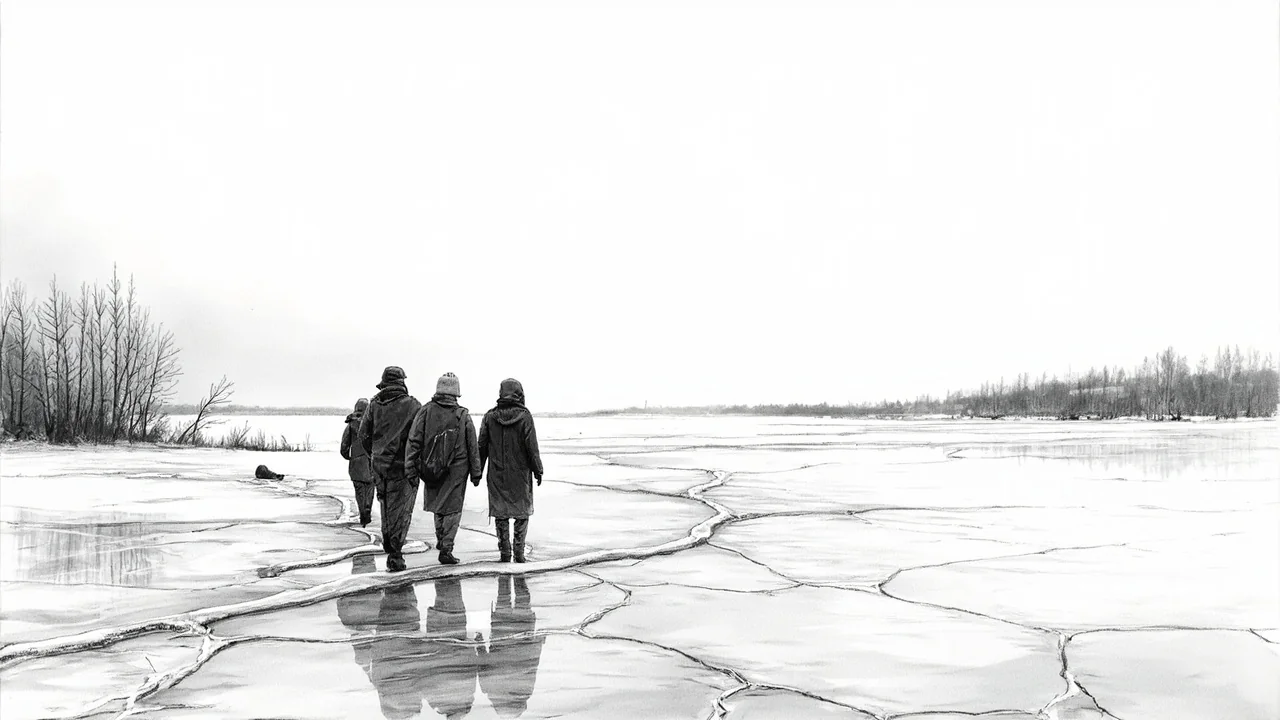
Danish police are charging citizens for venturing onto frozen lakes before the ice is declared safe. This enforcement follows several recent incidents, including a dramatic rescue in Sorø, highlighting a recurring winter safety challenge. Authorities are issuing fines under public order bylaws, urging the public to wait for official municipal clearance.
A 22-year-old man had to be rescued from a lake near Sorø last Friday after falling through the ice. He suffered from hypothermia and required hospital treatment. In separate incidents over the weekend, a 60-year-old man at Nørresø in Maribo and two 20-year-old men on Sorø Sø were charged for violating the public order regulations. Copenhagen Police also reported encountering citizens with ice skates on the city's lakes Monday morning, despite repeated warnings.
A Persistent Winter Hazard
Every winter, Danish police and rescue services face the same dangerous scenario. Citizens, lured by the picturesque frozen landscapes, ignore warnings and test the ice's stability prematurely. The police message is blunt. "It can be tempting to move out onto the frozen lakes around the police district, but: don't! It's as simple as that. It is far too dangerous," stated the South Zealand and Lolland-Falster Police in their daily report. Copenhagen Police echoed this, stressing the ice on the city's lakes is still dangerously thin.
Vagtchef Anette Ostenfeldt from Copenhagen Police highlighted the ongoing issue. "We of course urge people not to do that, because it has not been declared safe yet. It is stupid, and it is dangerous," she said. The incidents are not isolated to rural areas; urban lakes in the capital are equally attractive and hazardous. This creates a significant strain on emergency services who must respond to preventable accidents.
The Rules of the Ice
The authority to declare ice safe for public use lies with Denmark's municipalities. Each local council monitors conditions and makes an official announcement when lakes are secure for skating, walking, or other activities. Until that municipal declaration is made, it is illegal to venture onto the ice. The legal basis for charges is typically the ordensbekendtgørelsen, the public order bylaw, which allows police to fine individuals for behavior that poses a danger to themselves or public safety.
There is no single national standard for ice thickness. Requirements can vary from municipality to municipality, though guidelines often reference a minimum of 10-12 centimeters of solid, clear ice for a single person on foot. The variation underscores the importance of heeding local announcements rather than relying on personal judgment or anecdotal evidence from other regions.
A Cultural Clash With Common Sense
This annual conflict touches on a deeper aspect of Danish society: the balance between personal freedom and collective responsibility. The right to roam freely in nature is deeply cherished. Yet, the welfare state model is built on a social contract where individual actions are expected to consider the broader community impact. A risky personal choice on thin ice is not just a personal gamble; it mobilizes police, firefighters, and medical personnel, diverting resources from other emergencies.
From my perspective, covering integration and social policy, I see parallels here. Successful integration into Danish society involves understanding these unwritten codes of conduct—the expectation that you will not knowingly engage in behavior that forces a costly public rescue. It’s a form of social cohesion exercised through self-regulation. The police charges are a last-resort enforcement of a norm that most Danes internalize: you wait for the green light from the kommune.
The Cost of a Winter Thrill
Beyond the legal fine, the real cost can be human life. Hypothermia sets in rapidly in Denmark's near-freezing waters, and survival depends on a swift rescue. The 22-year-old in Sorø was fortunate. Not everyone has been. Historical data from the Danish Emergency Management Agency shows that ice-related accidents, while not massively frequent, consistently occur each winter and sometimes end tragically. Each incident serves as a stark reminder that nature's conditions are non-negotiable.
The police response is fundamentally pragmatic. By issuing fines, they aim to create a concrete deterrent that supplements their warnings. The charge is not punitive for its own sake but a tool to prevent a much worse outcome. It reinforces the message that this is not a trivial matter of bypassing a minor rule but a serious public safety issue.
Waiting for the Official Word
So, what should citizens do? The answer from authorities is unequivocal: check with your local municipality. Most kommuner provide clear updates on their websites or through local media regarding which lakes, if any, are open. Community-run ice measuring groups, often affiliated with local sports clubs, sometimes provide supplementary information, but the official municipal declaration remains the legal benchmark.
The coming weeks, if temperatures remain low, will test this enforcement. As the ice potentially thickens, the temptation will only grow. The police have made their position clear—they will continue to patrol and they will continue to charge individuals who disregard the warnings. The goal is to ensure that winter recreation remains a source of joy, not a headline for a tragedy.
This annual dance between human impatience and natural danger reveals a lot about societal trust in institutions. Will people trust the municipality's caution, or their own eyes and desire for a skate? The police fines are a heavy-handed nudge toward choosing the former, protecting individuals from themselves and upholding a system designed for collective safety. As the days remain cold, the thin ice will remain a physical reality and a social test.