
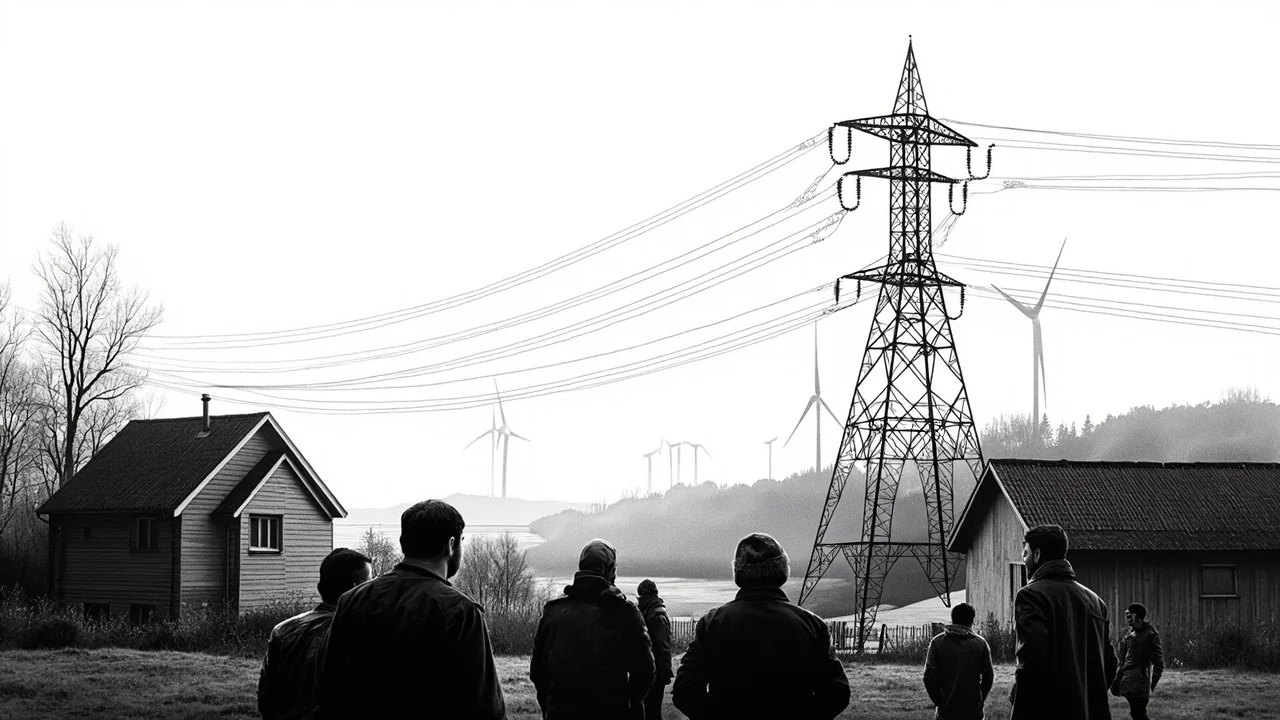
Denmark's power grid faced a sudden disruption Sunday evening, leaving over 1,600 customers in the Herning area without electricity. The outage, reported by grid operator N1, began at 8:26 PM and was projected to last until approximately 10:30 PM. The cause of the failure remains unknown, according to the company's statement on its website. For affected residents, the incident meant an unexpected and inconvenient halt to their Sunday evening routines, plunging homes into darkness and disconnecting them from essential services during a peak family time.
A Sunday Evening Plunged into Darkness
The power cut struck at a pivotal time for many Danish families. Sunday evenings in Denmark are typically reserved for hygge – a cherished time for relaxation, shared meals, and preparing for the week ahead. The loss of power disrupted this fundamental rhythm. Homes were suddenly without lighting, heating, and the ability to cook. For those reliant on electronic medical equipment or with vulnerable family members, the situation carried an added layer of anxiety. The outage underscored how dependent modern life is on a constant, reliable electricity supply, a cornerstone of the Danish welfare system's promise of stability and comfort.
Grid Operator's Response and Communication
N1, the regional grid company responsible for the area, activated its standard incident protocol. The primary channel for information was its official website, where it posted the initial alert and the estimated restoration time. This method of communication is standard for Danish utilities, but it presents an immediate challenge for those whose internet access was severed by the outage itself. The company's focus was on isolating the fault and restoring power within the two-hour window. While the estimated resolution time of 10:30 PM offered some certainty, the lack of a confirmed cause for the failure left open questions about the underlying resilience of the local infrastructure.
Context of Denmark's Energy Reliability
Denmark is known for its advanced and generally stable energy grid, with a strong focus on renewable sources. However, localized outages like this one reveal the system's points of vulnerability. They are often caused by technical faults, equipment failure, or external damage. While statistically rare on a large scale, such events have a disproportionate impact on the communities they affect. This incident in Herning serves as a real-time test of municipal and utility emergency coordination. It highlights the importance of robust contingency planning at the local level, ensuring that communication reaches all residents, not just those who can access online updates during a blackout.
Expert Perspective on Infrastructure Stress
Energy analysts note that while Denmark's grid is modern, it is not immune to faults. "Every electrical network, no matter how well-maintained, can experience unexpected failures," explains a consultant who prefers to remain anonymous due to ongoing work with utility providers. "The critical metrics are response time, communication clarity, and the effectiveness of redundancy systems. An outage of this duration, while inconvenient, falls within a standard response window for locating and fixing an unknown fault." The expert further points to weather and increasing demand as constant pressure points on national infrastructure, even in a country with Denmark's technical prowess.
Community Impact and Local Response
For the municipality of Herning, the event triggered standard welfare check protocols. Social services and local police are typically alerted to monitor the situation, with a focus on elderly care homes and individuals registered as power-dependent. Community centers can act as temporary warming shelters if an outage is prolonged, though the two-hour scope of this event likely limited the need for such measures. The incident nevertheless acts as a live drill, revealing how quickly local agencies can mobilize and share information to protect vulnerable citizens when a core utility fails.
A Return to Normalcy
As the clock neared the 10:30 PM estimate, repair crews worked to restore connection. For the 1,600 affected households, the return of power meant more than just light and heat, it meant a restoration of normalcy and security. The quiet hum of appliances and the glow of streetlights would signal the end of an abrupt disruption. While the outage was a temporary inconvenience, its occurrence on a quiet Sunday night in a developed nation like Denmark serves as a potent reminder of the complex, often invisible systems that underpin daily life and the collective reliance on their seamless operation.