
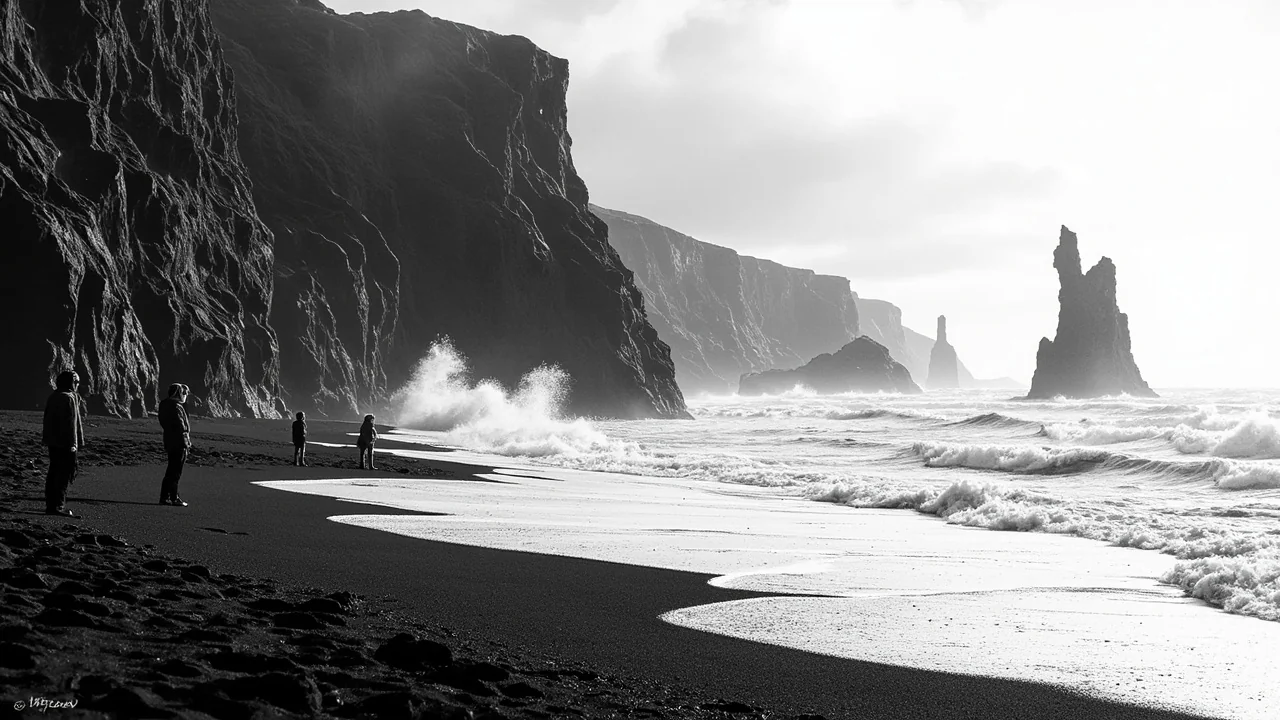
Iceland's Reynisfjara beach has lost over 100 meters of sand to fierce easterly storms, exposing ancient basalt columns directly to the sea. Farmer Guðni Einarsson, who owns land in the area, summed up the shock: "Stuðlabergið er bara komið út í sjó. The basalt column is just out in the sea." He says the scale of erosion this past weekend is unlike anything he has witnessed before, calling it unprecedented in his lifetime.
Residents of the South Iceland coast near Vík í Mýrdal report they never expected anything like this. A natural hazards expert noted that easterly winds have been constant over the area for weeks, combined with high surf. She holds some hope that sand which has moved away might return, but acknowledges it is entirely uncertain if all of it will come back.
Unprecedented Shift on a Famous Shore
Reynisfjara, stretching between Dyrhólaey and Reynisfjall, is known for its dynamic black sand beaches. Guðni Einarsson explains that sand movement is a familiar process here. "We have often experienced that the sand has moved back and forth. It erodes to the east by Reynisfjall and deposits to the west by Dyrhólaey," he said. But the recent event is different. "The sea has cleaned away all the sand south under Reynisfjall and the basalt column. It just carries it further west onto the beaches."
The erosion dug inland approximately one hundred meters near Reynisfjall, creating a significant new depth. Guðni emphasizes this specific phenomenon occurs with easterly winds, and sand often returns with southwesterlies. However, the current loss is on a scale that has never occurred before, transforming the coastline in a matter of days.
Local Livelihoods and Infrastructure at Risk
The immediate concern extends beyond the natural landscape. Guðni Einarsson's worry is now practical and economic. "If there is heavy surf, we could become exposed regarding the parking lot in Reynisfjara," he stated. This parking lot serves the thousands of tourists who visit this iconic site each year, a cornerstone of local tourism in the region. The potential damage to infrastructure highlights how environmental change directly impacts community resilience and the economy in rural Iceland.
Other residents echo his alarm, describing a profound change to a landscape they thought they knew. The loss of sand has altered the very character of the beach, making it unfamiliar to those who live alongside it. This human impact angle is central to the story, as climate and weather patterns shift the ground beneath people's feet—literally.
Expert Perspective on a Changing Coast
The natural hazards expert monitoring the situation provides crucial context. She confirms the persistent easterly storms and high waves as the driving force. Her analysis points to a natural cycle, but one intensified by recent weather patterns. While she hopes for some sand return, the uncertainty underscores the volatile nature of Iceland's coastal environments. This expert view anchors the story in observable science, moving it beyond anecdote to a documented environmental event.
In Iceland, where the environment is both livelihood and identity, such events prompt immediate reflection. The data from this single event—100 meters of erosion—serves as a stark metric for coastal communities nationwide. It raises questions about preparedness and adaptation in the face of increasingly volatile weather, a topic of discussion in Reykjavik's political circles concerning national resource management.
The Broader Environmental Picture
While this event is localized to Reynisfjara, it fits into a broader narrative of environmental sensitivity in the Nordic region. Iceland's coasts are constantly reshaped by glacial rivers, waves, and wind. However, extreme single events like this capture attention and drive home the reality of change. The fishing industry, closely tied to coastal stability, often watches such developments closely, though this incident is more directly tied to tourism and land use.
There is no direct mention of policy response or Althing intervention in the source material, but the implications for local governance are clear. Managing natural hazards and protecting infrastructure will require attention from municipal authorities in the South and potentially from national bodies focused on climate adaptation and environmental protection.