
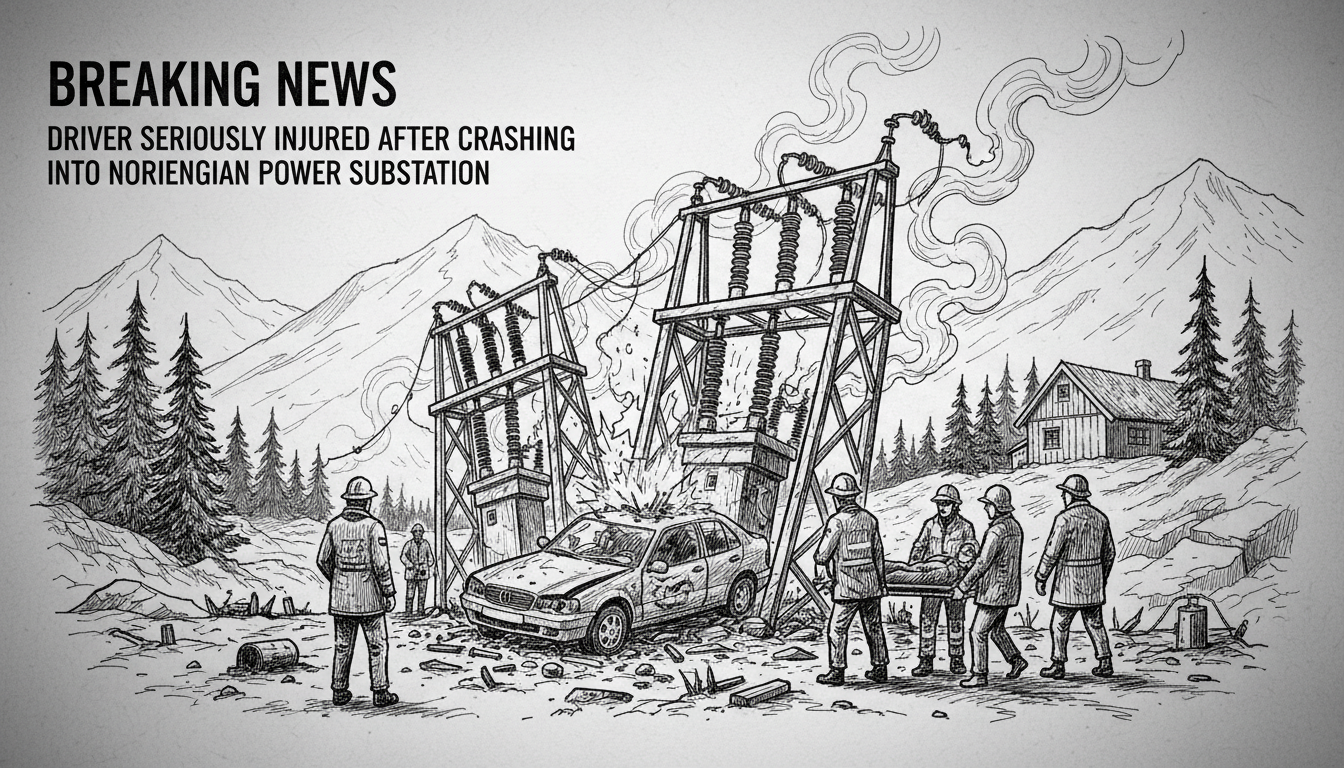
A serious accident in southwestern Norway has left one person with life-threatening injuries after a vehicle crashed into an electrical substation. Emergency services are performing critical first aid at the scene. Police report extensive material damage to both the vehicle and the transformer equipment. The local power grid operator has been notified of the incident.
This type of accident, while uncommon, highlights the critical infrastructure risks present even in remote areas. Norway's rugged terrain and dispersed population mean power infrastructure is often located near roadways. The country relies on a vast network of substations to distribute electricity from its extensive hydropower and, increasingly, wind power sources. Any damage to this grid can have cascading effects.
For international readers, it is important to understand Norway's unique energy landscape. The nation generates nearly all its electricity from renewable sources, primarily hydropower from its many fjords and mountains. This power is then transmitted across long distances to cities like Oslo, Bergen, and Stavanger. Substations are crucial nodes in this system, stepping down voltage for local distribution. An outage at one can disrupt power to homes, businesses, and even key industrial sites.
The immediate priority is the driver's condition and securing the site. Beyond the human tragedy, such incidents pose a dual threat. First, there is the risk of fire or electrocution from damaged high-voltage equipment. Second, there is the potential for localized power outages, which can impact everything from home heating to business operations. Norway's emergency response protocols for critical infrastructure are well-developed, given the nation's focus on energy security and its role as a major European energy supplier.
This event also touches on broader themes of infrastructure resilience. As Norway continues to develop its northern regions and the Arctic, protecting energy and transport networks becomes even more vital. The Storting, Norway's parliament, has consistently funded upgrades to national infrastructure, recognizing its importance for both the economy and national security. The clean, reliable power from Norway's fjords is a cornerstone of its modern society and its export economy.
What happens next? Investigators will determine the cause of the crash, examining factors like road conditions and driver error. The power company will work to assess the damage fully and restore any lost capacity. For a nation so dependent on stable electricity, from running its oil platforms in the North Sea to heating its homes through long winters, the integrity of every transformer station matters. This accident serves as a stark reminder of the complex, often unseen, systems that power daily life.