
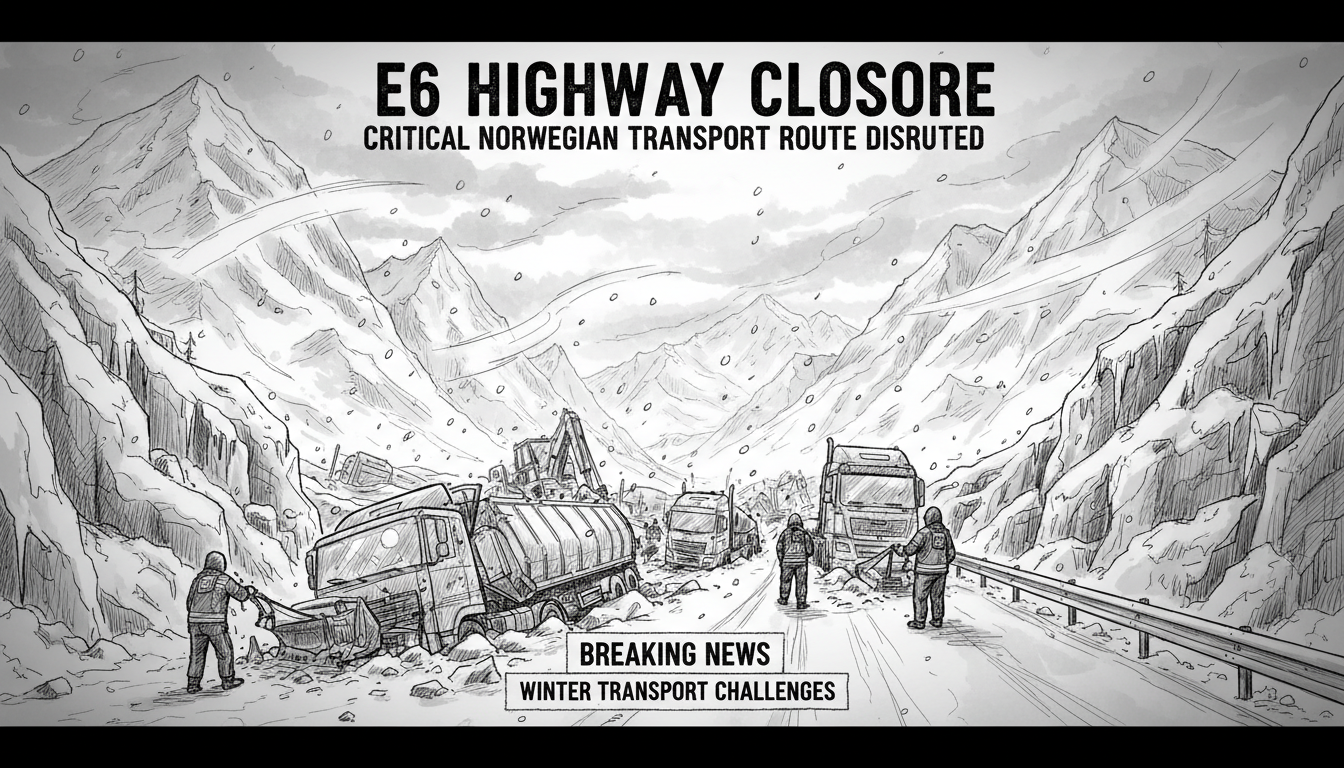
Norwegian authorities closed the E6 highway near Garli in Midtre Gauldal after dangerous ice conditions caused multiple truck accidents. The major transport artery connecting central and northern Norway remains blocked in both directions during ongoing winter weather challenges.
Police operations leader Svein Erik Wagnild described the situation as extremely hazardous. "Road conditions are terribly slippery," he said in a statement. "We received reports of several trailers skidding and experiencing major difficulties." Three commercial trailers currently block the highway completely. One driver deliberately steered into a ditch to avoid colliding with other vehicles.
Emergency crews have begun spreading salt and sand on the affected roadway sections. Police initially expressed confidence the closure would be brief but now acknowledge substantial challenges. Recovery teams await heavy tow trucks and additional de-icing vehicles before reopening the critical transport corridor.
Veteran transport driver Alf Henry Dahl expressed surprise at the severity of conditions. "This is the first time I have experienced anything like this," he noted after waiting ninety minutes in the growing queue. Dahl regularly travels this E6 segment multiple times monthly but never encountered similar closures.
The E6 highway represents Norway's primary north-south transportation backbone, stretching from the Swedish border through Trondheim to Arctic regions. This closure disrupts commercial transport, tourist travel, and local commutes simultaneously. Trøndelag region frequently experiences challenging winter driving conditions, though complete highway shutdowns remain relatively uncommon.
Norwegian highway maintenance faces particular challenges given the country's extensive roadway network and variable winter conditions. The Norwegian Public Roads Administration maintains 55,000 kilometers of public roads, with E6 representing the longest continuous route. Winter maintenance operations typically deploy 2,500 snowplows and specialized vehicles nationwide.
This incident highlights infrastructure vulnerabilities during extreme weather events. Transport analysts note that climate change may increase frequency of such freeze-thaw cycles in central Norway. The Garli section's specific topography creates microclimate conditions that sometimes produce unexpected ice formation despite advanced weather forecasting.
Norwegian authorities prioritize highway safety while balancing economic impacts of prolonged closures. The E6 carries substantial freight traffic between southern manufacturing centers and northern communities. Extended disruptions can affect supply chains, particularly for perishable goods and time-sensitive deliveries.
Road maintenance crews work through the night to restore safe passage. Police coordinate with regional emergency services to manage traffic flow and assist stranded motorists. The situation demonstrates Norway's ongoing balancing act between maintaining vital transport links and ensuring public safety during hazardous weather conditions.