
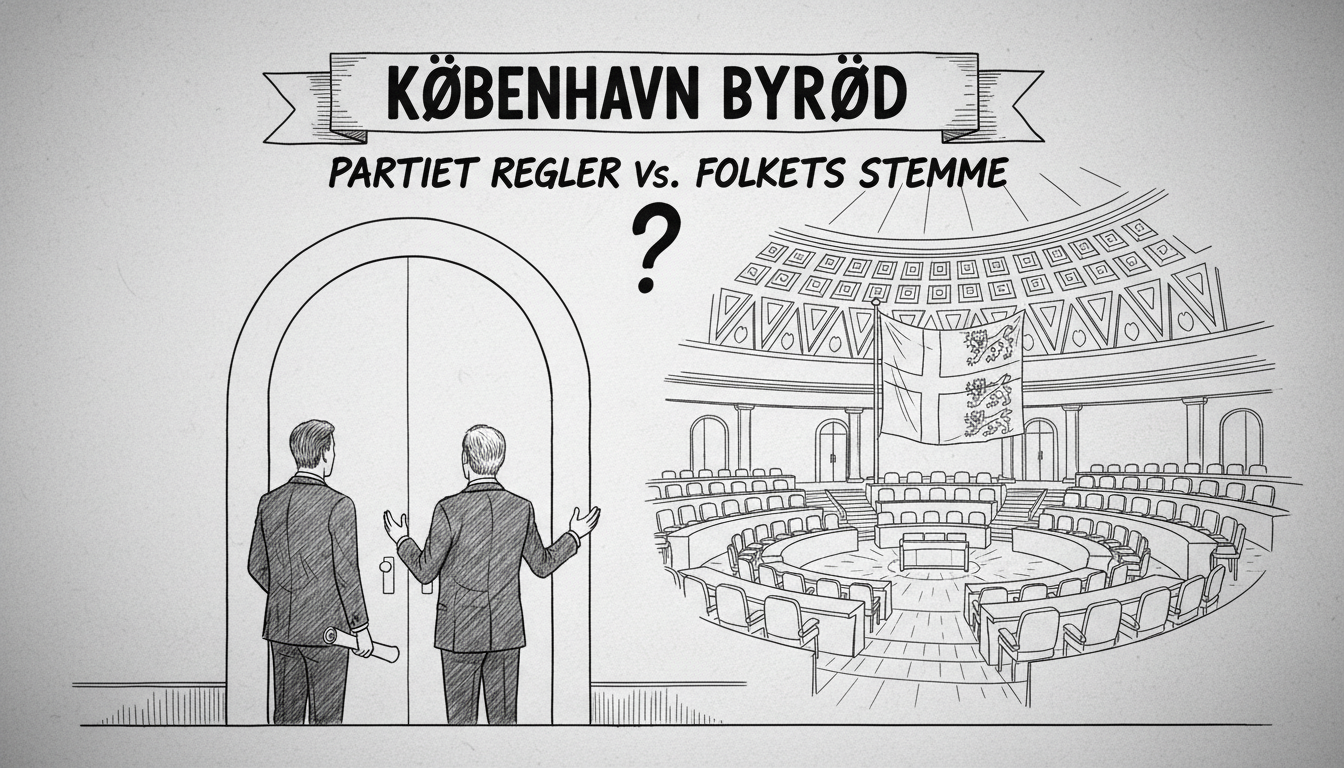
Over two thousand Copenhagen voters cast personal votes for Social Democrats Mette Reissmann and Yildiz Akdogan in the recent municipal election. Their votes secured seats for the two politicians in Copenhagen's City Council. Yet both will be absent from the first constitutive meeting of the new council this Friday. Their designated substitutes will attend instead. This situation highlights a recurring tension within Danish politics between voter choice and internal party discipline.
The core conflict stems from a longstanding Social Democratic party rule. It prohibits members from holding dual mandates in both the national parliament, the Folketing, and a municipal council. Both Reissmann and Akdogan are currently sitting members of parliament. They must choose one role. Despite leading campaigns that urged voters to support them personally, they have not yet made a public decision. This leaves their constituents in a state of uncertainty.
The internal party process adds another layer. Both politicians recently contested an internal party election for a vacant mayoral position in Copenhagen. They promised to leave parliament if they won. Neither succeeded. Now, they have applied to the party's national executive board for a special exemption to hold both seats. That application will be considered at a meeting early next week. The party leadership attempted to abolish the dual-mandate ban at its most recent national congress but failed to secure sufficient support from the broader membership.
This episode raises questions about political accountability in the Danish welfare system. Voters cast ballots with the expectation of representation. When elected officials are absent due to internal party mechanics, it can create a disconnect. The Copenhagen integration landscape, with its complex social policies, requires consistent and present leadership. Municipal social centers and local projects depend on clear political direction. The delay affects planning and community trust.
Statistics on political integration show that personal votes are particularly significant for candidates with diverse backgrounds. They are often seen as a direct channel for community concerns. Akdogan, in particular, has been a profile in discussions on Denmark immigration policy. Her absence from the local table, even temporarily, silences a specific voice in the Copenhagen integration debate. The situation calls for clearer communication between parties, their candidates, and the electorate.
The party chairperson has previously stated she sees no issue with fielding candidates who may not accept a council seat. She argued the rules are public and voters make an informed choice. This perspective places the responsibility on the voter to understand complex internal party regulations. For the average citizen, the expectation is simpler: a vote should lead to representation. The coming days will reveal if the party grants an exception or enforces its rules, setting a precedent for future Danish society news concerning political appointments.
This is not an isolated incident in Danish social policy. Similar debates occur when politicians juggle multiple elected roles. The system prioritizes preventing over-concentration of power. Yet it can also frustrate local democratic expression. The outcome will signal how the Social Democrats balance internal discipline with respecting the clear choice of over two thousand Copenhagen voters. Their decision will resonate in discussions about municipal autonomy and national party control for some time.