
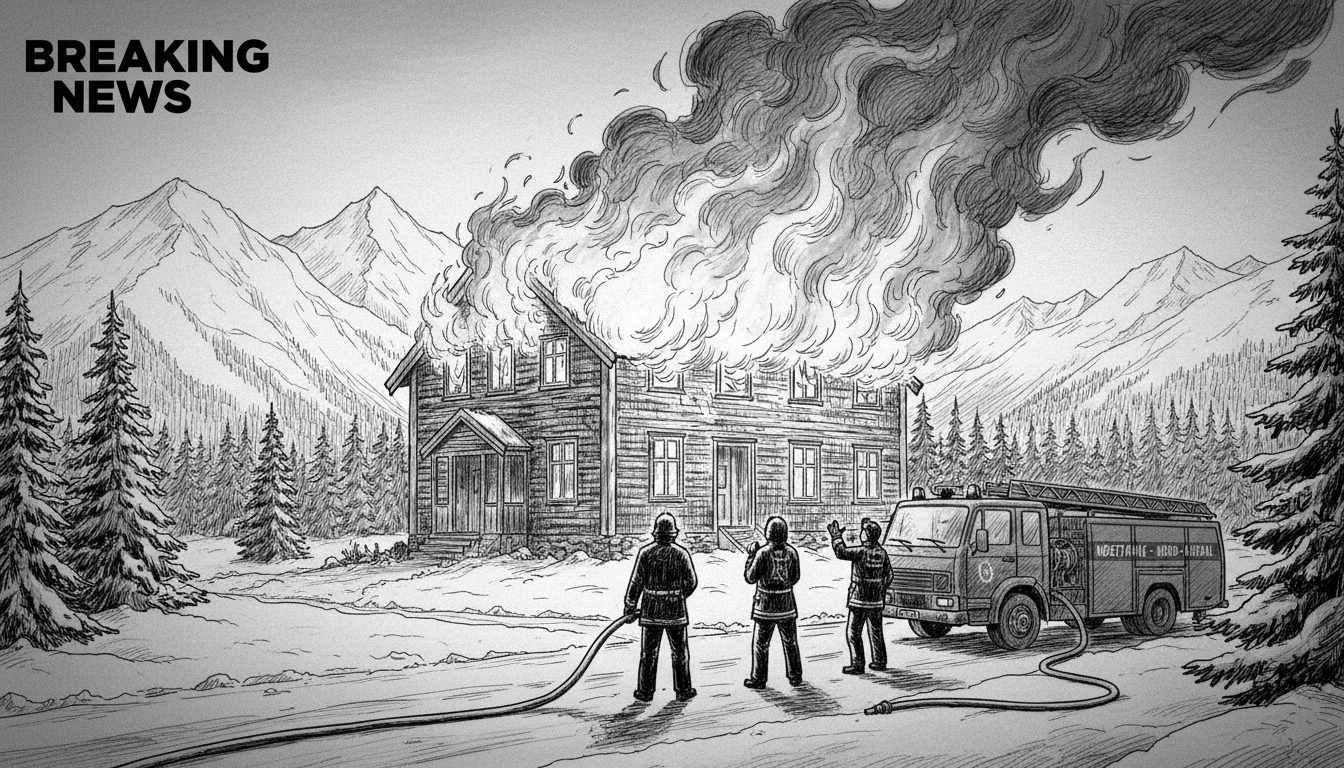
Emergency services rushed to a detached house fire in Nord-Aurdal on Thursday. Police reported visible flames above the roof. Authorities confirmed the immediate deployment of fire and medical units. The status of any potential occupants remains unknown as operations continue.
Nord-Aurdal is a municipality in the inland county of Innlandet. This region, while not a major population center, is emblematic of Norway's dispersed settlement pattern. Many families live in detached homes, or 'eneboliger', across vast rural and semi-rural areas. This geographical reality presents unique challenges for national emergency preparedness. Response times can be longer, and resources more spread out, compared to major cities like Oslo or Bergen.
The Norwegian emergency response system is a coordinated network. It involves municipal fire brigades, police districts, and regional health authorities. These entities train extensively for scenarios exactly like this. Their protocol prioritizes life safety, incident stabilization, and property conservation. The initial focus is always on confirming whether people are inside a burning structure. This dictates the tactical approach of the first responders on scene.
House fires in Norway, while tragic, have become less frequent over recent decades. This trend is due to strict national building codes and widespread public safety campaigns. All new homes must meet rigorous standards for fire-resistant materials and smoke alarm installation. The government also subsidizes the upgrade of older properties. Despite these measures, older wooden houses, common in areas like Nord-Aurdal, remain particularly vulnerable. Cold, dry winters and the use of wood-burning stoves for heating can increase fire risks in these communities.
For international readers, this incident highlights a key aspect of the Norwegian social contract. The state maintains a high-capacity emergency response system funded by substantial tax revenues. Citizens, in turn, expect a rapid and professional intervention regardless of how remote their home might be. This expectation extends from the oil platforms in the North Sea to the isolated fjord settlements. The effectiveness of this system is a point of national pride and a practical necessity for a country with Norway's terrain and climate.
The coming hours will be critical. Investigators will work to determine the fire's cause once it is fully extinguished. Common origins include electrical faults, chimney fires, or kitchen accidents. The local municipality's social services would typically offer support to any displaced residents. This story, while a localized emergency, reflects the broader infrastructure and values that underpin Norwegian society. It shows the machinery of the welfare state activating in a moment of crisis, a function its citizens rely upon.