
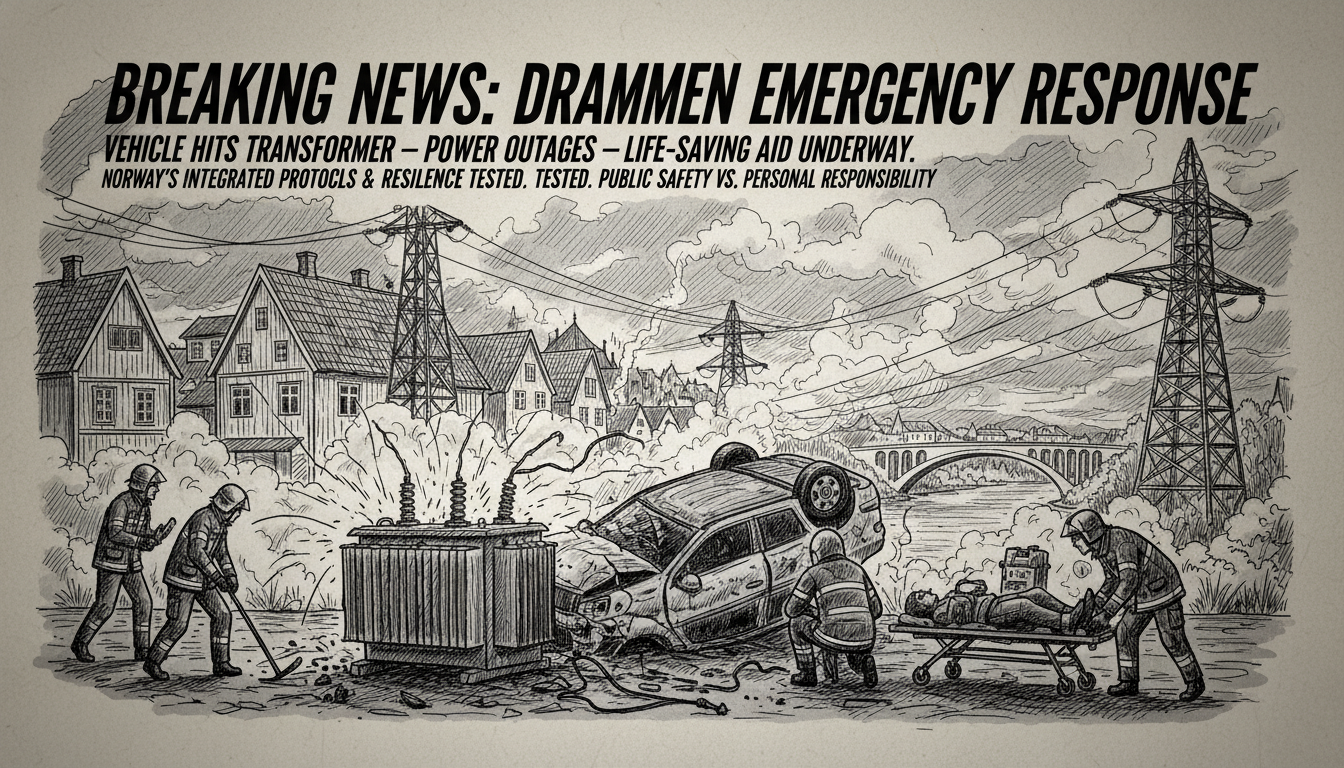
Emergency services in Drammen are conducting life-saving first aid after a car crashed into a power transformer. Police confirmed the incident and reported substantial material damage to both the vehicle and the transformer. The local power company has been notified. Early reports indicate localized power outages in the area as a direct result of the accident.
This incident highlights the critical infrastructure vulnerabilities in Norwegian towns. Drammen, a key industrial and logistical hub southwest of Oslo, relies on a stable power grid for its port operations and manufacturing sectors. Any disruption, even localized, can have ripple effects. The response underscores Norway's high-capacity emergency protocols, which are tested regularly in a nation with challenging geography and weather.
For international observers, this event connects to broader Norwegian policy priorities. The government consistently invests in resilient public infrastructure and emergency response. This is a cornerstone of the Nordic welfare model, where public safety and system reliability are non-negotiable. The swift deployment of resources to Drammen reflects this institutional commitment. It also demonstrates the integrated response between police, medical teams, and utility companies that is standard procedure.
Such accidents, while tragic, prompt reviews of road safety and infrastructure placement. Norwegian authorities often use these events to evaluate traffic calming measures or protective barriers around essential utilities. The material damage to the transformer itself will be a cost borne by the public, either through insurance or municipal budgets. This reality often fuels political debate about personal responsibility versus systemic safeguards.
The immediate focus remains on the individual's condition. The term 'livreddende førstehjelp' (life-saving first aid) indicates a very serious medical situation. Norway's emergency medical services are among the world's best, with high levels of training and equipment availability even in smaller cities. The outcome here will depend on the speed and quality of this initial intervention. The event serves as a stark reminder of how quickly routine travel can turn into a crisis, demanding robust public systems to manage the consequences.