
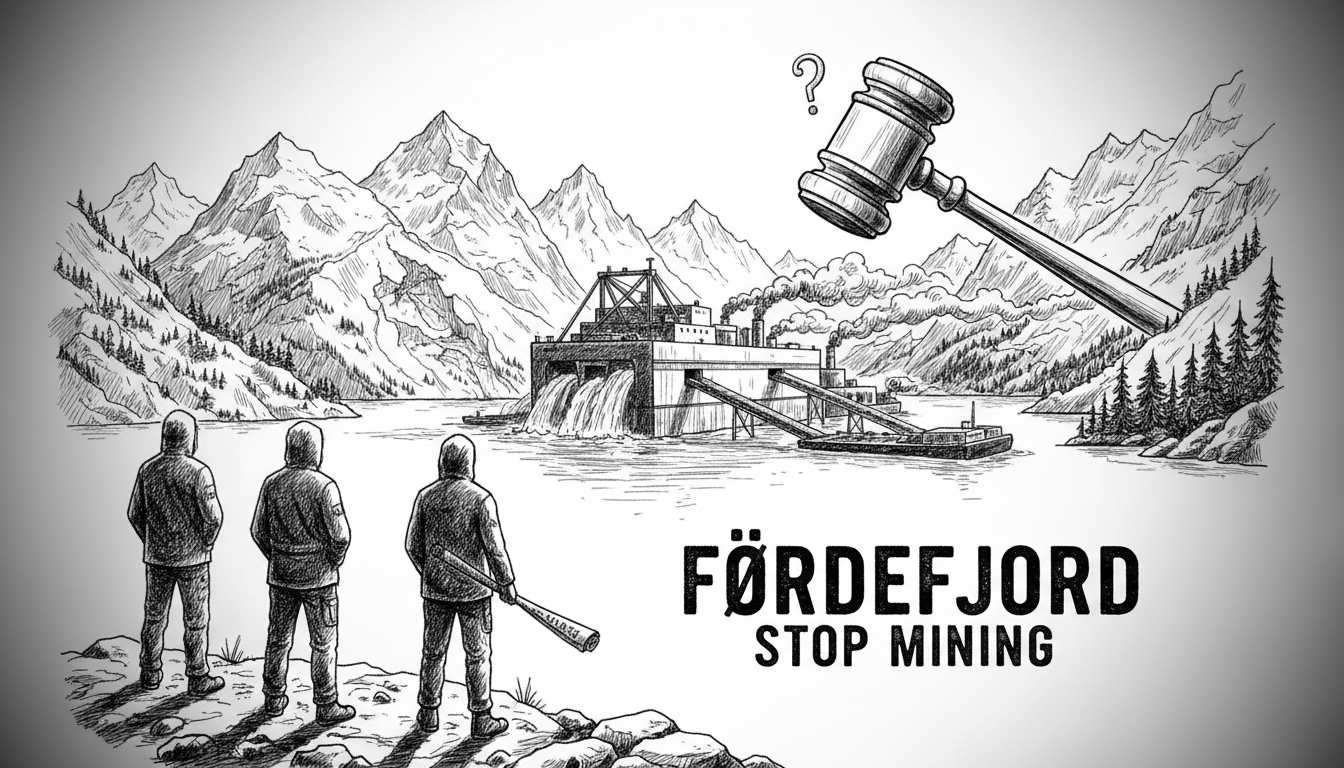
Environmental organizations in Norway will return to court seeking an immediate halt to mining operations in the Førdefjord. The Nature Conservation Association and Nature and Youth announced their decision following a board meeting. They aim to secure a temporary injunction to prevent potential damage to the sensitive fjord ecosystem until the Supreme Court makes a final ruling.
Truls Gulowsen, leader of the Nature Conservation Association, expressed strong confidence in their case. He said the groups seek a complete prohibition on mine waste dumping until the legal process concludes. The organizations argue that allowing operations to continue risks irreversible harm to the marine environment.
This legal battle centers on a controversial sea deposit permit for the Engebø Rutile and Garnet mine. The project is operated by Nordic Mining's subsidiary. The Borgarting Court of Appeal previously ruled the state's approval invalid. The government has since appealed that decision to the Supreme Court, setting the stage for a landmark environmental ruling.
In a significant setback last autumn, the Sogn og Fjordane District Court rejected the environmentalists' request for a temporary injunction. The court also ordered the organizations to pay substantial legal costs of 2.5 million Norwegian kroner to the mining company. Gulowsen criticized that ruling harshly. He stated the decision contains several obvious errors and violates the Aarhus Convention by imposing prohibitively high costs. The Aarhus Convention guarantees public rights regarding environmental information, justice, and decision-making.
Gulowsen argued the district court's ruling weakens legal protections for nature. He said it raises the barrier for bringing environmental cases to court to an unreasonable level. The environmental groups maintain such a precedent cannot stand in Norwegian law.
The Førdefjord case represents a critical test for Norway's environmental governance. It pits economic development through mineral extraction against strict protections for vulnerable Arctic and sub-Arctic ecosystems. Norway has positioned itself as a global environmental leader while simultaneously expanding its mineral extraction industry. This contradiction creates persistent legal and political tensions.
The mining project aims to extract rutile and garnet from the Engebø deposit. These minerals have industrial applications. Proponents argue the operation brings jobs and economic activity to the region. Opponents highlight the fjord's ecological value and the risks of submarine tailings disposal, where mine waste is deposited on the seafloor.
This is not Norway's first major environmental court battle over fjord protection. Similar conflicts have occurred regarding mining in the Repparfjord and salmon farming in multiple locations. The Supreme Court's eventual decision will establish important precedent. It will influence how future industrial projects near sensitive Norwegian fjords are evaluated and permitted.
The case also highlights the financial risks for environmental organizations in Norway's legal system. The substantial cost award against the groups could deter future public interest litigation. This creates a difficult balance between access to justice and preventing frivolous lawsuits.
International observers are watching closely. Norway's handling of this case affects its reputation for environmental stewardship. The outcome will signal how the country manages its natural resources amid global demand for critical minerals. The government must navigate between industrial policy objectives and its international climate and nature commitments.
The next legal steps involve formalizing the appeal to a higher court. The process could take many months. During this period, mining operations could potentially continue unless the appeals court grants the requested injunction. The environmental groups are preparing their arguments, focusing on procedural errors and constitutional protection principles.
The Førdefjord conflict underscores a fundamental Norwegian dilemma. The nation benefits enormously from petroleum and mineral exports yet champions environmental causes globally. How courts and politicians resolve these tensions will define Norway's development path for decades. The Supreme Court's ruling will either reinforce environmental safeguards or signal greater flexibility for resource extraction in fragile coastal areas.