
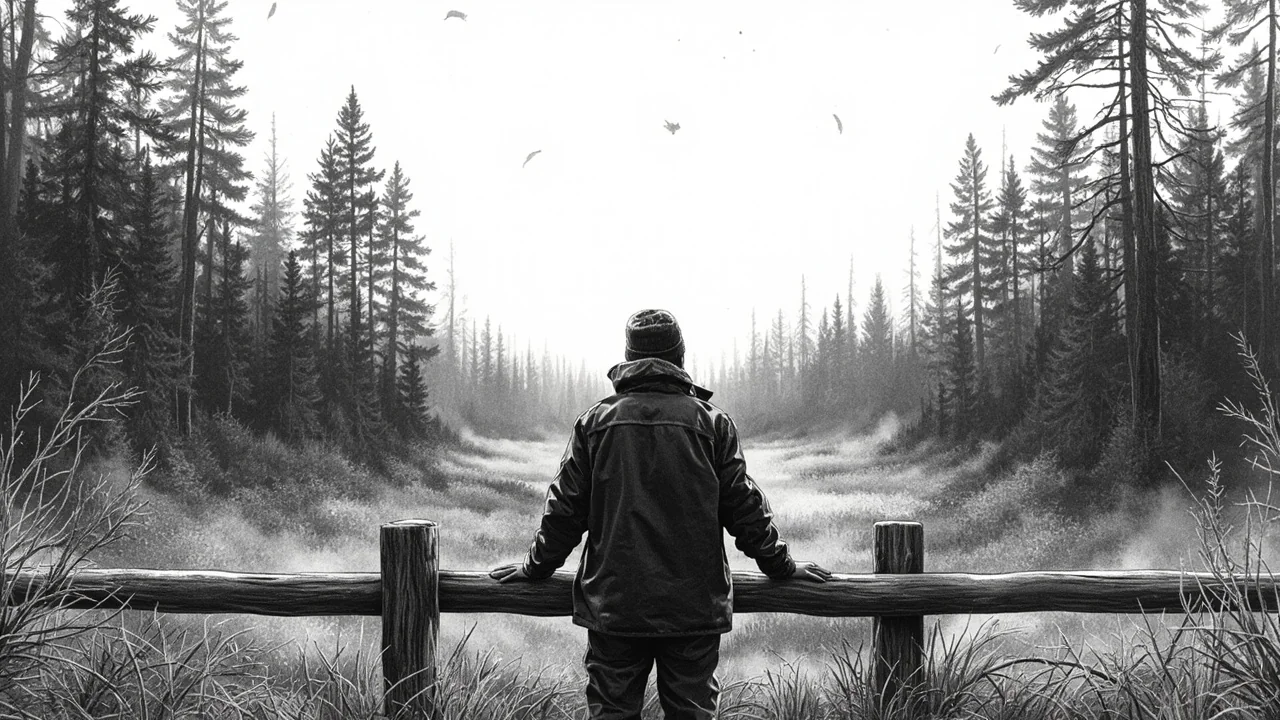
Finland's municipal forestry practices are navigating public sentiment and silvicultural needs in Central Finland. The municipality of Laukaa is implementing continuous cover logging this winter in nearby forests at Lievestuore's Laurinkylä and Leppävesi's Näätämäki. The work continues forest management initiated last year with the removal of smaller undergrowth.
“At these sites, undergrowth was cleared last year and now the work continues with the removal of larger trees,” said Jarmo Toikka, Laukaa's land use director. The method being used aims to maintain a forested landscape character by removing trees from all canopy layers, leaving the overall visual impression intact.
The Continuous Cover Approach
Authorities express a clear preference for this selective logging technique where feasible. “If at all possible, all nearby forests are aimed to be treated this way,” Toikka explained. The practice, known as continuous cover forestry, avoids the stark visual impact of clear-cutting, which is often a point of public contention when forests near residential areas are harvested. It represents a common municipal strategy to balance wood production with recreational and aesthetic values that residents attach to local woodlands.
However, the method is not universally applicable across all forest stands. Its success depends on the existing structure and density of the trees. “Sometimes the forest doesn't have enough small-sized trees. Then continuous cover logging doesn't succeed, and we have to carry out regeneration felling and plant seedlings,” Toikka noted. This acknowledgment points to the technical limitations forest managers face when applying ideal practices to varied on-the-ground conditions.
Navigating Public Feedback
The management of these lähimetsät, or nearby forests, inherently involves public interest. The original headline's quote, “Feedback is considered, but sometimes wishes are contradictory,” encapsulates the core challenge for municipal planners. Residents may have strong but differing opinions: some prioritize unmanaged natural landscapes, others accept active forestry for economic or health reasons (like mitigating bark beetle risks), and others still focus solely on the visual buffer between their homes and more intensive operations.
This feedback loop is a standard part of Finnish municipal forestry planning. While not detailed in the brief source material, such processes often involve published management plans, public announcement periods, and sometimes direct communication with nearby landowners. The contradiction mentioned arises when, for instance, one resident opposes any cutting while a neighbor supports thinning for better forest health or views.
Forestry in the Finnish Context
To understand the scale, Finland's forest landscape is overwhelmingly dominated by commercial forestry, with a significant portion privately owned by individuals and families. Municipalities like Laukaa also own and manage productive forest land, generating revenue for local services. The management of these municipal forests sits at the intersection of economic benefit, environmental stewardship, and social license from the taxpayer-residents.
The choice between continuous cover and regeneration felling (clear-cutting with replanting) is a major technical and ethical discussion in Finnish forestry. Continuous cover is often promoted for its ecological and aesthetic benefits, but regeneration felling is a standard, legal practice for renewing even-aged forests, particularly pine and spruce stands common in the region. Municipalities, under public scrutiny, often lean towards the more publicly palatable continuous cover method for stands visible from homes and roads.
Implementation and Winter Harvesting
Carrying out the work in winter is a deliberate operational choice. Frozen ground minimizes damage to soil structure and the remaining root systems. It also allows for easier access for machinery with less rutting and landscape disturbance. The snow cover can further cushion the impact and provide a clear, clean worksite. This seasonal timing reflects standard sustainable forestry practice aimed at reducing the environmental footprint of timber extraction.
The specific sites, Laurinkylä and Näätämäki, represent typical Finnish forest villages where settlements are nestled within or adjacent to productive forest land. The management decisions here are microcosms of the national conversation about forest use. The work is not presented as exceptional or large-scale, but rather as part of the routine, cyclical management of a renewable resource that defines much of Finland's geography and economy.
Looking Beyond the Harvest
The aftermath of the logging is as important as the harvest itself. In areas where continuous cover is successful, the forest will continue to grow and evolve with a more varied age structure. Where regeneration felling and planting must occur, the site will begin a new, 60- to 100-year rotation. Municipal forestry departments typically manage these young stands, conducting necessary tending thinning in the coming decades, slowly steering them toward the next harvest.
This long-term perspective is key. A single winter's logging operation is not an end point but a phase in a perpetual cycle. The public feedback considered for this operation will again be sought in future decades when these stands are next due for treatment. The balancing act between contradictory wishes – for untouched nature, for productive forestry, for scenic views – is therefore not a one-time challenge but a permanent feature of managing Finland's forested landscape. The true test is whether the management cycle maintains both the health of the forest and the trust of the community over time.