
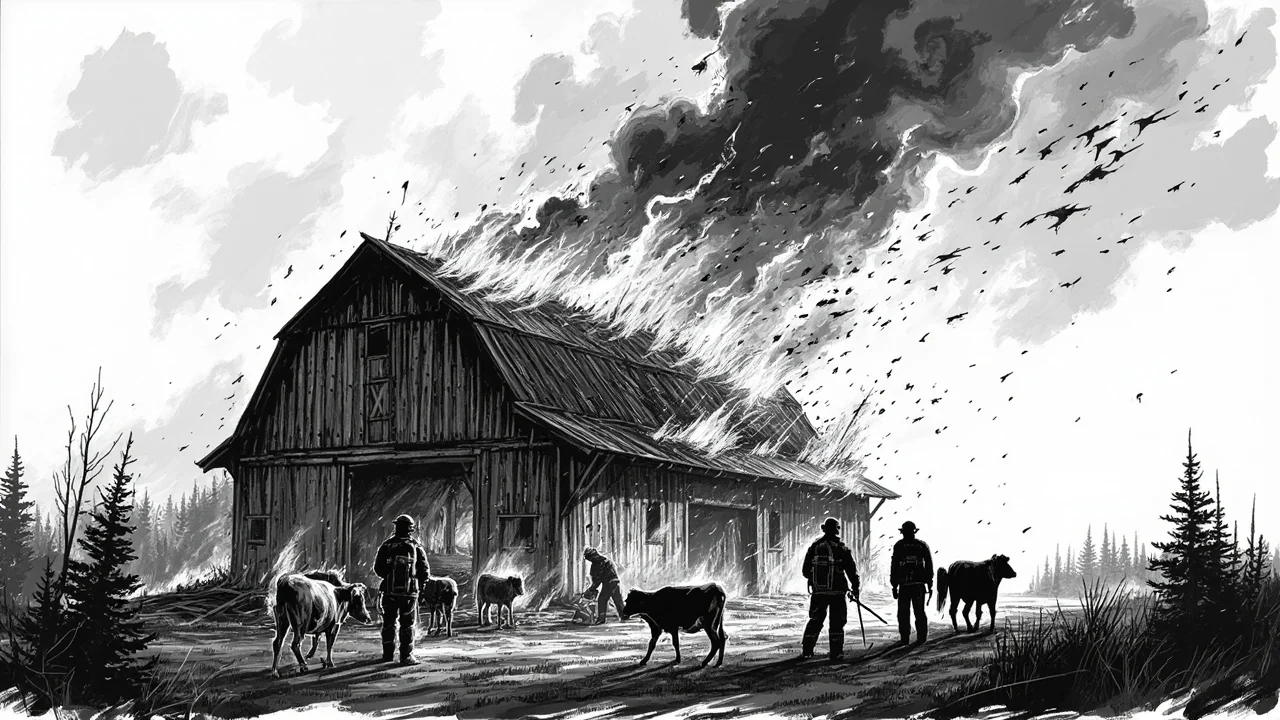
Finland's agricultural sector is reeling after a devastating barn fire in Kouvola claimed the lives of approximately 180 cattle early Sunday morning. The blaze, which erupted around 6:30 AM on Yläniitynkuja, completely destroyed the steel-framed structure before firefighters could contain it. According to the on-duty chief, Timo Kuossari, the building was practically already destroyed when rescue services arrived on the scene. Firefighters successfully prevented the flames from spreading to adjacent farm buildings. In a neighboring barn, about 60 calves survived unharmed and did not require evacuation.
A Dawn Catastrophe in Kouvola
The alarm came in to emergency services just after half past six on a quiet Sunday morning. The speed and intensity of the fire in the steel-framed barn overwhelmed initial response efforts. By the time fire crews from Kouvola and surrounding areas reached the rural property in Kymenlaakso, the primary structure was fully engulfed. Chief Timo Kuossari's statement to news media painted a stark picture of the scene his team encountered. Their immediate operational focus shifted from saving the main barn, which was already a total loss, to conducting a defensive operation. This strategy aimed to protect other assets on the farmstead, including vital infrastructure, machinery storage, and the nearby calf barn. The successful containment prevented what could have been an even more extensive disaster, limiting the financial and emotional damage to the farming family.
The Neighboring Calves Spared
In a small stroke of fortune amidst the tragedy, the fire did not reach a separate barn housing approximately 60 young calves. These animals, which are typically more vulnerable, were completely spared from injury or smoke inhalation. Firefighters confirmed that there was no need to evacuate the calves, as the protective measures taken ensured their barn remained safe and unaffected by the intense heat and flames next door. The survival of these animals represents a critical piece of biological and economic continuity for the farm operation. While the loss of nearly 200 mature cattle is a massive blow, the saved calves provide a foundation for future herd rebuilding. This detail underscores the capricious nature of such fires, where wind direction, building materials, and the swift action of first responders can determine vastly different outcomes within meters.
Economic and Emotional Blow to Farming Family
The loss of 180 head of cattle represents a severe financial hit for the farm owners, one that extends beyond simple asset valuation. In Finnish agriculture, a herd of that size often represents generations of selective breeding, herd health management, and daily labor. Each animal carries not just a market price but accumulated investment in feed, veterinary care, and husbandry. The psychological impact on the farmers and their workers is profound, as the care of livestock forms deep bonds and a daily routine now violently disrupted. The incident immediately raises questions about insurance coverage, the potential causes of the fire, and the daunting task of clearing the site. For a family-run enterprise, this is a life-altering event that will require extensive support from the local agricultural community, cooperatives, and mental health services tailored to the unique stresses faced by farmers.
Rising Concerns Over Farm Fire Safety
This fire in Kouvola is not an isolated incident but part of a concerning pattern of large-scale barn fires in Finland and across the Nordic region in recent years. These incidents often result in catastrophic animal losses and multi-million-euro property damages. The common use of steel framing and insulated panels in modern farm buildings, while efficient, can present specific fire spread challenges. The investigation into this fire's cause will be closely watched by the agricultural sector. Potential focuses include electrical systems, heating equipment, or machinery stored in the barn. The tragedy inevitably renews discussions about preventive measures, such as more frequent electrical inspections, the installation of sprinkler systems in larger livestock buildings, and enhanced firebreak planning between farm structures. While initial cost is a barrier for many farms, the scale of loss from a single event makes a compelling case for increased investment in mitigation.
Community and National Response
The local community in Kouvola and the wider Finnish farming network have begun mobilizing support for the affected family. This is a standard, heartfelt response in rural Finland, where neighbors understand the scale of such a loss. Practical help with tasks like feeding the surviving calves, clearing debris, or providing temporary equipment will be essential in the coming weeks. At a national level, organizations like the Central Union of Agricultural Producers and Forest Owners (MTK) often provide guidance and advocacy following such disasters. They may also use these tragic events to lobby for better state-supported safety programs or insurance schemes. The fire also serves as a somber reminder to all livestock producers to review their own emergency plans, ensuring all workers know evacuation protocols for animals and that contact information for emergency services is readily accessible at all hours.