
Finland's capital Helsinki was the scene of a violent ambush last summer that led to a major police operation and a court case centering on intent and intoxication. The incident, which began with an invitation to talk, ended with a gunshot in a quiet forest and a city-wide manhunt that shut down a major highway.
A Saturday Night Turns Violent
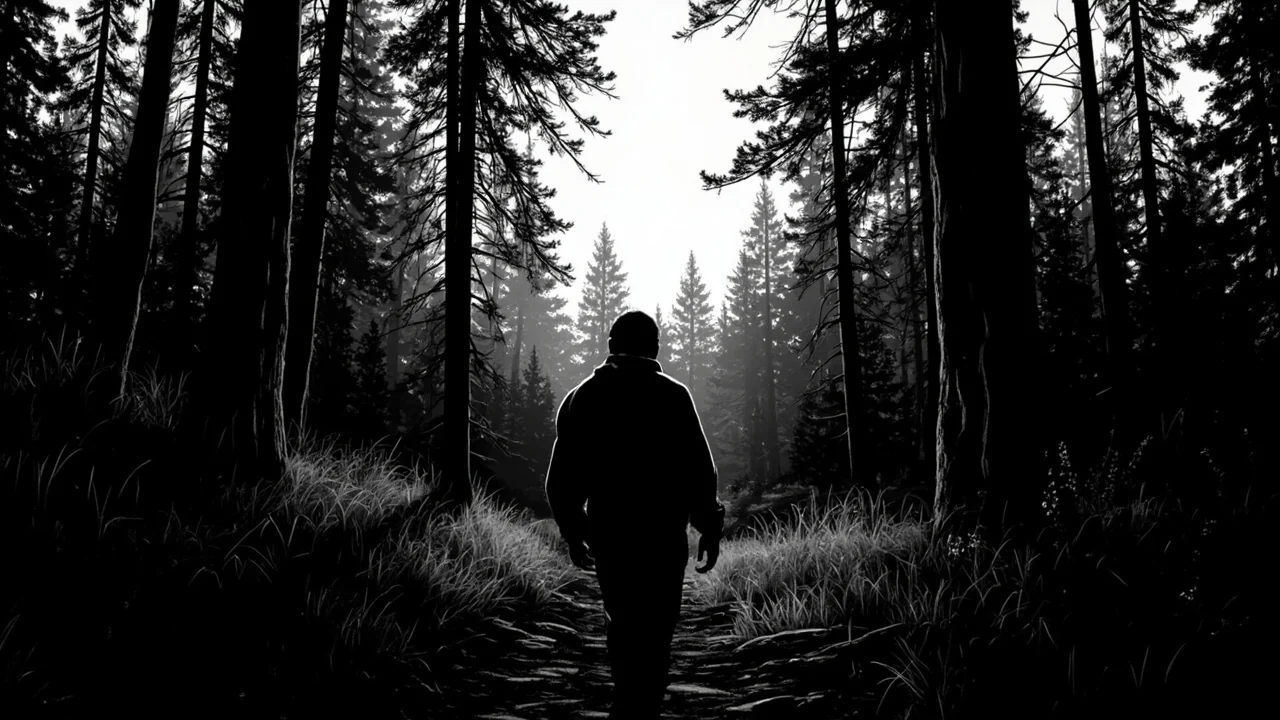
The events unfolded on the evening of July 5th. A 37-year-old man was spending time with friends on the island of Kulosaari when an acquaintance, a 33-year-old man, arrived. The visitor asked the victim to step aside for a private conversation but did not say what he wanted to discuss. Unsuspecting, the victim followed him into a wooded area near the Kulosaari bridge.
According to court testimony, the situation escalated in seconds. The victim sat down on a tree stump. The other man then suddenly produced a handgun and fired. The bullet, fired at close range, pierced the victim's leg. The shooter reportedly told his victim not to say anything about what happened to the authorities before fleeing the scene.
City-Wide Manhunt and Arrest
The gunshot and the victim's cry for help alerted his friends. One friend later testified in Helsinki District Court that he heard a bang and then immediately a shout that his friend had been shot. Police were called and launched a search for the armed suspect. The manhunt was described as a major security threat, leading authorities to close the entire Itäväylä highway, a critical traffic artery in eastern Helsinki.
The intensive search lasted several days. The suspect was arrested on suspicion of attempted murder a couple of days after the shooting. The case was processed in the Helsinki District Court last autumn, where the charge was ultimately for aggravated assault.
Clashing Accounts in Court
The court proceedings revealed starkly different accounts of the shooter's motives. The defendant denied the assault charge. He claimed he was only guilty of aggravated negligent bodily injury. He argued that the gunshot was a momentary impulse and that he had aimed at the ground near the victim's feet to scare him, not to injure him.
The defendant offered context for his state of mind. He testified that he had been on a three-day drug binge at the time of the incident and had used cocaine shortly before the shooting. He also stated he had received a message from the victim about a week and a half earlier, which he interpreted as provocative. He said he went to Kulosaari that Saturday to clear the air about what he felt was a lingering issue.
He told the court the shooting was over in an instant and claimed he was surprised the bullet hit the victim. He said he did not call for help for the injured man because he knew other people were nearby.
The Victim's Perspective
The victim's testimony painted a picture of a rapid and wholly unexpected attack. He told the court there was no preceding argument, negotiation, or any other form of confrontation. The entire encounter, from walking into the woods to the gunshot, lasted only about two minutes. He required significant compensation for his injuries, seeking 8,000 euros in damages.
Interestingly, the victim did consider the shooter's claim about aiming at the ground as a possibility. He stated in court that he found it plausible the defendant had indeed been aiming for the earth. Despite the violent outcome, the court found it was not proven that the shooter had lured the victim to the woods with the premeditated intent to shoot him.
Legal Assessment and Broader Implications
The court had to weigh these conflicting narratives against the physical evidence. While the defendant's drug use and emotional state were part of the testimony, the central legal question remained one of intent versus negligence. The judge's assessment focused on whether pulling the trigger in such proximity could be considered merely an attempt to frighten, as the defendant asserted, or a conscious act of violence.
Cases like this highlight the severe consequences of mixing substance abuse with firearms. The defendant's admitted cocaine use prior to the incident became a critical factor in assessing his judgment and control. It underscores a recurring challenge in Finland's criminal cases where intoxication is presented as context for violent, impulsive actions.
The incident also demonstrated the significant public safety resources required when an armed individual is at large. The closure of the Itäväylä highway caused major disruption, showing how a single act of violence can ripple out to impact thousands of commuters and strain police resources for days.
Lingering Questions After the Verdict
While the court reached its conclusion on the specific charge, the case leaves several questions unresolved for the public. It serves as a stark reminder of how quickly a private conversation can turn lethal, especially when drugs and weapons are involved. The victim's willingness to entertain the shooter's version of events adds a complex layer to a story that, on the surface, seems straightforwardly malicious.
The final ruling balanced the undeniable result—a man was shot—with the murkier details of the shooter's claimed intentions and impaired state. For the victim, the physical wound may heal, but the psychological impact of being led into the woods by an acquaintance only to be shot is a longer-term burden. The case file now closed, the episode remains a disturbing footnote in one Helsinki neighborhood, a brief outburst of violence that started with a simple request to talk.