
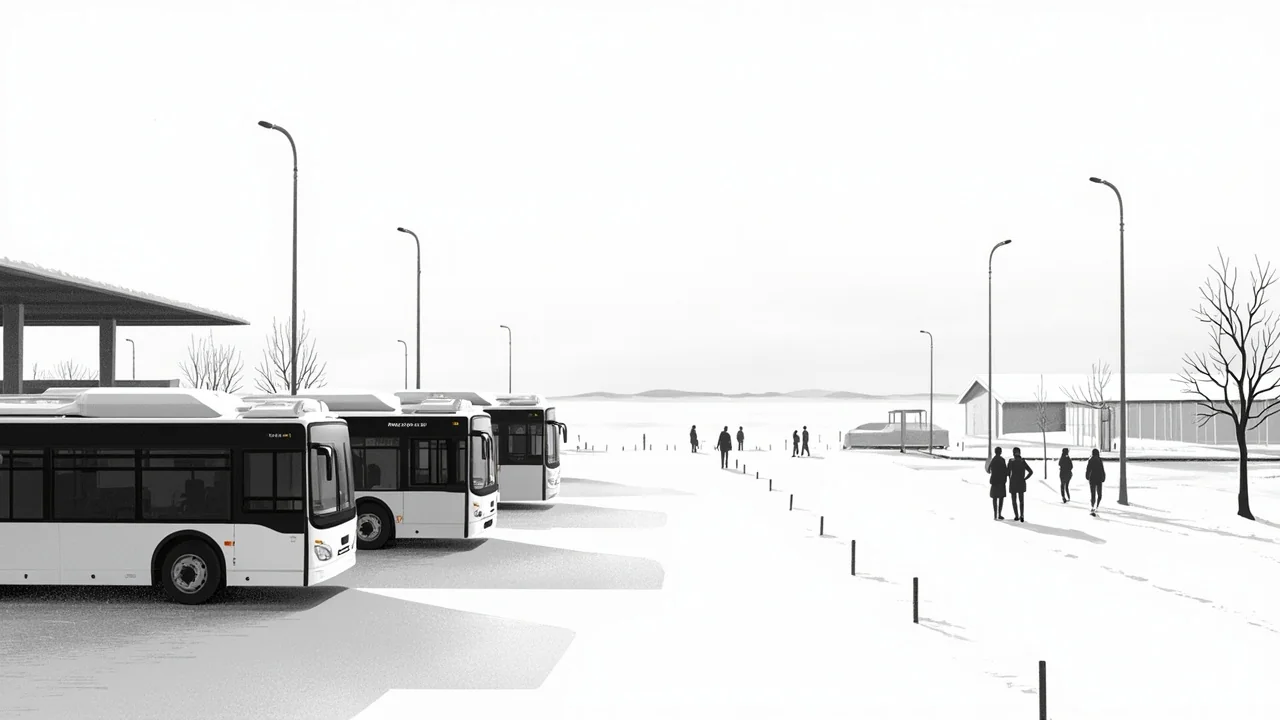
Finland's recent extreme cold snap caused 40 bus service cancellations in the Nurmijärvi region during January, as deep freezes triggered unexpected mechanical failures across the local fleet. Korsisaari, the area's transport operator, confirmed the figure and acknowledged the significant disruption for affected passengers, despite the cancellations representing less than half a percent of the roughly 9,700 scheduled journeys for the month.
Ilkka Ojala, Korsisaari's contract traffic manager, said the number was unacceptably high. 'The amount is much higher than we are used to. On the other hand, for that customer whose bus does not come, it does not matter how many other trips have to be cancelled. For them, only their own trip is essential,' Ojala stated. He noted that while winter always brings challenges, this January presented far more difficulties than usual.
Winter's Grip Tightens on Transport Networks
Persistent sub-zero temperatures across southern Finland for several weeks have tested infrastructure and vehicles. For public transport, the problems have been acute and sudden, often materializing early in the morning as buses prepare to leave the depot. Ojala detailed that the failures have specifically affected exhaust after-treatment systems, the AdBlue fluid used within them, and the vehicles' pneumatic air pressure systems. These components are particularly vulnerable in sustained severe cold, leading to last-minute service withdrawals that are impossible to plan for far in advance.
The cancellations in Nurmijärvi provide a concrete example of how extreme weather strains daily logistics in Finnish municipalities. While the percentage of lost trips seems minor on a spreadsheet, the impact is concentrated and real for commuters, students, and other residents relying on timely service. The situation forced operators into difficult real-time decisions, often having to choose between running a route with a smaller replacement bus or canceling it entirely.
Technical Failures in the Deep Freeze
Ojala explained the operational dilemma when a standard bus fails. 'From the customers' point of view, a crowded bus is certainly a better solution than the bus not coming at all,' he said. This has, however, led to instances where passengers were left at stops because the substitute vehicle lacked sufficient capacity. These crowding issues were reportedly exacerbated at school times when many students travel simultaneously, a peak demand that regular timetables are not designed to handle all at once.
The company stated it works regularly with the local municipality's school transport team to identify and resolve these specific peak-time pressure points. The core issue remains the mechanical brittleness induced by the cold. Unlike snow or ice, which can be plowed or melted, systemic failures in engine and emission control technology can sideline a vehicle without warning. This makes preventative maintenance and rapid response protocols critical, yet sometimes insufficient during exceptional weather events.
A Question of Capacity and Communication
In response to the spike in disruptions, Korsisaari says it has strengthened its exception communication over the past year. The primary tools for passengers are the Korsisaari mobile application, which provides updated disruption information, and the Bussi Live service, which shows the real-time location and status of buses on a map. This push for better transparency aims to give travelers a chance to adjust their plans when services are altered, delayed, or canceled.
The investment in communication highlights a key aspect of modern public transport management: managing expectations and providing alternatives when the primary service fails. For rural and suburban areas like Nurmijärvi, where alternative transport options may be limited, this information becomes even more vital. The company's strategy implicitly acknowledges that while not all cancellations can be prevented, the frustration of unreliable service can be mitigated by clear, timely information.
Preparing for the Next Cold Snap
Looking ahead, the experiences of this winter will likely inform both technical preparations and customer service planning for future cold seasons. Operators may need to review cold-weather hardening of specific vehicle components, especially as emission technology becomes more complex. Municipalities and transport authorities might also reconsider the balance between fleet standardization and maintaining a buffer of diverse, resilient vehicles for extreme conditions.
The situation in Nurmijärvi is a localized symptom of a nationwide annual challenge. Finland's infrastructure is famously built for winter, but the limits of that preparedness are tested each time temperatures plummet far below average for extended periods. The reliability of the bus network is a cornerstone of daily life for many without private transport, making its winter performance a matter of practical social equity and economic functionality.
As the deep winter continues, passengers are advised to check real-time service updates before traveling. The repeated disruptions serve as a reminder that even in a country adept at handling cold, the margin between normal operation and systemic strain can be surprisingly thin. For the residents who missed their bus, the statistical context of 40 out of 9,700 trips offers little comfort, their personal plans were still derailed by the freeze.