
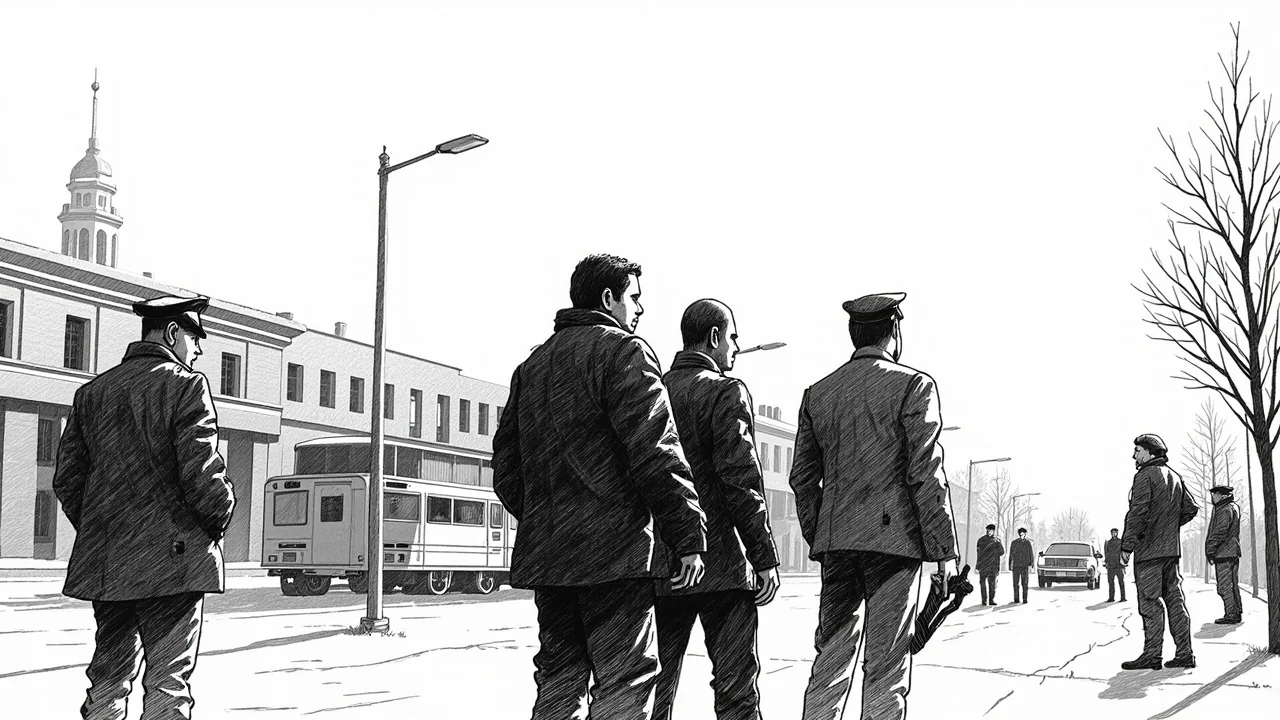
Finland's Helsinki police detained three individuals on the secured grounds of the Hernesaari heat plant Friday evening, deploying multiple patrols to the critical infrastructure site before later releasing them without any criminal suspicion. The incident began when emergency services relayed a report of people spotted without authorization inside the fenced area of the power plant on the Hernesaari island. Police confirmed the individuals had a permit to be on the general area but lacked the specific access permission required for the secured zone, a distinction that triggered the robust security response.
A Swift Response to a Security Breach
Upon receiving the alert via emergency services, Helsinki Police Department mobilized several patrol units to the scene. The decision to deploy significant resources was based solely on the location's classification as critical infrastructure. Finland's Security Committee defines such infrastructure as systems and assets whose disruption would seriously impact societal functions, national security, or the economy. District heating plants, which provide essential warmth to homes and businesses across Helsinki, fall squarely under this protective umbrella. The police action followed standard protocol for any unauthorized incursion into such a high-security zone, prioritizing immediate containment and assessment over determining intent in the initial moments.
The Fine Line of Access Permissions
According to the police statement, the core of the incident hinged on a specific administrative detail. The detained persons were not trespassing in the general sense, they possessed a permit for the broader Hernesaari area. Their violation was the absence of what authorities termed 'asiaan kuuluva kulkulupa' – the appropriate, specific access permit for the plant's fenced compound. This highlights the layered security protocols surrounding vital utilities in Finland. Access is often tiered, with general area permissions insufficient for entering operational cores. The investigation at the scene involved verifying identities and cross-checking the precise permissions held by each individual against the required clearance for the infrastructure site.
Protocols for Protecting Critical Infrastructure
Finland's approach to critical infrastructure protection is multifaceted, involving legislation, police guidelines, and cooperation between operators and authorities. The police response in Hernesaari reflects standard operating procedures derived from this framework. When an alarm is raised at a key utility site, the default position is to treat it as a potential threat until proven otherwise. This ensures a consistent, security-first response regardless of the eventual outcome. The rapid de-escalation once the situation was clarified shows the system also incorporates proportionality. The individuals were released after it was determined their presence, while technically a breach of specific access rules, did not constitute a criminal offense or malicious intent.
Context of Energy Security in Finland
This incident occurs against a broader backdrop of heightened awareness around energy security in Finland and across the European Union. Following geopolitical shifts, the secure operation of domestic energy production has taken on renewed significance. Heat plants, like the one in Hernesaari, are crucial for urban functionality, especially during the harsh Finnish winter. Their protection is a matter of public safety and national resilience. While this event ended without criminal charges, it serves as a practical test of response protocols. It demonstrates the tangible steps taken when a breach, however minor it may seem, is detected at a facility deemed essential to societal function.
A Resolution Without Further Action
The Helsinki Police Department closed the matter after determining no criminal suspicion was warranted. The individuals were released once their identities and the nature of their permit discrepancy were fully established. No further police action is planned. The incident concludes as a security alarm followed by a procedural response, ending without fines or charges. It stands as an example of a system functioning as designed: a reported breach at critical infrastructure triggers an immediate, substantial response to neutralize potential threat, followed by a meticulous on-scene investigation to ascertain the facts and apply the law precisely. In this instance, the law did not point to a crime, only a procedural error regarding a specific access permit.
While minor in outcome, the deployment of multiple police units to Hernesaari is a definitive signal of the priority Finland places on guarding its critical infrastructure. It shows that the protocols, shaped by national security strategy, are active and responsive. The event tested these mechanisms in a real-world scenario, resulting in a swift security intervention that was then scaled back based on evidence gathered at the scene. This balance between decisive action and measured resolution remains a cornerstone of protecting essential services in an open society.