
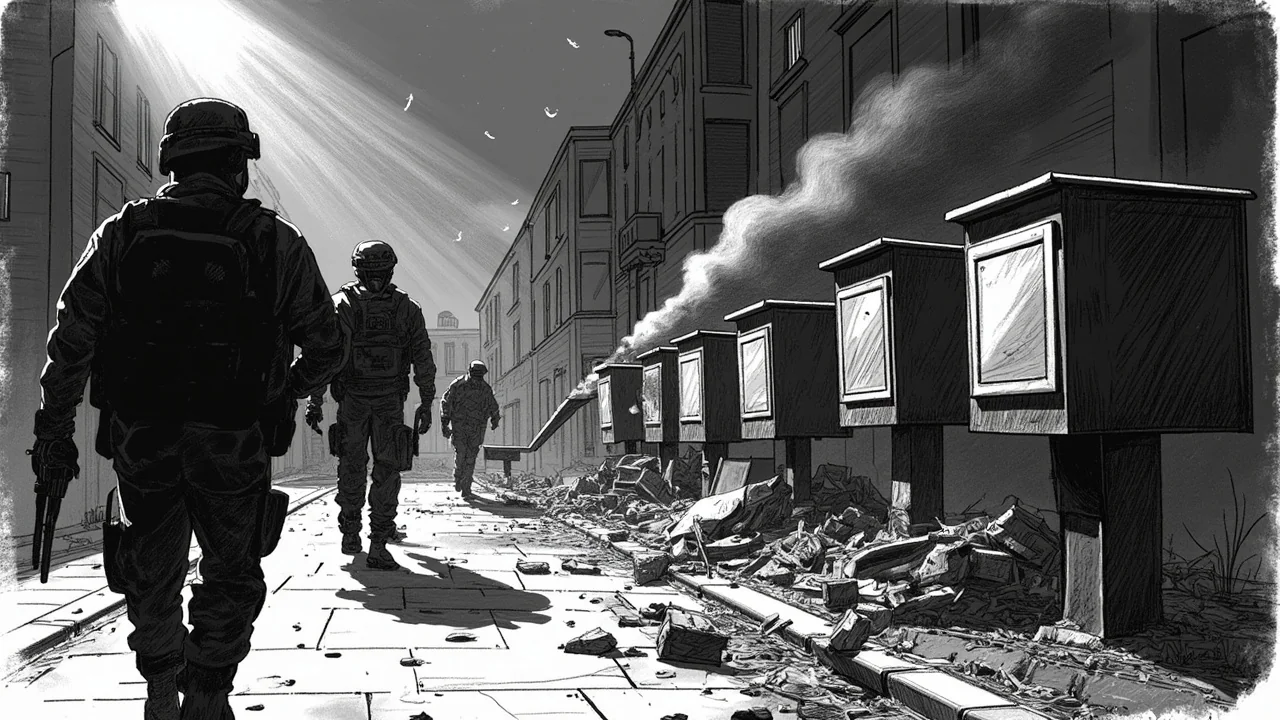
Finland's quiet municipality of Nurmijärvi has been shaken by a series of deliberate postbox bombings, with residents now fearing to collect their mail. A local resident has detailed three distinct waves of attacks along Yli-Lepsämäntie road in Perttula, beginning in October, continuing over New Year, and culminating in another spree last weekend. Multiple criminal reports have been filed as the explosions have destroyed several mailboxes, with one targeted twice, causing financial loss and putting both the perpetrators and the public at serious risk.
"The 'boys will be boys' saying doesn't help much when it's about the deliberate destruction of another person's property," the resident stated firmly to local media. The attacks have escalated from a concern over vandalism to a genuine public safety crisis. In one incident, an explosive device failed to detonate fully, leaving a dangerous dud that threatened both the individual who lit it and a resident who later came to inspect the damaged box.
A Pattern of Escalating Danger
The chronology provided by the resident paints a picture of persistent, escalating criminal activity. The first wave occurred in October, with explosions so severe they left little trace beyond a heavily burned postbox, suggesting the use of potent explosives. A second wave hit around New Year, and a third and most recent series of attacks happened just last weekend. The resident noted differences in the materials used, with the latest incidents leaving behind tubular cardboard remnants scattered outside the boxes, indicating a hasty and sloppy placement of the charges.
All the targeted boxes on Yli-Lepsämäntie are metallic, a standard in many Finnish rural areas. This detail amplifies the danger. "When pieces fly from those, certainly fingers and eyes have also been in danger," the resident observed, highlighting the reckless risk the young perpetrators took with their own safety. The unexploded ordnance from the failed detonation represents the most acute threat, transforming a communal space into a potential hazard zone.
The Tangible Cost of Senselessness
Beyond the shock and fear, the bombings have inflicted clear material and administrative damage. One destroyed mailbox cost its owner 106 euros to replace—a significant, unplanned expense. More critically, the explosions have led to the loss of mail, including official correspondence. The resident discovered a partially burned letter from Kela, the Finnish Social Insurance Institution, strewn across the road after the New Year's attack. The loss of such documents can mean missed bills, lost benefits notifications, or delayed official communications, creating a cascade of personal administrative problems for victims.
"I would gladly use that money for something else," the resident remarked, pointing to the economic reality for working people. "The friends clearly don't have jobs themselves, so they don't know how much work you have to do to earn that sum." This comment underscores a societal friction point, where the perceived thoughtlessness of youth crime clashes with the financial pressures of adult life. The act is not just vandalism; it's a direct theft of time, money, and security from neighbors.
Community Fear and the Failure of Deterrence
The psychological impact on the community is profound and perhaps the most damaging long-term effect. The resident's own words capture the new climate of anxiety: "Right now, I'm afraid to open the box, in case there's a dud in there that explodes in my face or hands. It's not a very nice feeling. What if a child gets the mail? I don't have children myself, but the neighbors do." This fear erodes the fundamental sense of safety one expects in a residential area. The simple, daily act of collecting post has become an act of apprehension.
The pattern suggests that existing social deterrents—and potentially initial police responses—have failed to stop the perpetrators. The return for a second and third wave of attacks indicates a level of brazenness or a belief in impunity. The resident's message to the parents of those involved is succinct and pointed: "Parents, wake up – absolutely for sure." This reflects a common public sentiment in Finland that parental responsibility is a key component in addressing youth delinquency, especially when it occurs repeatedly in a local community.
Legal and Municipal Response Pathways
While the source material does not detail police action, the filing of multiple criminal reports triggers a standard Finnish legal process. Destroying a mailbox falls under criminal damage (tahallinen vahingonteko) under the Finnish Criminal Code. Given the use of explosives, which inherently endanger public safety, more severe charges related to endangerment could be considered. Police investigations would typically involve forensic analysis of the remnants, canvassing for witnesses, and reviewing any available CCTV footage from the area, though such coverage can be sparse on rural roads.
The local municipality of Nurmijärvi also has a role. While replacement costs fall to the property owner, the municipality's public works and community safety officials would be aware of the pattern. In cases of repeated, targeted vandalism, local authorities can sometimes increase patrols or collaborate with police on community watch initiatives. The broader question for local governance is whether this is an isolated incident or symptomatic of wider youth engagement issues in the area that require programmatic interventions.
A Broader Lens on Rural Discontent
Analysts looking at Finnish society might view this incident through several lenses. It fits a pattern of seasonal vandalism, often peaking during long, dark autumn and winter evenings when youth have fewer structured activities. The choice of target—postboxes—is symbolic. They are ubiquitous, unguarded representations of the state and of private property, making them accessible targets for expressing frustration or simply seeking a thrill.
From a social policy perspective, incidents like these often reignite debates about youth services, especially in rural and semi-rural areas like Perttula. Are there sufficient after-school activities, youth centers, or employment opportunities for teenagers? The resident's assumption that the perpetrators are not in "earned employment" touches on a real issue of youth unemployment and idle time, which can correlate with anti-social behavior. However, it is crucial to avoid simplistic causation; most young people in similar circumstances do not resort to bombarding their neighbors' property.
The Road Ahead for Perttula
The immediate need in Perttula is for an effective police investigation that identifies and holds the perpetrators accountable, thereby restoring a sense of security. For the residents, the path forward involves repairing physical damage and navigating the bureaucratic hassle of lost mail. The deeper community healing requires the cessation of the attacks and, ideally, some form of restitution or acknowledgment from those responsible.
This case serves as a stark reminder that public safety and community cohesion are fragile. They are built on a thousand small, unremarkable acts of respect—like not blowing up a neighbor's mailbox. When that contract is broken, especially repeatedly and with dangerous means, the damage is more than financial. It forces a community to look at its young people with suspicion and fear, and it forces young people to see the authorities as purely punitive. The true solution lies somewhere beyond the police report, in the difficult, everyday work of community connection that prevents such "incomprehensible brainwaves" from taking root in the first place. Will the response in Perttula be solely about punishment, or will it spark a broader conversation about belonging and responsibility in a changing Finnish countryside?