
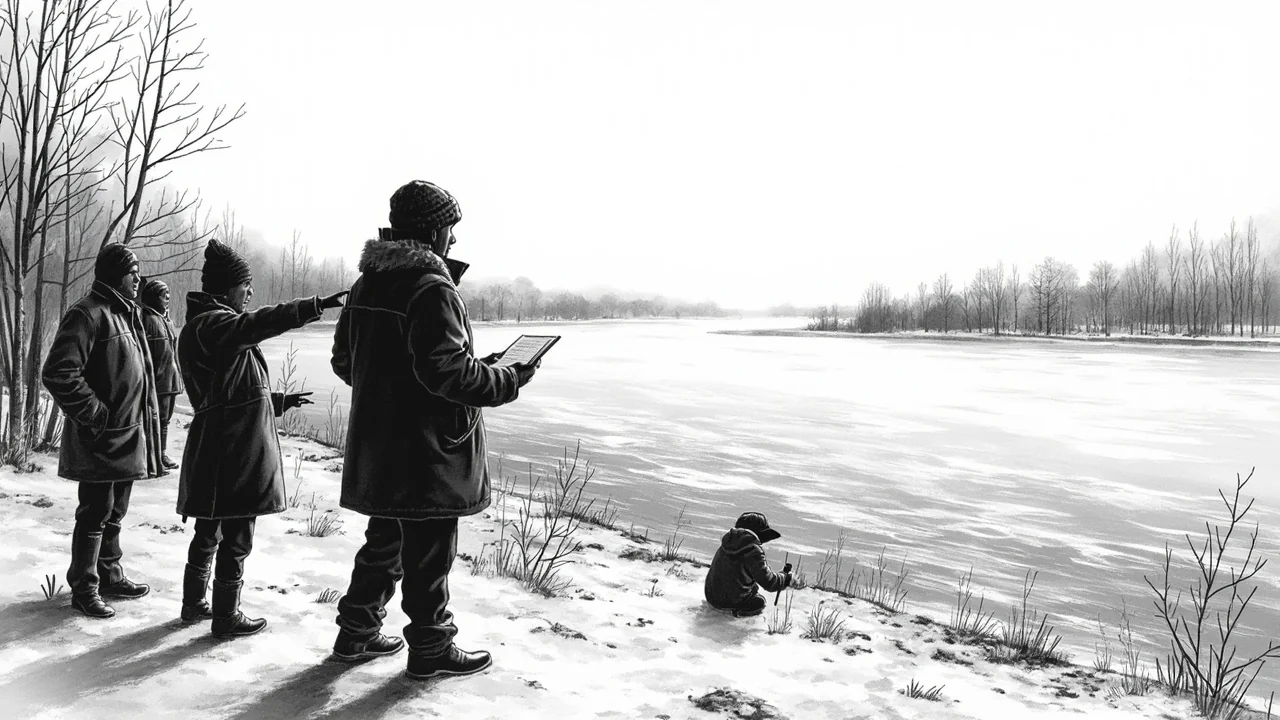
Finnish authorities are investigating the deliberate dumping of dozens of eggs and fish fillets along the banks of the Vuoksi River, a perplexing act of waste that has raised environmental and legal questions. The discovery was made last Saturday near the town of Meltola, turning a routine birdwatching outing into a scene of bizarre pollution.
A Startling Discovery on the Riverbank
Ulla Voutilainen's husband first noticed the anomaly while observing birds along the Vuoksi River. His attention was drawn by an unusually large flock of crows taking flight from a specific spot on the ground. Upon investigation, he found the source of the birds' interest: a pile of food waste deliberately dumped on the earth. The discarded items included dozens of chicken eggs, many of them broken, alongside fish fillets and what appeared to be meat jelly. The site was located close to a wastewater treatment plant, adding to the peculiar nature of the incident. Ulla Voutilainen later confirmed the find, describing the sight as confusing and out of place in the natural riverside setting.
Initial Response and Environmental Concerns
Local municipal authorities were notified of the dumping. The immediate concern, beyond the oddity of the act, is its environmental impact. The Vuoksi River is a significant waterway in Eastern Finland, part of the larger Saimaa lake system. Introducing organic waste like raw fish and eggs directly into a sensitive riparian zone can disrupt local ecosystems. It can attract scavengers in unnatural numbers, potentially altering the behavior of local wildlife like the observed crows. Decomposing food waste can also affect soil and water quality in the immediate area. While a single incident may not cause widespread damage, it represents a violation of responsible waste disposal practices and a careless treatment of the landscape.
The Legal Framework and Food Waste
This incident touches on broader Finnish and European Union policies regarding waste management and food sustainability. In Finland, the Waste Act (Jätelaki) mandates that waste must be handled without endangering human health or harming the environment. Illegal dumping of waste, including organic matter, can be considered an environmental offense. More specifically, the act contradicts the goals of Finland's national food waste reduction program, which aims to halve food waste by 2030 in line with the EU's broader Farm to Fork Strategy. The strategy emphasizes sustainable food production and consumption, making the deliberate wasting of edible food a counterproductive act. The dumped items—eggs, fish fillets—are processed food products, representing not just organic matter but also the resources and energy used in their production, processing, and transportation.
Motives and Investigation Challenges
The central mystery is the motive behind the dumping. Authorities have not identified a suspect or a clear reason. Potential explanations range from the disposal of food that had passed its sell-by date by an individual or a small business, to more peculiar personal reasons. Unlike large-scale illegal industrial dumping, this small-scale, domestic-type waste presents a challenge for investigation. There are no immediate leads from the waste itself, and the remote location suggests the dumper sought anonymity. The incident highlights a gap between systemic food waste reduction efforts and individual actions. It raises questions about accessibility to proper waste disposal facilities and public awareness regarding the correct ways to discard food, which in many municipalities includes separate bio-waste collection that is later composted or used for biogas production.
Broader Context in Finnish Society
Finland consistently ranks high in global environmental performance indices, with a strong societal commitment to nature and sustainability. Acts of littering or illegal dumping are generally frowned upon and relatively rare compared to many countries. This case stands out precisely because of its incongruity with common Finnish behavior. The concept of 'jokamiehenoikeus' or everyman's right allows extensive public access to nature but carries the fundamental responsibility of not causing damage or leaving waste. This dumping is a clear violation of that unwritten social contract. Furthermore, in a nation with a high cost of living and where food security discussions are present, the blatant waste of protein-rich food like eggs and fish can also provoke a social and ethical discomfort beyond the environmental irritation.
Community Reaction and Next Steps
For residents like Ulla Voutilainen, the event is a disturbing blemish on a familiar natural landscape. It transforms a place of recreation and tranquility into a site of pollution and thoughtlessness. The local environmental authority is tasked with the clean-up, ensuring the waste is removed properly to mitigate any impact. Whether a police investigation proceeds may depend on the cost of the clean-up and the determination of environmental damage, if significant, it could lead to a fine for the perpetrator if caught. The incident is likely to be logged as a minor environmental offense, but its symbolic weight is heavier. It serves as an unintended, negative case study for local environmental education, demonstrating how easily individual neglect can clash with national sustainability goals.
A Puzzle with No Clear Answer
As of now, the case of the Vuoksi River food dumping remains an open puzzle. The who and why are unknown. The investigation may not lead to a dramatic resolution, but the event itself has already succeeded in sparking local discussion. It forces a momentary reflection on the value of food, the importance of correct waste streams, and the shared duty to protect natural environments. In a country where nature is integral to the national identity, such a careless act is not just a legal infraction but a minor cultural affront. The broken eggs and discarded fish fillets on the riverbank are a stark, messy reminder that even in a society with advanced environmental policies, individual accountability remains the most crucial component of ecological stewardship. The hope among officials and locals is that the perpetrator, if found, gains an understanding of the ripple effects of such an action, and that the public's reaction reinforces the social norm against littering in all its forms.