
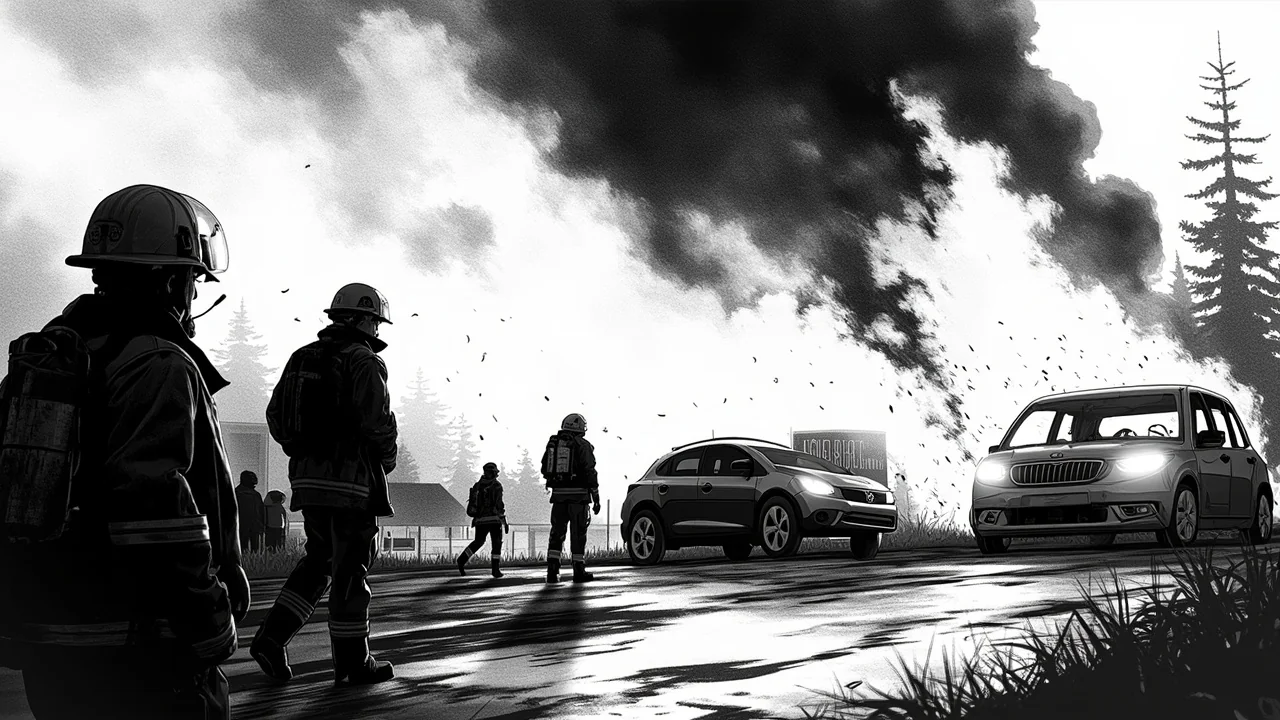
Finland's quiet town of Karstula became the latest location for one of the country's approximately 1,300 annual vehicle fires last Saturday afternoon. A gasoline-powered passenger car caught fire in a private driveway on Nevantauksentie around 4 p.m. shortly after the driver had completed a journey. Flames emerged from under the hood, but the vehicle's owner managed to extinguish the initial blaze using a first-response fire extinguisher. The fire was contained to the engine compartment. Rescue services were alerted and their task was primarily to ensure the fire was completely out, with no need for extensive intervention.
A Common Yet Dangerous Occurrence
While this incident ended without serious injury or major property damage, it highlights a persistent national safety issue. According to statistics from the Finnish Rescue Service (Pelastuslaitos), an average of 1,300 vehicles catch fire in Finland each year. These incidents range from small engine compartment fires, like the one in Karstula, to catastrophic blazes that result in total loss. The majority involve passenger cars, though vans, lorries, and machinery are also represented in the data. Most begin in the engine bay, often linked to electrical faults, fuel system leaks, or overheating components. The Finnish National Rescue Association (SPEK) consistently advises all drivers to carry a working fire extinguisher rated for Class B (flammable liquids) and Class C (electrical) fires, a measure that proved decisive in Karstula.
The Regulatory and Safety Framework
Vehicle fire safety in Finland operates within a multi-layered framework combining national regulations and European Union directives. All vehicles on Finnish roads must pass periodic inspections (katsastus), which include checks for obvious fire risks such as damaged fuel lines, leaking fluids, and exposed electrical wiring. The European Union's general vehicle safety regulations, which Finland implements, set manufacturing standards for fuel system integrity, electrical harness protection, and the use of flame-retardant materials in certain areas. The Finnish Transport and Communications Agency (Traficom) is the national authority responsible for overseeing vehicle safety and issuing recalls. When a specific model shows a repeated pattern of fire-related defects, Traficom can issue a domestic recall or act in concert with EU-wide safety campaigns initiated by the European Commission.
Investigation and Follow-Up Procedures
In the aftermath of a vehicle fire, several official channels may become involved, depending on the severity. For a contained incident like the one in Karstula, the local rescue service files a standard report. If the fire causes significant injury, death, or major property damage, the police may open an investigation to rule out criminal activity, such as arson. Crucially, from a regulatory perspective, rescue services are tasked with reporting certain types of incidents to Traficom. This reporting helps the agency identify potential trends or specific vehicle models that may have recurring defects. While the cause of the Karstula fire remains officially undetermined without a full technical inspection, common culprits in similar cases include aged wiring, faulty alternators, or oil leaks onto hot exhaust components.
The Bigger Picture in Nordic Context
Finland's annual figure of 1,300 vehicle fires is broadly consistent with its Nordic neighbours relative to population and vehicle fleet size. The cold climate presents unique challenges, including the use of engine block heaters and pre-heaters, which add to the electrical load and, if faulty, can become ignition sources. The long periods of darkness also mean more electrical systems like lights are in use for longer durations. Comparing national approaches, all Nordic countries emphasize rigorous periodic vehicle inspections and strong first-response preparedness from their citizens. The common Nordic recommendation is the in-car fire extinguisher, a simple tool that turns a citizen into a first responder, exactly as seen in Karstula. This shared philosophy highlights a regional commitment to practical, individual-level safety measures complementing state-run systems.
Conclusion
Last Saturday's event on a driveway in Karstula was, statistically speaking, an unremarkable one among hundreds of similar incidents across Finland this year. Yet its successful resolution provides a clear model: a prepared vehicle owner with appropriate equipment can prevent a small mechanical failure from escalating into a disaster. It reinforces a key message from Finnish safety authorities that personal preparedness is not optional but a critical component of national safety. As vehicles become more complex and the fleet transitions to new energy sources, the fundamental principles demonstrated in Karstula—awareness, immediate action, and proper equipment—will continue to be the cornerstone of preventing tragedy on the road.