
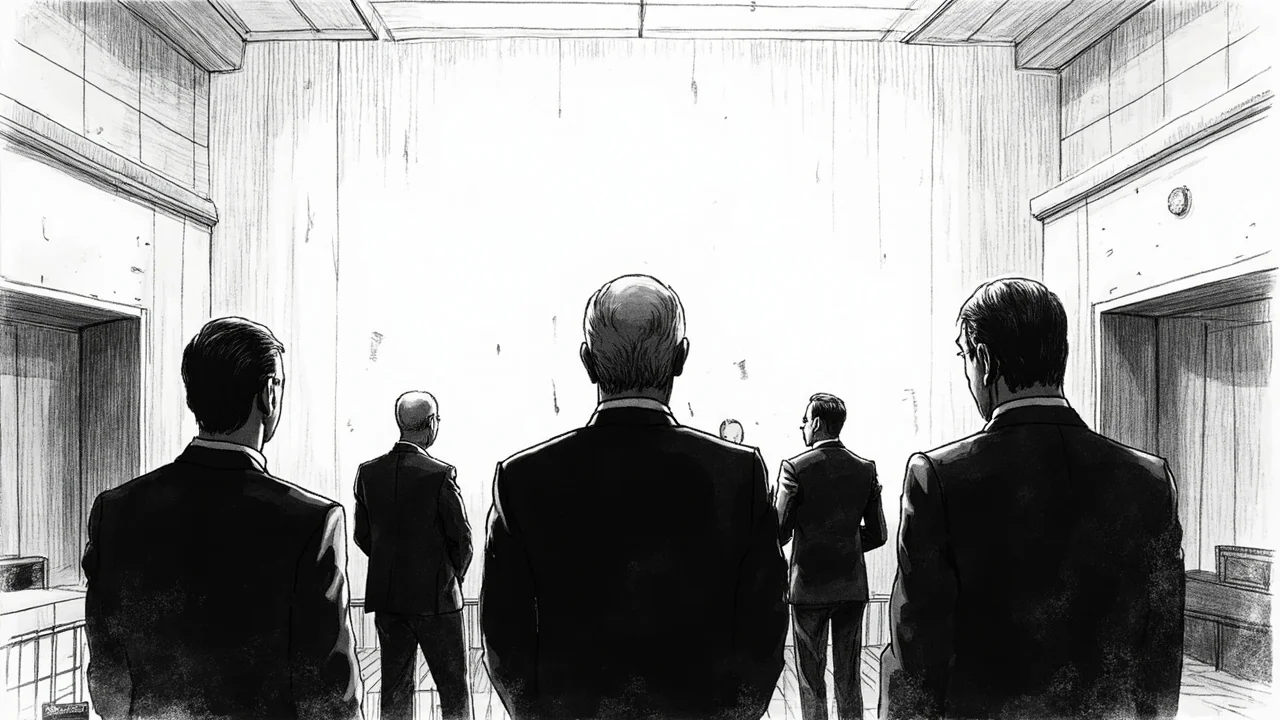
Finland's Constitutional Law Committee failed to pass a single item on its agenda last Friday, its work paralyzed because it could not muster the quorum required by the constitution. The planned vote on a legislative proposal to allow the home delivery of alcoholic beverages was shelved, becoming the latest casualty in a recurring problem that senior committee members warn is clogging the nation's entire lawmaking pipeline.
Heikki Vestman, the committee's chairman and a National Coalition Party MP, described the situation in grave terms. "Each member is responsible for their own attendance and for carrying out the duties that belong to a Member of Parliament," Vestman said. "Participating in committee work is practically the most important task of an MP." The committee can only make decisions when at least 12 of its 17 full or deputy members are present. When the roll was called at 8 a.m., only four members were in the room, with several others arriving late for various reasons.
A Recurring Legislative Breakdown
The Friday deadlock was not an isolated incident. Vestman noted that last autumn also saw meetings where the powerful committee failed to achieve a decision-making quorum. He directly linked these failures to delays across the legislative board. "This is apt to cause delays in the entire legislative work," Vestman continued. He stressed that such a situation should not be allowed to happen, suggesting that some MPs may not be prioritizing committee work sufficiently.
The committee does not keep a formal record of reasons for absences. Vestman stated that evaluating the justification for absences or lateness is not part of parliamentary practice, with each member personally responsible for ensuring their absence is warranted. However, the early morning start time for the meeting was cited by sources as a factor affecting attendance. Vestman acknowledged that meetings have had to be scheduled early before and that this has become almost standard practice for the Constitutional Law Committee, with more early sessions expected during the busy spring term.
The Specifics of the Stalled Session
According to the attendance record, when the committee began processing the agenda item concerning the Alcohol Act, the following members and deputy members were present: Wille Rydman, the deputy chairman from the Finns Party. Petri Honkonen from the Centre Party. Teemu Keskisarja from the Finns Party. Johanna Ojala-Niemelä from the Social Democratic Party. Johannes Yrttiaho from the Left Alliance. Hannu Hoskonen from the Centre Party. Johannes Koskinen from the Social Democratic Party, and Jani Mäkelä, a deputy member from the Finns Party. This list, provided by sources, shows the scramble to achieve quorum even after the official start time.
The proposal that was stalled seeks to amend Finland's strict Alcohol Act to permit the home delivery of alcoholic beverages, a reform that has been subject to significant debate and would align Finnish regulations more closely with practices in several other EU countries. The Constitutional Law Committee's opinion is a mandatory step for all legislation, as it reviews bills for their compatibility with the Finnish constitution and international human rights obligations. Its inability to convene effectively therefore acts as a direct bottleneck for the government's entire legislative program.
Systemic Pressure and a Warning for Spring
Vestman and other committee members share the assessment that the body has a pronounced need to achieve a quorum basically every time it meets. The reason is a heavy workload. "There is a large number of proposals on the table, and next spring more items will only be coming," Vestman explained, highlighting the accumulating pressure. The committee's agenda includes not only government proposals but also numerous EU-related matters where it must issue an opinion on the conformity of EU legislative initiatives with the Finnish constitution, adding a layer of complexity and urgency to its schedule.
The chairman's warning is clear. With the spring parliamentary session traditionally being the most intense period for lawmaking, further failures to achieve quorum could have cascading effects. Delays in the Constitutional Law Committee reverberate through subsequent readings in the plenary session and in other specialized committees, potentially pushing final votes on key government policies past deadlines or into the next electoral term. This procedural gridlock occurs amidst a politically fragmented Eduskunta, where the government coalition holds a thin majority, making disciplined attendance from both coalition and opposition committee members critical for basic functionality.
The Broader Implications for Finnish Governance
The repeated failure of a key constitutional organ to perform its duties due to simple lack of attendance raises questions about parliamentary discipline and prioritization. While individual MPs have diverse responsibilities, from constituency work to party duties, the committee system is the engine room of detailed legislative scrutiny in Finland's unicameral parliament. The Constitutional Law Committee, in particular, holds a guardianship role. Its effective paralysis, even temporarily, means that fundamental rights reviews and constitutional assessments are not being conducted, leaving proposed laws in a state of limbo.
This incident also underscores a practical challenge in modern parliamentary work: scheduling. The need to accommodate early meetings points to an overcrowded parliamentary timetable where MPs are pulled in multiple directions. However, Vestman's firm stance places the responsibility squarely on the members themselves. His public remarks serve as an unusual and stark internal rebuke, signaling that the issue has moved beyond mere logistical frustration to a genuine threat to legislative output. The situation presents a practical test for the party whips and group leaders, who are responsible for ensuring their members fulfill core parliamentary duties.
As Finland faces complex policy challenges requiring legislative solutions, from economic reforms to security policy updates following NATO membership, the efficiency of its lawmaking process is under the microscope. The image of the respected Constitutional Law Committee, a body typically associated with sober legal analysis, being unable to vote because members were not in their seats is a potent symbol of a deeper operational strain. The coming spring session will prove whether Vestman's admonition has been heeded or if the committee, and by extension the national legislature, will continue to be hamstrung by empty chairs.