
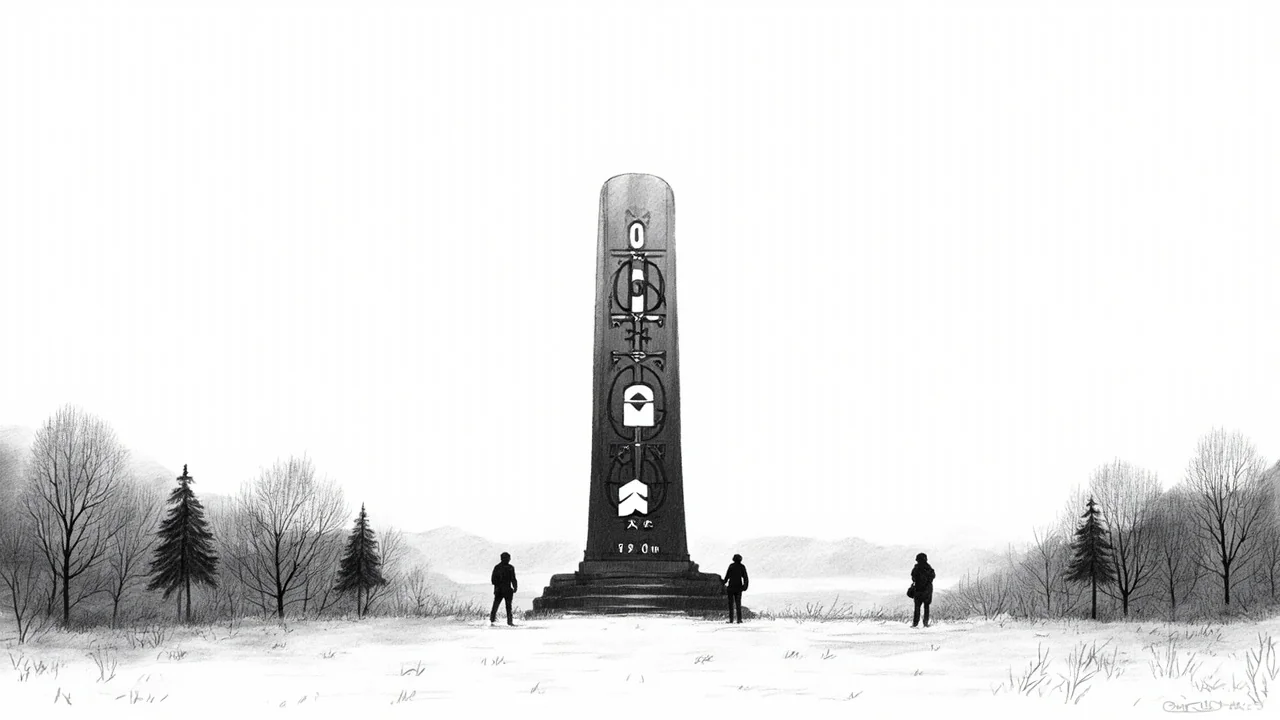
Finland's community of Kutemajärvi in Kangasniemi has completed a new memorial to its 28 fallen soldiers from the Second World War, a project built through traditional volunteer labor known as 'talkoot'. The stone and slate monument, unveiled late last year, now permanently houses name plaques first created in 1989, ensuring the village, in the words of the local association chairman, does not forget its heroes.
A Community's Labor of Remembrance
The memorial, a sturdy stone frame protecting inscribed slate nameplates, stands at Nalikkatori in Kutemajärvi. Its creation was a communal effort, reflecting the Finnish tradition of 'talkoot', where neighbors gather to accomplish a significant task for the common good. The unveiling ceremony drew a large crowd of relatives of the fallen, highlighting the enduring personal connections to the war generation more than eight decades later. 'Let us remember what the departed generations had to sacrifice for our freedom,' said Kutemajärvi Village Association Chairman Ilkka Tiihonen in his address at the unveiling. His words underscored the memorial's core purpose: making a permanent, physical promise of remembrance.
The Long Path to a Permanent Home
The journey of the 28 name plaques reveals a decades-long community commitment. The village association first commissioned and installed them in 1989, mounting them on the wall of a classroom in the then-operating Korhola school. This initial act required considerable effort and resources from the active village association. For 26 years, schoolchildren learned their lessons in the presence of these names. This changed in 2015 when the school was closed down as part of broader municipal consolidations affecting rural Finland. The plaques, representing a sacred community trust, were carefully removed and placed into storage, their future uncertain. For several years, the tangible link to Kutemajärvi's war dead was out of public view, a situation the recent talkoot project was designed to permanently resolve.
The Significance of Talkoot and Local Memory
The use of talkoot to build the memorial is as significant as the structure itself. This practice is a bedrock of Finnish rural and suburban society, used for building community halls, maintaining sports grounds, or organizing local festivals. Applying this method to construct a war memorial ties the memory of national sacrifice directly to the values of communal cooperation and self-reliance. It transforms the monument from a government-sponsored project into an expression of local will and collective identity. The memorial does not just honor the dead, it also celebrates the living community's capacity to act together. In a nation with a deep and complex relationship with its wartime history, such locally initiated and maintained sites are crucial. They represent a grassroots, personal layer of remembrance that exists alongside official state ceremonies and national monuments.
The Enduring Bond Between Past and Present
The emotional resonance of the unveiling, marked by the strong attendance of relatives, shows how the Second World War, or the Continuation War and Winter War as they are known in Finland, remains a living family history rather than a distant historical event. The 28 names on the slate are not anonymous statistics, they are grandfathers, great-uncles, and cousins. The memorial provides a focal point for this familial grief and pride, a place where private memory meets public acknowledgment. For younger generations born long after the war, the solid stone monument at Nalikkatori serves as an undeniable physical anchor to a past that shaped their community's landscape and character. It answers the implicit question of how a small village remembers a loss that touched nearly every family.
A Model for Rural Heritage
The Kutemajärvi project highlights a common challenge across the Finnish countryside: how to preserve local heritage and memory in the face of centralization, school closures, and aging populations. By taking direct action, the village association found a sustainable solution. The memorial's sturdy construction suggests it is built to last for generations, requiring minimal maintenance. It stands as a successful case study in community-driven preservation. Other small communities across Finland with similar concerns about their historical landmarks or memorials may look to this example of leveraging traditional social capital—the talkoot spirit—to achieve a concrete goal. It proves that even without large municipal budgets, determined volunteerism can safeguard a community's most important stories.
The Quiet Promise in Stone
Ultimately, the new memorial in Kutemajärvi is a statement in granite and slate. It states that the community, despite the passage of time and changes like school closures, holds itself responsible for its own memory. The talkoot that built it was a renewed vow, a collective act that said the names in storage would not be forgotten. As Chairman Tiihonen reminded those gathered, the fallen 'gave their most valuable sacrifice.' The village, through its own labor and will, has now given a permanent home in return. The monument now waits quietly at the crossroads, ensuring that all who pass through Kutemajärvi know the price paid for the peace of the Finnish countryside.