
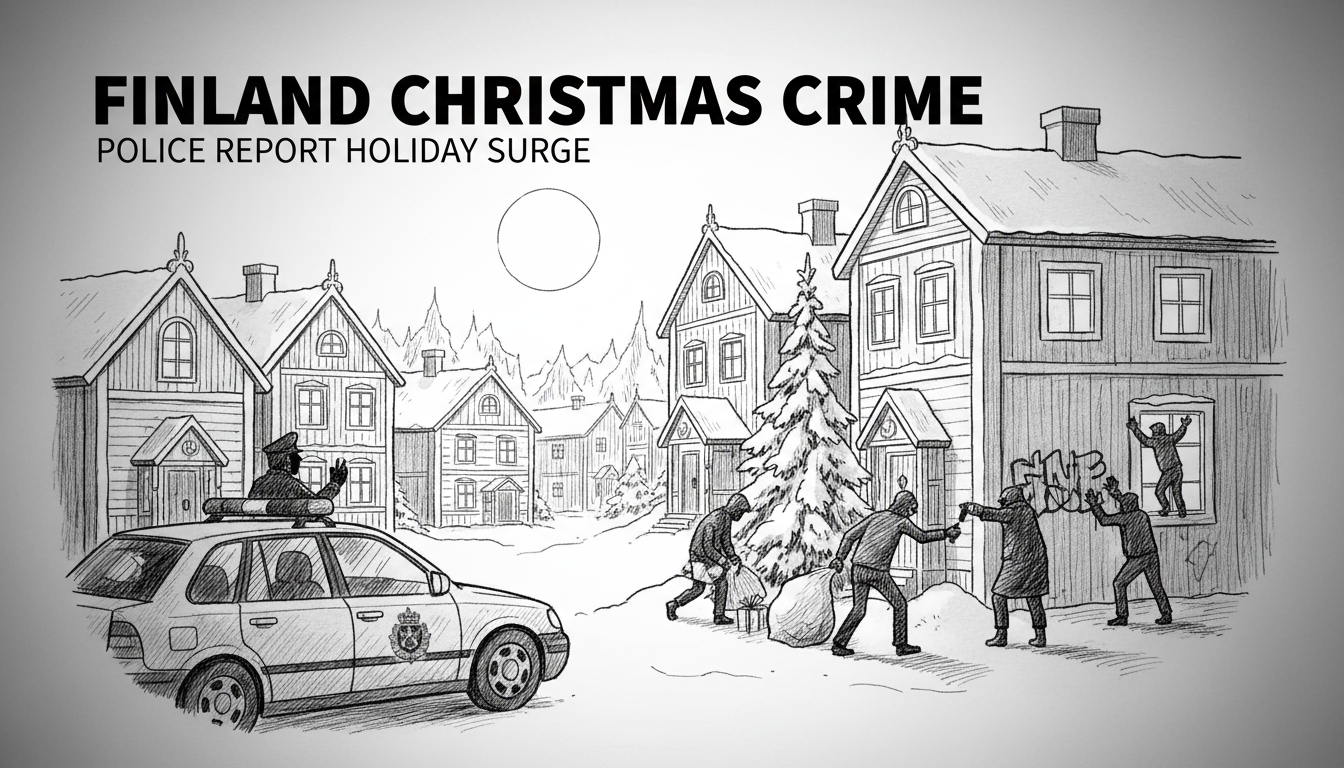
Finland Christmas crime reports spiked as police departments nationwide logged a significant increase in emergency calls during the festive period. Christmas Eve and the intervening night until Christmas Day proved particularly active, with officers responding to a steady stream of incidents related to disturbances, assaults, and domestic crises. This seasonal uptick challenges the idyllic notion of a tranquil Nordic holiday and underscores persistent public safety challenges.
Regional Reports Highlight Holiday Pressures
Police authorities from multiple regions confirmed the heightened activity. Southwest Finland Police reported in an official statement that while public spaces remained generally calm, police resources were heavily directed toward private homes and restaurants. The Häme Police Department provided more specific detail, noting that a large proportion of their Christmas Eve tasks involved individuals in distress and quarreling couples, both current and former partners. These reports align with patterns observed in urban centers like Helsinki, where holiday pressures often manifest in family conflicts and alcohol-related incidents. The Finnish police force, organized into regional departments, coordinated responses across districts to manage the varied caseload.
The nature of the calls points to a holiday season fraught with underlying tensions. Officers were dispatched to handle situations ranging from loud parties and public intoxication to more serious allegations of physical altercations within homes. Traffic-related duties also formed a part of the holiday workload, as increased travel during the festive period led to accidents and violations. This broad spectrum of incidents kept patrol units busy through what is traditionally a time for family and rest. The data from these initial reports provides a snapshot of the social dynamics at play during Finland's long Christmas break.
The Human Factors Behind Festive Crime
Experts consistently identify a cluster of interrelated factors that drive police intervention rates upward during the holidays. Increased alcohol consumption is a primary contributor in Finland, where festive gatherings often center on social drinking. Financial pressures from gift-giving and entertainment can exacerbate household stress, while the intense focus on family togetherness sometimes magnifies pre-existing relational conflicts. Mental health crises also tend to become more visible during this time, as individuals struggling with loneliness or depression find the celebratory atmosphere particularly difficult. These elements combine to create a perfect storm for disturbances that require police attention.
Senior researcher Anna Kärnä, who studies social welfare at the University of Helsinki, explains the phenomenon. 'The Christmas period amplifies everyday stresses,' Kärnä said. 'Expectations for a perfect holiday, combined with financial strain and increased alcohol use, can lower inhibitions and escalate conflicts quickly. What might be a minor disagreement in July can become a police matter in December.' This analysis is reflected in the Häme police's observation that many callouts involved 'people feeling unwell'—a broad category encompassing mental health episodes, intoxication, and emotional distress. The police role thus expands beyond law enforcement to include social support and crisis intervention.
Police Resources and Seasonal Challenges
The seasonal surge places direct pressure on Finland's decentralized police structure. The country is divided into several regional police departments, such as the Helsinki Police Department and the Western Finland Police Department, each operating with fixed staffing levels. Commanders must carefully allocate officers and anticipate hotspot areas during holidays, a complex logistical task. Long vacations, such as the stretch between Christmas and New Year, can thin regular ranks while simultaneously increasing the potential for incidents as people have more unstructured leisure time. This resource balancing act is a critical part of Finland's public safety planning.
Interior Minister Mari Rantanen has previously highlighted the need for strategic resource planning in the Eduskunta, Finland's parliament. 'Our police perform admirably under fluctuating pressures,' Rantanen stated during a budget discussion. 'Ensuring they have the support and manpower during peak periods, including holidays, is a priority for this government.' This political acknowledgment points to the ongoing challenge of funding and staffing a responsive police service. The Christmas experience often informs preparations for New Year's Eve, which typically sees even higher levels of public celebration and associated police workloads. Operational reviews from the holiday period directly influence tactics for future events.
EU Context and Nordic Comparisons
Finland's experience mirrors broader trends across the European Union, where member states report similar holiday spikes in domestic incidents and public order calls. EU directives on victim support and cross-border police cooperation indirectly shape how national forces, including Finland's, prepare for seasonal demands. While Finland maintains its own operational protocols, it participates in EU-wide exchanges of best practices for handling holiday policing and crime prevention. This transnational perspective helps contextualize the Finnish data within a wider European framework of seasonal public safety management.
Comparing with Nordic neighbors offers further insight. Sweden and Norway also typically report increased police activity during Christmas, particularly related to domestic violence and drunk-driving. However, Finland's specific cultural habits, such as the tradition of festive sauna gatherings which sometimes involve alcohol, may influence the type and location of incidents. Denmark often highlights New Year's Eve as its peak period for fireworks-related injuries and disturbances. These regional variations underscore that while the phenomenon of holiday crime is common, its manifestations are shaped by local traditions and social behaviors. Understanding these patterns is key for effective cross-border cooperation within the Nordic region.
Looking Ahead: Lessons for New Year
As the Christmas period winds down, Finnish police authorities are already analyzing the reported incidents to refine their approach for the upcoming New Year's celebrations. New Year's Eve historically generates an even greater volume of calls, with large public gatherings and extensive private parties. Police spokespersons have indicated that additional patrols will be deployed in city centers and residential areas known for celebrations. Public awareness campaigns focusing on responsible alcohol consumption and conflict de-escalation are also being promoted through municipal channels and social media.
The Christmas surge serves as a stark reminder of the hidden tensions within the festive season. It raises important questions about community support systems, mental health services accessibility during holidays, and long-term strategies for reducing domestic conflict. Will the patterns observed this Christmas lead to new policy initiatives in the Eduskunta? As Finland moves into the new year, the balance between festive joy and public safety remains a key concern for lawmakers, police commanders, and citizens alike. The true measure of success will be a holiday season where celebrations are memorable for all the right reasons, requiring minimal police intervention.