
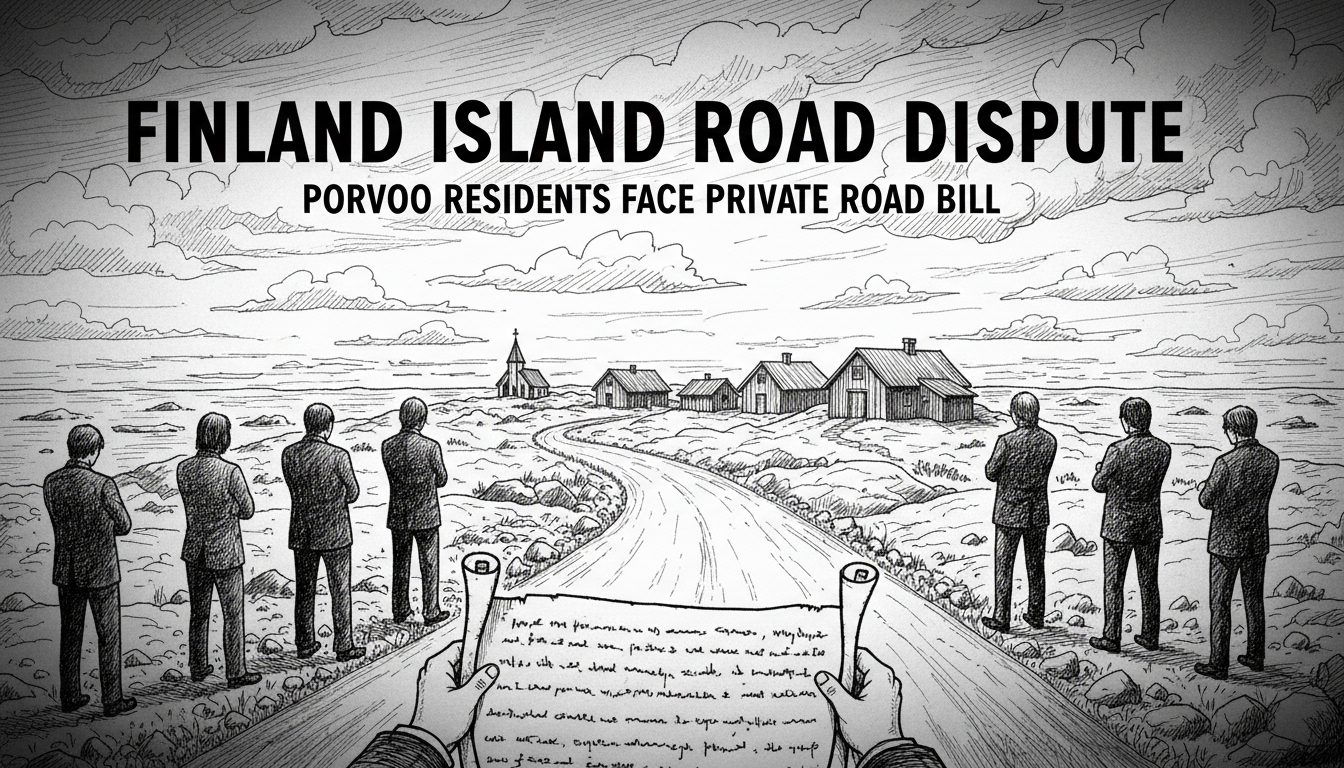
Finland's island residents in Porvoo are confronting a stark ultimatum from their local government: pay up or lose your connection. The City of Porvoo has proposed reclassifying the main access road to Sikosaari island as a private road, a move that would transfer maintenance costs and legal responsibility from the municipality to the handful of year-round inhabitants. This policy shift has left residents like Marika Pättö and Antti Rytkönen completely bewildered, fearing for their homes' accessibility and value in the fragile Baltic archipelago.
"Either we pay, or there will be no access route here," one resident summarized the city's position after a tense pre-Christmas meeting where threats only multiplied. The dispute centers on Sikosaarentie, the vital lifeline connecting the island community to mainland services in Porvoo, a historic city east of Helsinki. For the permanent residents, the proposal feels like a sudden abandonment by the municipal authority they pay taxes to, forcing them to bear a potentially crippling financial burden for essential public infrastructure.
A Clash Over Costs in the Archipelago
The conflict in Sikosaari is not an isolated case but a symptom of a broader tension in Finnish rural and island municipalities. Across Finland, thousands of kilometers of road exist in a gray area between public and private. While municipalities often provide grants or basic maintenance for these routes, the ultimate responsibility can be ambiguous. As municipal budgets tighten, especially in regions with declining populations, councils are increasingly scrutinizing the cost-benefit ratio of maintaining infrastructure for small, remote communities.
Porvoo city officials likely see the Sikosaari road as a candidate for privatization due to its low traffic volume, serving only a few permanent households. From a municipal accountant's perspective, reclassifying it could free up thousands of euros annually for other public services. For the residents, however, this calculus ignores their fundamental right to reasonable access and places an unequal burden on a small group. The road is not a luxury but a necessity for commuting, emergency services, and the delivery of goods.
The Legal and Practical Burden of Private Ownership
If the road becomes officially private, the legal and financial framework changes dramatically. The residents would likely need to form a road association, a common legal entity in Finland for managing private roads. This association would then be responsible for all winter plowing, summer grading, ditch clearing, and long-term repairs. The costs, which could run into tens of thousands of euros for major resurfacing, would be split among the property owners.
Expert analysis in Finnish municipal law suggests such transfers are legally complex. Municipalities cannot simply abandon existing obligations without a formal process, which often includes assessing the road's significance and exploring all alternatives. The impact on property values is also a critical concern. A home on an island with a publicly maintained road is significantly more valuable and insurable than one reliant on a privately funded and potentially unreliable track. This move could effectively trap residents, diminishing their largest asset while increasing their annual costs.
A Microcosm of Finland's Rural Challenge
The standoff in Sikosaari reflects a national conversation about the future of Finland's sparsely populated areas. The government in Helsinki and the EU in Brussels promote policies of regional equality, aiming to ensure all citizens have access to essential services. Yet, at the local level, practical budget constraints force difficult choices. This creates a paradox where policy goals clash with municipal ledgers.
Other Nordic countries face similar dilemmas, but Finland's extensive archipelago and vast rural north make the issue particularly acute. The Sikosaari case tests the limits of a municipality's duty of care. Is providing basic access a core function of local government, or can it be offloaded when costs are deemed too high? The residents' sense of bewilderment stems from a feeling that the social contract is being rewritten without their consent, prioritizing balance sheets over community cohesion.
What Comes Next for Sikosaari?
The path forward for Sikosaari's residents involves political advocacy and legal scrutiny. They will need to formally oppose the city's proposal through official channels, potentially appealing to the regional administrative court if the municipality proceeds. They can also lobby local council members, highlighting how the decision contradicts Porvoo's own branding as a vibrant, connected archipelago community. Gathering support from seasonal residents, who also use the road, could strengthen their position.
National MPs from the region might also be drawn into the debate, as it touches on broader themes of regional policy and justice. The Finnish Ministry of Transport and Communications sets guidelines for road classification, and this local dispute could attract attention at the state level if it is seen as setting a problematic precedent. The outcome will be closely watched by other small communities across Finland who fear they might be next.
Ultimately, the Sikosaari road dispute is more than a quarrel over potholes and plowing. It is a fundamental question about the kind of society Finland wants to be. Will it protect the viability of life in its beautiful, remote corners, or will market logic dictate that only easily serviced populations deserve guaranteed connectivity? The answer, being negotiated on a small island in Porvoo, will resonate far beyond its shores.