
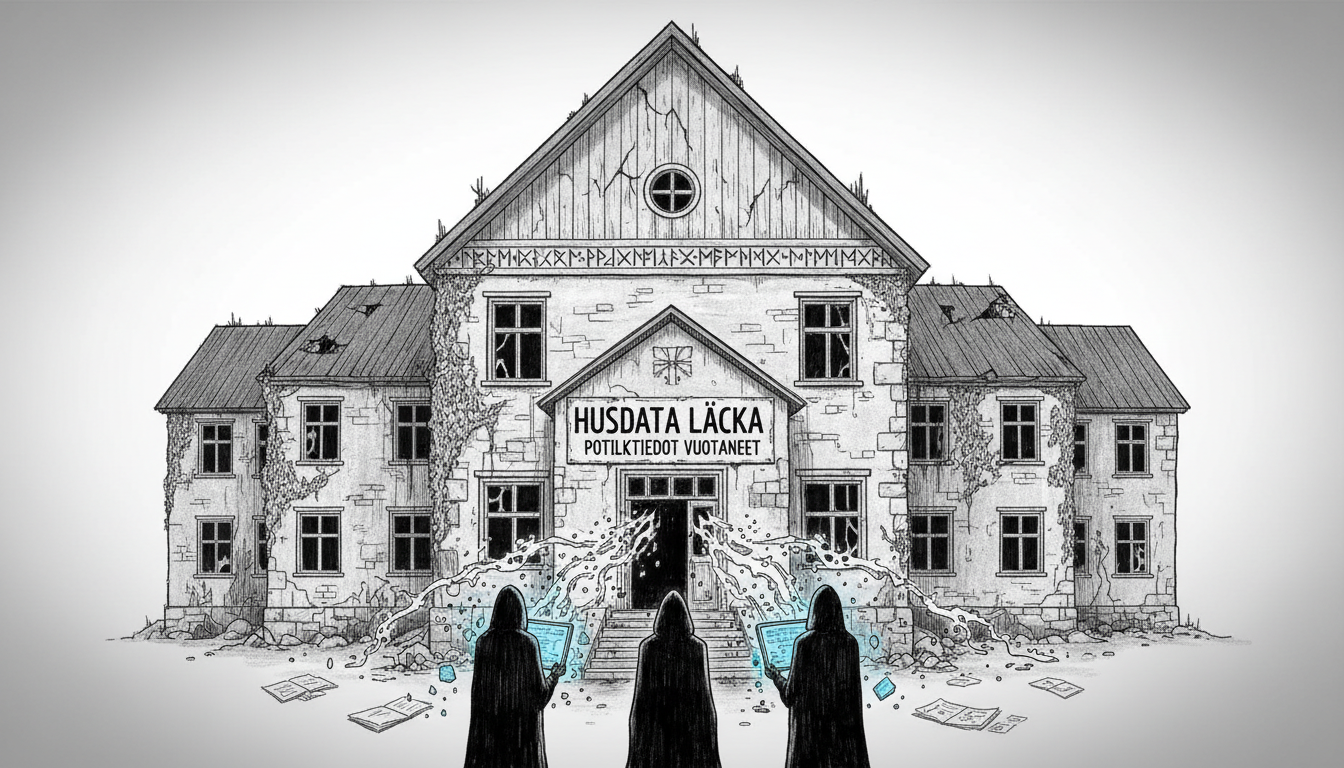
Finland faces a serious data security scandal after a TikTok video revealed highly sensitive patient documents abandoned inside a shuttered psychiatric hospital. The footage, filmed by individuals who entered the empty Keropudas hospital in Tornio, shows referral forms containing patient names, national identity numbers, home addresses, and psychiatric diagnoses left openly on tables. This incident exposes a potential catastrophic failure in data protection protocols during Finland's massive healthcare reform.
Lapland Wellbeing Services County (Lapha), the new authority now responsible for the records, confirmed the breach and has contacted police. "We are both very surprised and, in a way, shocked by how these [documents] could have ended up there, because it has been checked many times," said Jyri J. Taskila, Lapha's Chief Administrative Medical Officer. The police investigation, launched after a citizen report, is treating the unauthorized entry and the discovered documents as a criminal matter.
A Systemic Failure in Transition
The Keropudas psychiatric hospital closed its doors in 2022. Its operations, along with all record-keeping and archival responsibilities, were transferred to the newly formed Lapland Wellbeing Services County at the end of that year. This transfer was part of Finland's landmark social and healthcare reform (SOTE), which in 2023 moved service organization from over 300 municipalities to 21 new wellbeing services counties. The reform's goal was to streamline services and ensure equality, but this breach highlights a critical vulnerability: the secure handling of sensitive data during administrative upheaval.
Taskila stated that patient records were previously stored in separate archives and cabinets, and that proper emptying procedures were followed with multiple post-closure inspections. The building itself was sold and has stood empty for approximately three years. The stark contradiction between these assurances and the video evidence points to a procedural breakdown. It raises urgent questions about the verification processes used by both the outgoing Länsi-Pohja hospital district and the incoming Lapha administration during the handover.
Legal Repercussions and GDPR Violations
The content of the leaked documents places this incident in the most severe category of data breaches. Psychiatric diagnoses, combined with personally identifiable information like a national ID number and address, represent exceptionally sensitive personal data under the EU's General Data Protection Regulation (GDPR). Finland's own data protection laws mirror and enforce these strict standards. The exposure of such data is not just an administrative error; it constitutes a clear violation of patient confidentiality and privacy rights, carrying the potential for significant financial penalties from the Data Protection Ombudsman.
Beyond fines, the breach could lead to tangible harm for the affected individuals. Stigma associated with mental health conditions remains a serious concern, and the public exposure of this data could impact patients' personal relationships, employment prospects, and overall well-being. Lapha is legally obligated to report the breach to the Data Protection Ombudsman's office, which will likely launch its own investigation parallel to the police probe. The focus will be on determining liability: whether the breach occurred due to negligence during the final clean-out by the old organization, a failure in the transfer protocol, or inadequate oversight by the new county.
The Challenge of Securing Abandoned Infrastructure
This case also sheds light on the broader challenge of decommissioning healthcare infrastructure. An abandoned hospital is not simply an empty building; it is a repository of institutional memory and, as seen here, can contain physical remnants of highly confidential operations. The individuals who filmed the TikTok video gained access without force, according to police, suggesting possible lapses in securing the premises after its sale. While the primary fault lies with the improper disposal of documents, the ease of entry compounded the severity of the breach.
The video's circulation on social media platforms like TikTok adds a modern, viral dimension to the crisis. It transforms a physical security failure into a digital privacy catastrophe, with the potential for unlimited copying and sharing of the sensitive information. This forces authorities to confront a containment scenario that is nearly impossible to manage fully. The police investigation will need to address two separate crimes: the unauthorized trespass and the unlawful processing or exposure of personal data.
Rebuilding Trust in a Reformed System
For the fledgling Lapland Wellbeing Services County, this incident is a major reputational blow occurring just as it seeks to establish public trust. The SOTE reform was marketed on principles of efficiency and improved care. A breach of this magnitude, suggesting that vulnerable patients' deepest secrets were left behind like trash, fundamentally contradicts those promises. Lapha's response in the coming days will be critical. It must not only cooperate fully with investigations but also proactively identify and notify every individual whose data was compromised, a painstaking process given the apparent disarray of the documents.
The scandal serves as a stark warning to other wellbeing services counties across Finland. Many have inherited older archives and facilities from predecessor municipalities and hospital districts. The Keropudas case demands an immediate, nationwide review of data security protocols related to closed facilities and archived records. It underscores that organizational reform requires meticulous attention to the granular, unglamorous details of data stewardship, especially when that data concerns the most intimate aspects of a person's health.
Ultimately, this is more than a story about forgotten papers. It is a test of Finland's commitment to data protection in its new public healthcare architecture. The investigations by police and the data watchdog will assign legal responsibility. But the political and administrative responsibility lies with ensuring that the pursuit of structural reform does not sacrifice the fundamental right to privacy, particularly for those who have relied on the state's care in moments of profound vulnerability. The empty halls of Keropudas hospital now echo with questions that the entire Finnish system must answer.