
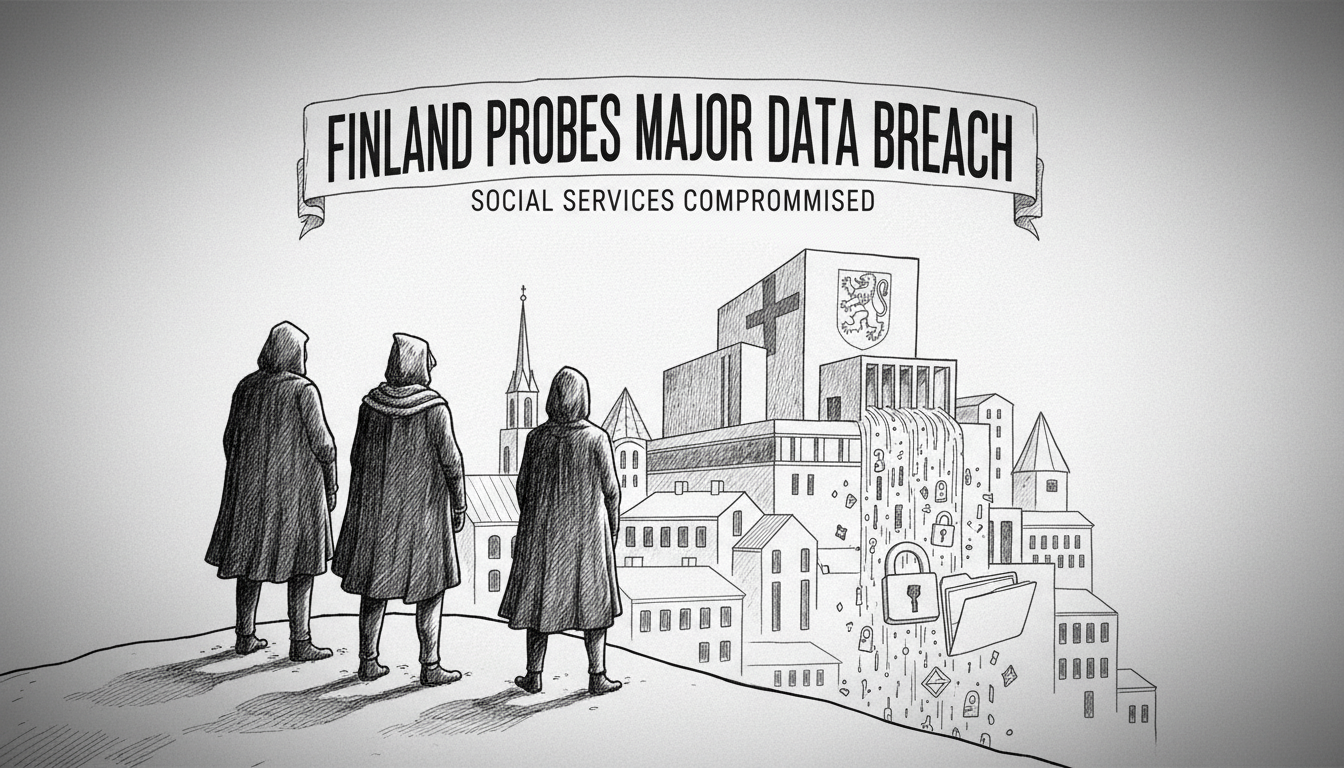
Finland's data protection authorities are investigating a serious breach after confidential social service files, containing decades of citizens' income support details, were left unattended overnight in a town hall lobby. The incident occurred during a bureaucratic transfer in the municipality of Närpiö, exposing a critical failure in the handling of sensitive personal data within the public welfare system. This lapse strikes at the heart of Finland's reputation for robust privacy protection and efficient governance, raising urgent questions about procedural safeguards during a major national administrative overhaul.
A Night in the Unsecured Lobby
According to an official release from the Pohjanmaa Wellbeing Services County, the breach happened on a recent Wednesday in December. Staff were transferring sealed archive boxes from the former municipal social services to the new regional wellbeing county authority. These boxes contained documents related to income support, known as 'toimeentulotuki,' a crucial last-resort benefit for Finland's most vulnerable residents. The files dated from at least the 1980s up to 2007, covering a period of nearly three decades. After packing, the boxes were left in the main lobby of Närpiö Town Hall to await transport the following day. Personnel operated under the mistaken belief that the building's doors would be locked at 4:00 PM. However, a public library operating within the same complex remained open until 8:00 PM, leaving the documents in an accessible public area for hours.
Surveillance camera footage later revealed that individuals had examined the boxes. The footage shows people looking at the labels on the archive containers and even taking photographs of them. The Pohjanmaa wellbeing services county stated that, based on the video material, the outsiders did not open the boxes themselves. Nevertheless, the confidentiality of the information was compromised the moment the labels were viewed and recorded. The county has now filed a mandatory breach notification with Finland's Data Protection Ombudsman, as required by the EU's General Data Protection Regulation (GDPR).
Systemic Failure in a Trust-Based System
This incident is not merely a case of simple negligence. It reveals a cascade of procedural failures during a significant structural transition in Finnish public administration. The transfer of archives was part of the wider Social and Health Services Reform (SOTE), which moved responsibility for services like social care from 309 municipalities to 21 larger wellbeing services counties. This vast reorganization, aimed at improving efficiency and reducing inequality, involves moving colossal amounts of historical client data. The Närpiö case suggests that protocols for physically securing this data during transit were either absent, inadequate, or ignored. The assumption that a building housing a public library would be secure for sensitive documents indicates a profound lack of risk assessment.
"This is a classic example of a process failure where the human element and physical security were overlooked," says a Helsinki-based data protection consultant who advises public sector bodies. "GDPR compliance isn't just about digital firewalls and encrypted databases. It encompasses the entire chain of custody for personal data, including paper records. Staff training and clear, accountable procedures for physical transfers are non-negotiable, especially during a systemic reform of this scale." The consultant noted that while the data is historical, it remains highly sensitive. Income support applications contain detailed information about an individual's financial situation, family status, health issues, and housing—a comprehensive profile of personal hardship.
GDPR and the Finnish Reputation for Privacy
The breach presents a direct challenge to Finland's strict data protection regime. The country has consistently ranked high in global indices for transparency, low corruption, and digital trust. The Finnish Data Protection Ombudsman's office is known for its rigorous enforcement of GDPR, which mandates severe penalties for violations. For a public body like the wellbeing services county, a confirmed breach could result in significant administrative fines and, more damagingly, a loss of public trust. Citizens must feel confident that their most private information, entrusted to the social safety net, is handled with utmost care. This incident erodes that confidence.
From a legal perspective, the age of the data does not diminish the violation. GDPR applies to the processing of personal data, regardless of when it was collected, as long as it concerns identifiable living individuals. Documents from 2007 are well within the scope, and even older files could contain information about people still alive today. The obligation to ensure appropriate security measures applies equally to historical archives. The investigation by the Data Protection Ombudsman will likely focus on the county's organizational and technical measures to prevent such incidents. Key questions will involve staff training protocols, risk assessment procedures for archive transfers, and the chain of command responsible for the move.
The Human Cost Beyond the Bureaucracy
Beyond the legal and procedural analysis lies the human impact. For former clients whose data was in those boxes, the breach is an invasion of privacy that revisits past periods of potential difficulty. Income support is not a permanent benefit for most; it is a temporary lifeline during unemployment, illness, or other crises. The public exposure of one's past reliance on this system can cause embarrassment, anxiety, and a sense of vulnerability. In a small, tight-knit community like Närpiö, a bilingual town in the Ostrobothnia region, the social ramifications could be particularly acute if details were to circulate locally.
"The fundamental principle of social work is confidentiality," states a veteran social policy scholar from the University of Helsinki. "That principle is timeless. A breach like this, regardless of the data's age, violates the covenant of trust between the state and the citizen. It signals a carelessness that is anathema to the ethical foundations of the Nordic welfare model. The reform's goal was to improve services, but such incidents undermine its very purpose by damaging the client relationship." The scholar argues that the wellbeing services counties must now conduct a thorough audit of all archive transfer processes across Finland to prevent a repeat occurrence.
A Wake-Up Call for Administrative Reforms
The Närpiö data breach serves as a stark wake-up call for Finland's ongoing and future public administration reforms. It highlights how operational details during large-scale transitions can create significant risks if not managed with precision. The government in Helsinki and the leadership of the wellbeing services counties must now demonstrate that lessons have been learned. This will require transparent communication about the investigation's findings, concrete steps to reinforce staff training on data security for physical records, and a review of all protocols governing the movement of sensitive archives.
Finland's commitment to digitalization and efficient governance is strong, but this episode is a reminder that foundational principles like data security cannot be an afterthought. As the Data Protection Ombudsman's investigation proceeds, the case will test the robustness of Finland's GDPR enforcement and the accountability of its new regional health and social care authorities. The ultimate measure of success will be whether a citizen's decades-old plea for help, documented on paper, is treated with the same rigorous protection as a modern digital record. For a nation that prides itself on integrity and reliability, the standard must be nothing less.