
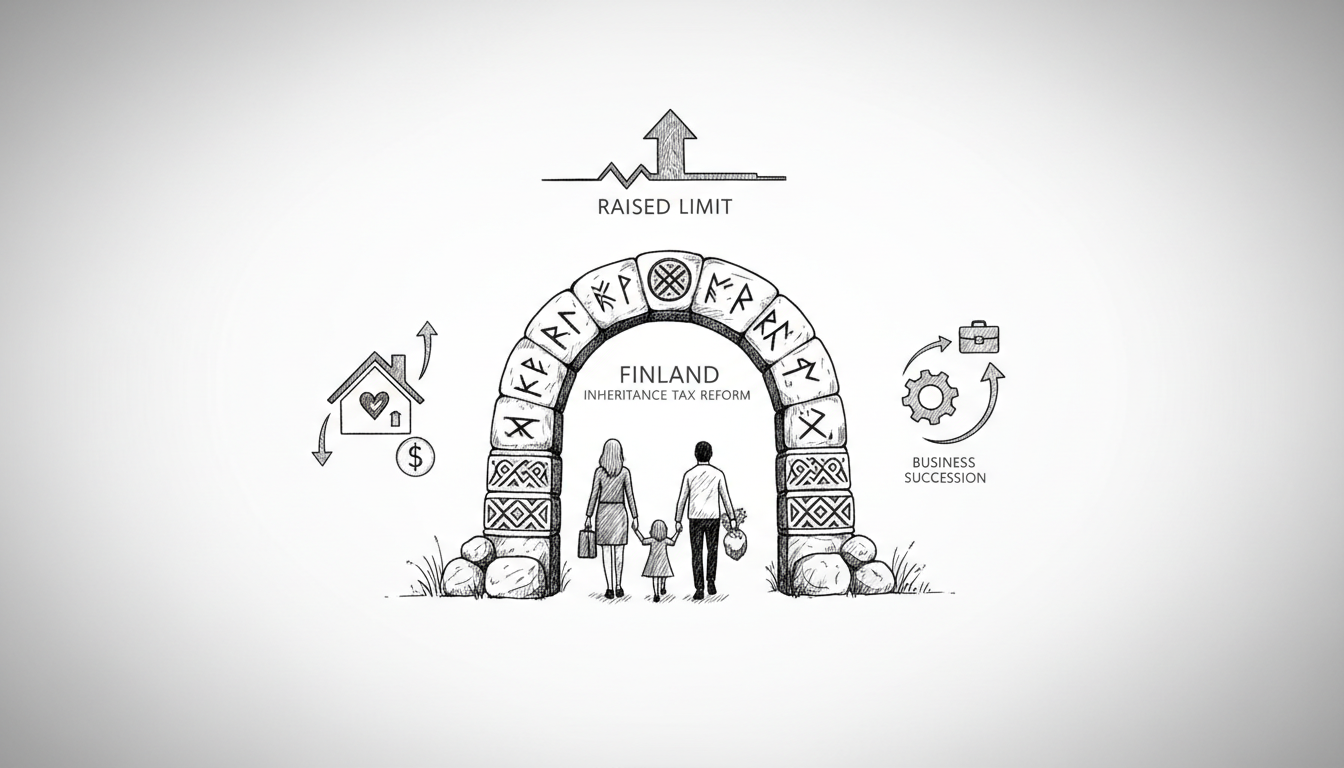
The Finnish Parliament has approved a substantial increase to the tax-free thresholds for inheritance and gift taxes, a move set to exempt thousands of citizens from these levies entirely. The reform, passed in a vote of 114 to 52, will raise the inheritance tax exemption limit from 20,000 euros to 30,000 euros and the gift tax threshold from 5,000 euros to 7,500 euros. The changes are scheduled to take effect at the start of the next fiscal year. The governing coalition parties celebrated the decision, while opposition members from the Social Democratic Party, the Green League, and the Left Alliance voted against the measures.
National Coalition Party MP Sinuhe Wallinheimo described the reform as a long-awaited correction for ordinary Finns. He argued that small inheritances often involve modest family assets like summer cottages or childhood homes in municipalities with difficult housing markets, not large fortunes. Wallinheimo stated that the time was right for these adjustments, calling them a major relief for many families. He also confirmed that the government has further ambitions, with the National Coalition Party advocating for the complete abolition of inheritance tax. Wallinheimo framed this goal by stating that intergenerational wealth accumulation should not be treated as a crime in Finland.
The legislative package includes additional relief measures beyond the raised thresholds. The interest rate applied to late payments of inheritance tax will be reduced by 1.5 percentage points. This change means the penalty interest will be the reference rate confirmed by the Bank of Finland plus two percentage points, down from the previous addition of 3.5 percentage points. Wallinheimo noted that it had been unsustainable for inheritance tax debt to accumulate interest as high as eight percent in some cases. Furthermore, the rules for business succession relief are being expanded to allow its use even when some of the heirs are minors, facilitating smoother generational transitions for family-owned enterprises.
Joakim Vigelius, deputy chair of the Finns Party, echoed the positive sentiment, stating that the change will free more Finns from inheritance tax completely and reduce the bill for others by hundreds of euros. He characterized the direction of the policy as correct. The political divide was clear during the committee stage, where the Centre Party, the SDP, the Green League, and the Left Alliance each submitted dissenting opinions with their reasoning attached to the proposal.
This policy shift represents a significant philosophical turn in Finnish fiscal policy, moving away from progressive taxation on transferred wealth. The debate touches on core questions of equality, family assets, and the state's role in redistributing wealth across generations. Critics argue that reducing inheritance tax benefits wealthier households and reduces state revenue needed for public services. Proponents counter that the previous thresholds were outdated and unfairly burdened middle-class families passing on modest properties. The reform's practical impact will be most felt in rural areas and among families with property assets that are high in sentimental value but not necessarily liquid. The government's next steps on this issue will be closely watched, particularly regarding any future push for total abolition.